Skincare Basics for Teenagers: What Actually Matters
A teen standing in front of the bathroom mirror, surrounded by a dozen trending products and a feed full of contradicting advice, often wonders where to even begin. The short answer is that skincare basics for teenagers usually come down to three simple steps: a gentle cleanser, a moisturizer that suits your skin, and sunscreen during the day. Everything else is optional, and for most people, a smaller routine is easier to stick with and less likely to cause irritation.
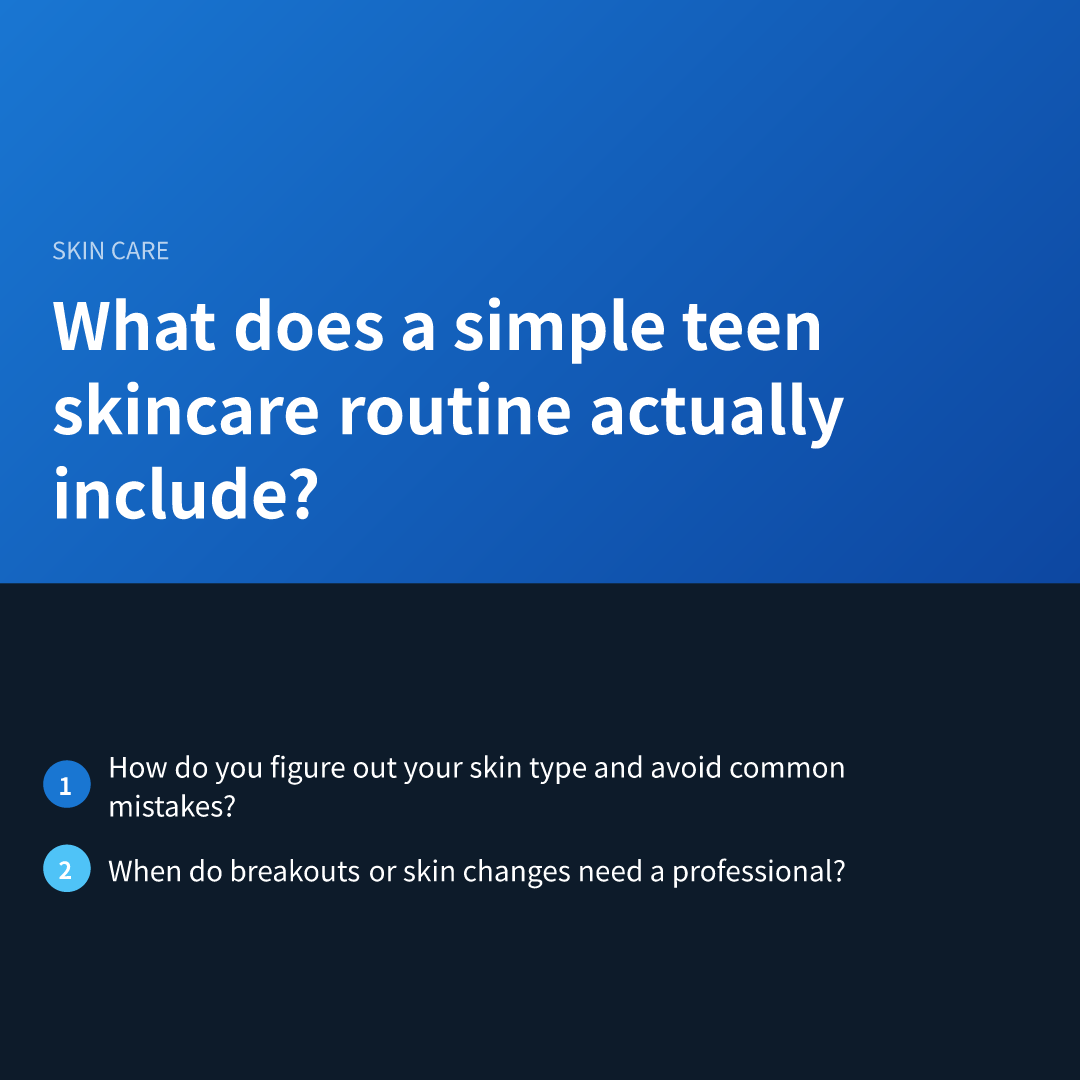
What does a simple teen skincare routine actually include?
A basic routine usually has just three parts: cleansing, moisturizing, and sun protection. Dermatology organizations such as the American Academy of Dermatology generally describe gentle cleansing and sunscreen as core habits for people of all ages. Teens don't need a long list of products to get started.
Cleanser
A mild, fragrance-free cleanser is a common starting point. Its job is to lift away sweat, oil, sunscreen, and everyday grime without leaving the face feeling tight or squeaky. That tight feeling is often a sign a product is too harsh for your skin.
Many people wash in the morning and again in the evening, and after sweaty activities like sports. Product labels and a pharmacist can help you pick a formula that fits your skin type.
Moisturizer
Moisturizer is not just for dry skin. Oily and acne-prone skin can still get dehydrated, especially if cleansing or acne products are drying. Lightweight, gel-style or "non-comedogenic" formulas are often chosen by people who worry about clogged pores, though the label is not a guarantee and reactions vary from person to person.
If your skin feels dry, flaky, or uncomfortable, a richer cream may be more comfortable. Trial and error, done slowly, is normal here.
Sunscreen
According to the U.S. Food and Drug Administration, sunscreen is regulated as an over-the-counter product, and broad-spectrum formulas are designed to protect against both UVA and UVB rays. The Skin Cancer Foundation and similar groups often point out that sun protection is a long-term habit, and teen years are a good time to build it. Many teens prefer lightweight lotions, gels, or mineral formulas because they feel less greasy.
Hats, shade, and protective clothing are part of sun protection too. Check the product label for directions, and ask a pharmacist if you're unsure which type suits you.
Related reading: Skincare Routine Basics for Oily Skin You Can Keep Up
How do you figure out your skin type and avoid common mistakes?
Start by observing how your skin behaves a few hours after washing. Skin that looks shiny across the forehead, nose, and chin is often described as oily or combination. Skin that feels tight or looks flaky may be dry, and skin that stings or turns red easily with many products may be sensitive.
These categories are rough guides, not strict labels. Hormones, weather, stress, and sleep can all shift how skin behaves, which is why teens often notice changes from one season to the next.
Mistakes that often cause trouble
- Over-washing or scrubbing. Harsh scrubs and very frequent washing can leave skin irritated, which may make breakouts look worse.
- Starting many products at once. If a reaction happens, it's hard to tell which product caused it. Adding one new item at a time is a common approach.
- Copying adult routines. Strong exfoliating acids, retinoids, and anti-aging serums are designed for different concerns, and they can be irritating for young skin.
- Skipping sunscreen because skin is oily. Many lightweight options exist for this reason.
- Picking or popping blemishes. The American Academy of Dermatology generally advises against this because it may lead to irritation or marks. Blemish care that involves extraction is something a dermatology office handles.
Patch testing a new product on a small area of skin is a method many product makers and skin organizations describe. Ask a pharmacist how it applies to the specific product you're considering.
Social media and ingredient hype
Short videos can make a product look like a must-have. In reality, trends move fast, and the evidence behind them is often thin or based on adult skin. Being skeptical of dramatic claims, before-and-after images, and sponsored posts is a reasonable habit.
The U.S. Federal Trade Commission requires that influencers disclose paid relationships, so look for those labels when judging advice. A product being popular does not tell you whether it suits your skin.
Related reading: How to Read a Skincare Ingredient List (Without Guessing)
When do breakouts or skin changes need a professional?
Occasional pimples are very common during the teen years, since hormonal changes affect oil production. Mild breakouts are often managed with gentle habits and, in some cases, over-the-counter products. The details of which products to use, and how, are best discussed with a pharmacist or healthcare professional, because ingredients like benzoyl peroxide and salicylic acid can cause dryness or irritation in some people.
Some signs suggest it's time to book an appointment with a doctor or dermatologist:
- Breakouts that are painful, deep, or leave marks or scars
- Acne that doesn't improve with gentle care, or that keeps returning
- Skin that is itchy, blistering, oozing, or spreading in a rash
- A mole or spot that changes in size, shape, or color
- Breakouts that seem to affect your mood, confidence, or social life
According to the American Academy of Dermatology, acne is a medical skin condition that can be treated, and prescription options exist. Whether any of them is appropriate depends on the individual, so that decision belongs to a licensed professional. A parent or guardian can help arrange a visit.
Allergic reactions and irritation
Burning, swelling, widespread redness, or hives after using a product are not something to push through. Stopping the product and seeking advice from a healthcare provider is the usual guidance. Severe swelling of the face or trouble breathing needs urgent medical care.
Makeup and skin
Many teens enjoy makeup, and it can be part of a healthy relationship with appearance. Removing it before sleep with a gentle cleanser is commonly recommended, since leftover product may irritate skin. Sharing makeup, especially around the eyes, can spread germs, so keeping your own is generally wiser.
Frequently asked questions
Do boys and girls need different skincare?
Not really. Skin needs depend more on skin type, climate, and activity than on gender, so a gentle cleanser, moisturizer, and sunscreen suit most people. Products marketed to one gender are often similar in formula to those marketed to another.
Is it okay to use my parent's skincare products?
It depends on the product. Basic items like a mild cleanser or moisturizer may be fine for some teens, but products with strong active ingredients are often designed for adult concerns and may irritate younger skin. Check labels and ask a pharmacist before borrowing anything unfamiliar.
Does diet or sleep affect my skin?
They may play a role, though the relationship differs from person to person. Many people notice their skin looks better when they sleep regularly, drink enough water, and eat a varied diet, but there's no single food that works for everyone. If you suspect a connection, a healthcare professional can help you think it through.
Building a calm, consistent routine is the heart of skincare basics for teenagers, and it doesn't require a shelf full of products. Start small, change one thing at a time, and lean on a pharmacist, doctor, or dermatologist whenever your skin raises questions that a routine can't answer.
Disclaimer: This article is for informational purposes only and is not a substitute for professional medical advice, diagnosis, or treatment. Please consult a licensed professional for personal health decisions.