Skincare Routine for Sensitive Skin: Build It Around Habits You Already Have
A skincare routine for sensitive skin tends to stick when it is attached to habits you already do every day, rather than built as a separate project. Brushing your teeth, making coffee, and plugging in your phone at night are all anchors that can carry one small skin step each. This approach is often called habit stacking, and it fits sensitive skin well because gentle, minimal routines are usually easier to maintain than long, complicated ones. Reactions vary from person to person, so treat everything below as general information, not personal advice.
Finding the Existing Habits to Attach To
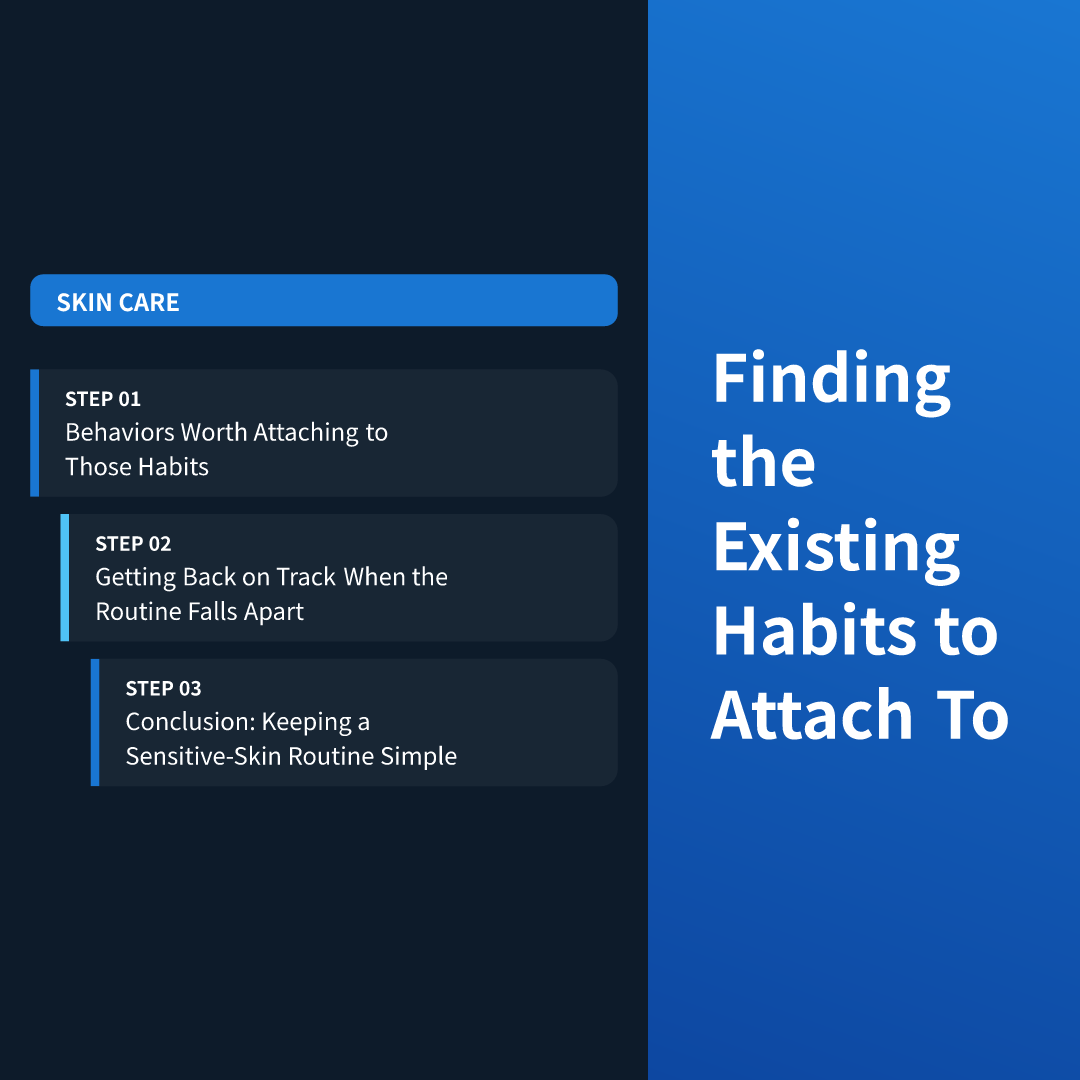
Before you add anything, look at what you already do without thinking. The best anchors are actions that happen at the same point in the day, in the same place, and that you rarely skip. Your bathroom sink, your bedside table, and your morning commute are all common candidates.
Anchors that tend to work
- Brushing your teeth: you are already at the sink, usually twice a day, which makes it a natural cue for a face-cleansing step.
- Taking a shower: a built-in moment to think about water temperature and what happens right after you step out.
- Making your morning drink: a short waiting window that suits a quick, simple step.
- Charging your phone at night: a reliable end-of-day signal that the routine is almost done.
- Changing into sleepwear: a clear boundary between the day and the evening.
Pick one or two anchors, not all of them. If your mornings are chaotic, it is perfectly reasonable to anchor most of the routine to the evening and keep the morning very short.
Why fewer steps often suit sensitive skin
Sensitive skin is a description of how skin feels and reacts, not a formal diagnosis. People use the term for stinging, redness, tightness, or flushing that shows up after certain products or conditions. According to the American Academy of Dermatology, gentle cleansing and avoiding products that irritate your skin are common starting points for people with easily irritated skin. A short routine also makes it easier to notice which product might be causing trouble, because fewer things are changing at once.
Many people with reactive skin find that the core of a routine is only three things: a mild cleanser, a moisturizer, and daily sun protection. Everything else is optional, and adding extras is usually something to approach slowly.
how to tell sensitive skin from a skin conditionBehaviors Worth Attaching to Those Habits
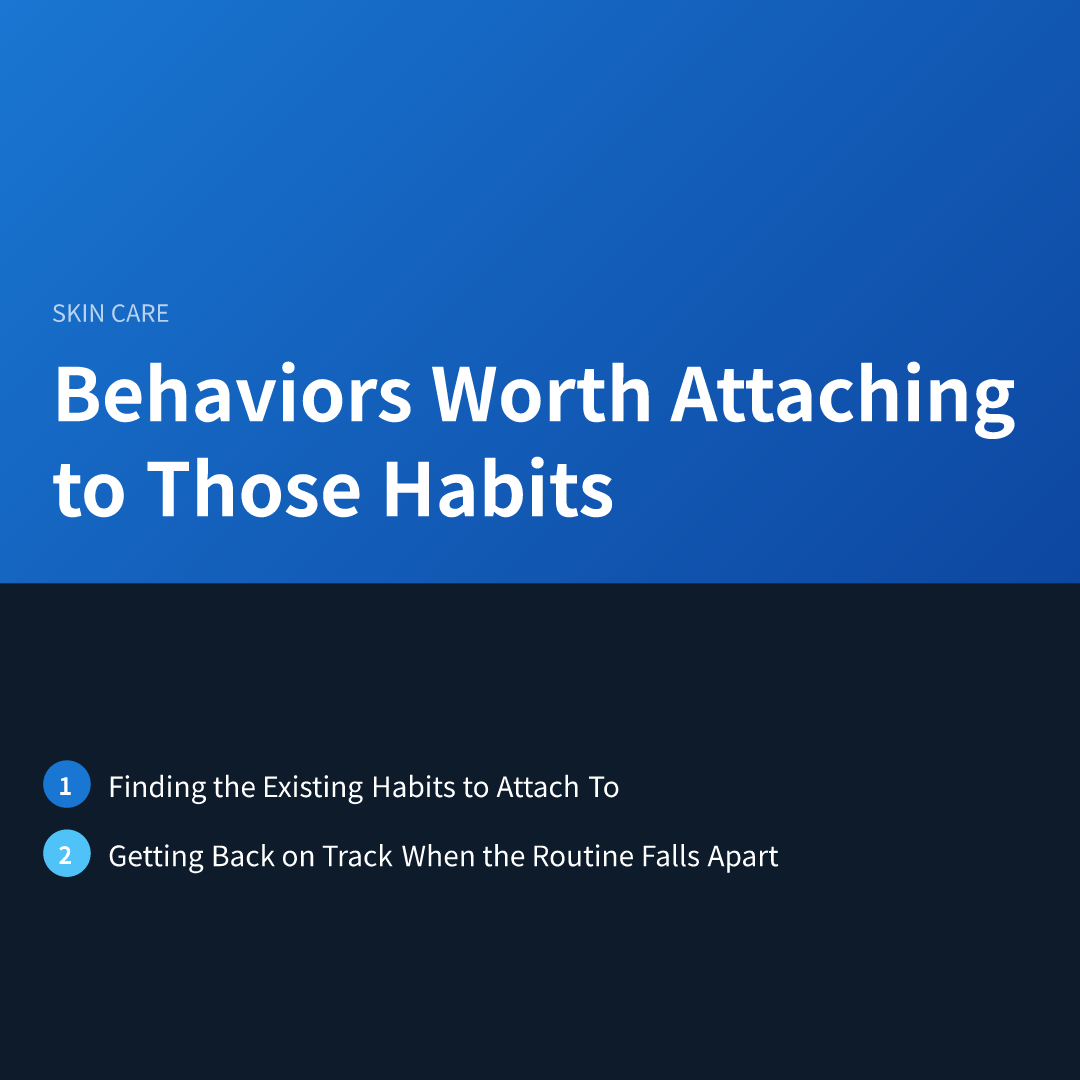
Once you have an anchor, the new behavior should be small enough that it feels almost too easy. Here are several pairings, written as ideas for how people commonly organize things, not as instructions.
Morning pairings
- Brushing teeth + rinsing the face with lukewarm water. Many people with reactive skin keep the morning cleanse very light, and sometimes water alone is enough on days when skin feels tight.
- Making coffee + moisturizer. While the kettle heats, a fragrance-free moisturizer step fits into the gap.
- Putting on shoes + sunscreen. Pairing sun protection with leaving the house makes it harder to forget. Mineral-based formulas are often mentioned as a gentler option for sensitive skin, though individual reactions differ. The American Academy of Dermatology provides general guidance on broad-spectrum sun protection.
Evening pairings
- Brushing teeth + gentle cleansing. If you wear makeup or sunscreen, the evening cleanse is where it comes off. Hot water is often described as aggravating for reactive skin, so lukewarm is the usual suggestion.
- Towel-drying + moisturizer. Some people like to moisturize while skin is still slightly damp after washing, since that is commonly said to help hold in hydration.
- Phone on the charger + a quick skin check. Take a moment to notice any redness, dryness, or stinging, and keep a short note in your phone if something seems off.
Weekly pairings
- Changing pillowcases or sheets + wiping down your phone screen. Things that touch your face regularly can carry residue, so a weekly refresh is a common habit.
- Sunday planning + reviewing your products. Check expiration indicators and notice whether anything has changed in smell, texture, or color.
A word about new products
New products are where sensitive skin most often runs into trouble. The U.S. Food and Drug Administration notes that cosmetics are not required to have FDA approval before they go on the market, which is one reason many people try a product on a small area first and watch for a reaction. A common approach is to introduce only one new product at a time and give it room before judging it. Because fragrance, certain preservatives, and some active ingredients are frequent culprits for irritation, many people look for labels that say fragrance-free, though that wording is not a guarantee that a product will suit you.
Ingredients such as retinoids, strong exfoliating acids, and high-strength vitamin C are widely used but can be irritating for some people. If you are curious about them, a dermatologist or pharmacist is the right person to ask about whether they make sense for your skin and how to introduce them.
reading skincare ingredient labels for fragrance and common irritantsGetting Back on Track When the Routine Falls Apart
Routines break. You travel, get sick, stay up late, or simply lose interest for a week. A habit-based plan should assume this from the start, so recovery is part of the design rather than a sign of failure.
Recovery rules for missed days
- Never miss twice. One skipped evening is just a skipped evening. The rule is to return the next day, even in a shortened form.
- Shrink, don't quit. On a bad day, drop to the bare minimum: a rinse and moisturizer at night, sunscreen in the morning if you are going outside.
- Return to the anchor, not the whole routine. If everything has slipped, restart with just the tooth-brushing pairing and rebuild from there.
- Skip the catch-up. Doubling up products or adding extra steps to make up for lost time tends to irritate sensitive skin more than it helps.
When skin itself seems to be struggling
Sometimes the issue is not the routine but a flare of irritation. A common general approach is to pause newer or stronger products and return to the simplest version of the routine while skin settles. The American Academy of Dermatology and other medical bodies point out that persistent or worsening skin problems deserve professional attention instead of more experimenting at home.
It is worth contacting a licensed professional, such as a dermatologist or your primary care clinician, if you notice any of the following:
- Redness, burning, or rash that does not settle or keeps coming back
- Swelling, blistering, oozing, or significant pain
- Symptoms that appear after starting a prescription or over-the-counter product
- Skin changes that seem to affect your eyes, lips, or breathing
- Ongoing itching or dryness that interferes with sleep or daily life
Seek urgent care for sudden swelling of the face or lips, trouble breathing, or a severe widespread reaction. Persistent redness or flushing can also have causes that are not related to products at all, such as conditions like eczema or rosacea, which only a qualified professional can sort out.
Limits of any routine
A gentle routine can support comfort and help protect the skin barrier, but it has limits. It will not replace medical care for a skin condition, and it cannot promise a particular result. Skin responds to weather, stress, hormones, sleep, and many things outside a bathroom shelf, so some ups and downs are normal. Results vary, and progress is usually gradual rather than quick.
Conclusion: Keeping a Sensitive-Skin Routine Simple
A skincare routine for sensitive skin is easier to keep when each step rides on something you already do, stays small, and has a built-in plan for the days it falls apart. Start with one or two anchors, add only what your skin seems to tolerate, and bring in new products one at a time. If irritation persists or you are unsure about an ingredient, a dermatologist or pharmacist can help with questions that general information cannot answer.
First two weeks: three running rules
- Attach each step to one existing habit, and keep the routine to a gentle cleanse, a moisturizer, and daytime sun protection.
- Add no new products during these two weeks, and if you miss a day, simply resume the next day without catching up.
- Write a short note about how your skin feels each evening, and bring any lingering concerns to a licensed professional.
Disclaimer: This article is for informational purposes only and is not a substitute for professional medical advice, diagnosis, or treatment. Please consult a licensed professional for personal health decisions.