Skincare Routine Basics for Oily Skin You Can Keep Up
Skincare routine basics for oily skin tend to work better when they are built around three small check-in points in the day rather than one elaborate plan attempted all at once. A short habit in the morning, a brief pause during the day, and a slightly longer wind-down at night usually last far longer than a ten-step routine that gets abandoned within a week. This kind of pacing also makes it easier to notice how your skin actually reacts, since you are checking in at natural moments instead of forcing a rigid schedule onto a busy life.
Oily skin is not a flaw to fix but a skin type to manage, and it can shift with weather, hormones, stress, or even the products layered on top of it. The goal of a routine is less about eliminating shine completely and more about keeping oil production, pores, and breakouts in a manageable range.
Morning: Preparing Skin Before Oil Builds Up
Mornings often bring a layer of oil that built up overnight, along with any residue from a nighttime treatment. A gentle, non-stripping cleanser at this point helps remove that surface oil without triggering the skin to overcompensate by producing even more sebum later in the day.
Cleansing Without Overdoing It
A mild, foaming or gel-based cleanser is generally easier on oily skin than a heavy cream cleanser, since it lifts oil without leaving a residue behind. Washing with lukewarm rather than hot water can also help, since hot water tends to strip more of the skin's natural barrier, which sometimes leads to more oil production as skin tries to compensate.
Lightweight Moisturizer and Sunscreen
Skipping moisturizer because skin feels oily is a common instinct, but under-hydrated skin can actually produce more oil to compensate. A lightweight, oil-free, or gel-based moisturizer labeled non-comedogenic is usually a better fit than a heavier cream. Sunscreen matters just as much for oily skin as any other type, and a matte-finish or gel sunscreen formula can reduce the greasy feel some people associate with SPF.
Midday: Managing Shine Without Restarting the Whole Routine
By midday, oil tends to resurface, especially across the T-zone. This is usually not a sign that the morning routine failed — it is simply how oily skin behaves as the day goes on, and it does not require a full rewash.
Blotting Instead of Rewashing
Blotting papers or a light dusting of translucent powder can absorb surface oil without disturbing sunscreen or makeup underneath. Rewashing the face in the middle of the day is rarely necessary and can sometimes irritate skin that is already adjusting to the morning cleanse.
A Quick Mist Instead of a New Layer
If skin feels tight or oily at the same time, a hydrating facial mist can refresh skin without adding heavy product. This midday moment is also a good time to notice patterns — does oil show up more after certain meals, stress, or long hours in air conditioning? Paying attention here can help fine-tune the rest of the routine over time.
Evening: Removing the Day's Buildup

Evenings call for a slightly more thorough cleanse, since sunscreen, makeup, and a full day's worth of oil and environmental exposure have accumulated. This is usually the point in a skincare routine basics for oily skin conversation where double cleansing gets mentioned, and it can be worth considering if sunscreen or makeup was worn.
Double Cleansing, If It Fits Your Day
A first cleanse with an oil-based or micellar formula can help dissolve sunscreen and makeup, followed by a gentle water-based cleanser to remove any remaining residue. This is optional rather than mandatory — on days without heavy sunscreen or makeup, a single gentle cleanse is often enough.
Treatment Ingredients and Where They Fit
Ingredients like salicylic acid or niacinamide are commonly discussed in relation to oil control and clearer-looking pores, since salicylic acid can help with buildup inside pores and niacinamide is often associated with a more balanced look to oily areas. How often a treatment product is introduced, and at what strength, is best worked out gradually and according to the product's own instructions, since reactions vary quite a bit from person to person.
Many dermatology resources note that oily skin still needs moisturizer and sun protection, and that overly frequent washing or harsh actives can sometimes worsen oiliness rather than improve it. For general background on caring for oily skin, the American Academy of Dermatology's skin care basics page is a reasonable starting point.
Weekly Check-Ins That Keep an Oily Skin Routine on Track
A daily routine handles most of the day-to-day oil control, but a weekly check-in helps catch things that build up more slowly — clogged pores, product buildup, or subtle irritation from a new item added too quickly.
Exfoliation, Kept Light
Chemical exfoliants can be useful for oily, acne-prone skin, but more frequent use is not automatically better and can lead to redness, sensitivity, or even more oil as the skin barrier becomes irritated. Spacing out exfoliation and watching for signs of irritation — tightness, stinging, or unusual redness — is a reasonable way to judge whether the frequency fits your skin.
A Quick Product Audit
Once a week is a good moment to glance at the products actually in rotation and ask whether each one is still doing something useful, or whether a few extra steps have quietly piled up. Layering too many oil-control or mattifying products at once can sometimes irritate skin more than a smaller, consistent routine would.
A Simple Weekly Check-In Checklist
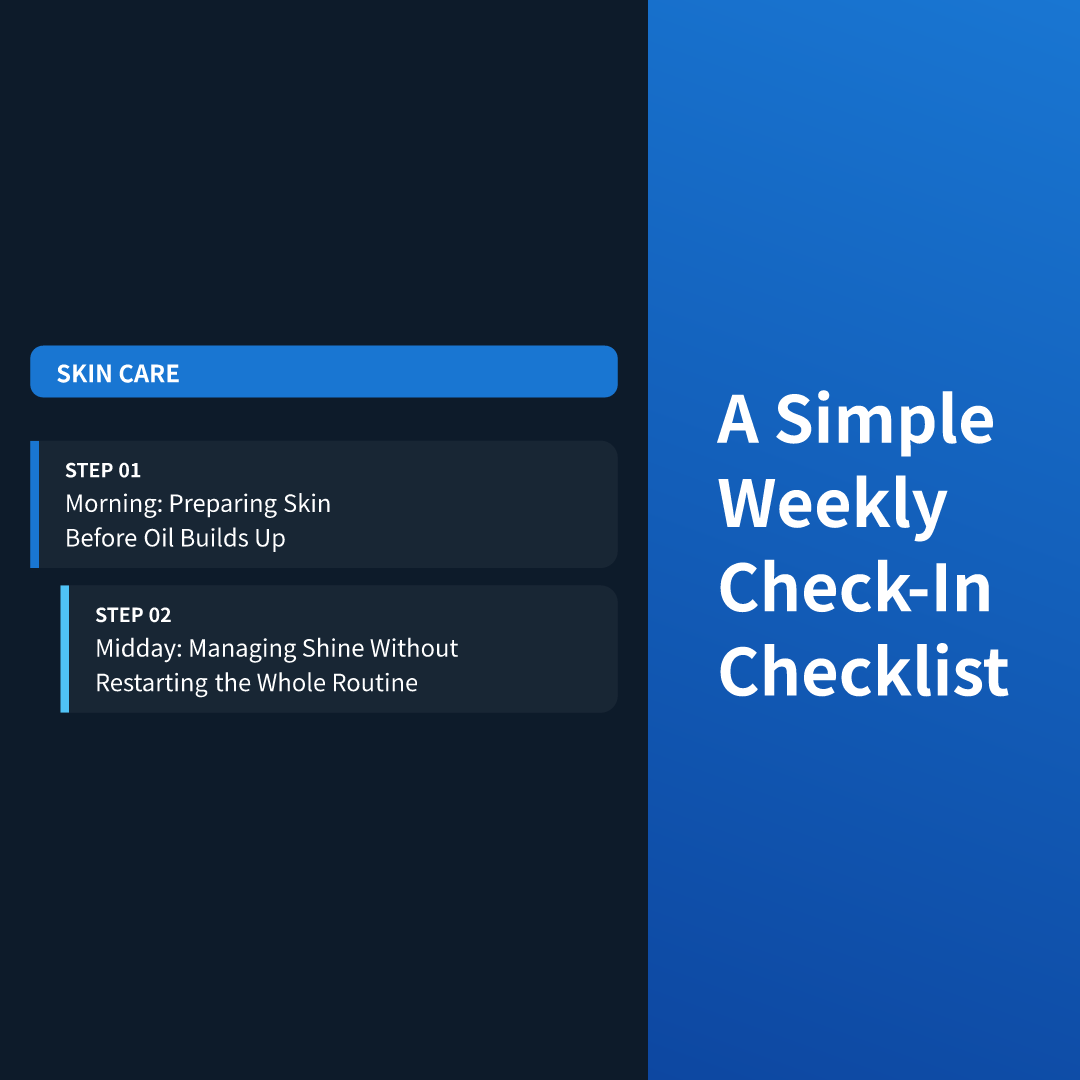
- Cleanser still feels gentle, without a tight or squeaky-clean sensation afterward
- Moisturizer and sunscreen are both non-comedogenic and lightweight in texture
- No new redness, stinging, or breakouts appeared after adding a recent product
- Exfoliation or treatment products are being spaced out rather than stacked
- Pillowcases, phone screens, and makeup brushes are cleaned regularly
- Persistent, painful, or cystic breakouts are being tracked rather than ignored
Oily skin can respond differently depending on humidity, hormonal changes, or even a change in diet or stress levels, so some trial and adjustment over time is normal rather than a sign that the routine is wrong. If breakouts become painful, widespread, or leave marks that do not fade, or if over-the-counter products cause ongoing irritation, it is worth bringing that pattern to a dermatologist rather than continuing to adjust a routine alone.
None of this needs to be complicated. Skincare routine basics for oily skin usually come down to a gentle cleanse, a light moisturizer with sunscreen, a few smart midday touch-ups, and a slightly closer look at the skin once a week — small habits repeated consistently tend to outperform an elaborate routine that only lasts a few days.
⚠️ Disclaimer: This article is for informational purposes only and does not replace professional medical advice.
Disclaimer: This article is for informational purposes only and is not a substitute for professional medical advice, diagnosis, or treatment. Please consult a licensed professional for personal health decisions.
Related reading: Skincare Routine Basics for Oily Skin You Can Keep Up