What to Look for in a First Anti Aging Product
The short answer: when choosing a first anti aging product, look for a gentle formula suited to your skin type, a clearly listed main ingredient, a daily-sunscreen habit alongside it, and realistic expectations about what a cosmetic can do. Fancy packaging and bold promises matter far less than those basics. Many people start with one simple product rather than a full shelf.
Searches for this topic tend to climb whenever people notice their first fine lines, uneven texture, or a duller look in photos. Social media routines with ten or twelve steps add pressure, and the ingredient lists can read like a chemistry exam. This guide explains the common building blocks, how needs differ between people, and where the limits of skincare sit, so you can judge a product label calmly.
Where This Question Usually Comes Up

Most people don't wake up one morning and decide to start an anti-aging routine. It usually begins with a small trigger: a mirror in harsh light, a milestone birthday, or a friend mentioning a serum. Two everyday situations show how different the starting points can be.
Situation one: the minimalist in their late twenties
Imagine someone who has only ever used a cleanser and occasional moisturizer. They notice faint lines near the eyes when they smile and wonder whether they are "behind." For this person, the most useful first step is usually consistency with basics, not a strong active. A reliable moisturizer and daily sun protection often form the foundation, and a mild active can be added later if they want.
Situation two: the combination-skin person in their forties
Now imagine someone with oily T-zone, dry cheeks, and some sun-related uneven tone. They have tried a few products and found some stinging. Their question is less "what do I add?" and more "what won't irritate me?" For them, texture, fragrance content, and how the product fits with what they already use may matter more than the ingredient that is trending.
Both people ask the same question, yet the sensible answers differ. That is why a single "best" first product rarely exists, and why the framework below focuses on how to evaluate rather than what to buy.
The Core Ideas Behind a Sensible First Choice

Cosmetic anti-aging means appearance, not reversal
In the United States, the FDA distinguishes cosmetics, which are meant to cleanse or improve appearance, from drugs, which are meant to affect the structure or function of the body or treat disease. According to the FDA's general cosmetics guidance, products marketed to change how skin works may be regulated differently. In practice, a typical over-the-counter anti-aging product aims to support the look of smoother, more hydrated skin over time. It does not stop the natural aging process.
Common ingredient families you will see
Labels tend to feature a handful of familiar ingredient groups. Knowing what each is commonly used for makes shopping less overwhelming.
- Retinoids and retinol-type ingredients: widely used for the look of fine lines and uneven texture. They are also a common source of dryness and redness, especially at the beginning.
- Vitamin C derivatives: often used for brightening the look of skin and as part of a daytime routine. Stability and formulation vary a great deal between products.
- Niacinamide: commonly included for tone, texture, and barrier support, and often described as relatively easy to pair with other products, though reactions vary.
- Hyaluronic acid and glycerin: humectants that draw water into the upper skin layer, giving a plumper, more hydrated look.
- Peptides and ceramides: frequently added to moisturizers to support a smoother feel and a more comfortable skin barrier.
- Alpha and beta hydroxy acids: exfoliating ingredients that can improve surface texture but may increase sensitivity to sun.
Sunscreen is the quiet anchor
According to the American Academy of Dermatology's general public guidance, sun protection is a central part of caring for skin over the long term, and ultraviolet exposure is widely linked to visible skin aging. That is why many routines treat a broad-spectrum sunscreen as the foundation, with any serum or cream built around it. A first anti aging product that you pair with daily sun protection usually serves you better than a stronger product used without it.
Related reading: How Often to Exfoliate: Skin Type and Signs to Watch
Formula details that matter on the label
- A clear hero ingredient: a product built around one or two active ingredients is easier to evaluate than a formula listing a dozen trendy extras.
- Fragrance and essential oils: these are common triggers for irritation in people with reactive skin, so many sensitive-skin users prefer fragrance-free options.
- Packaging: some ingredients, such as vitamin C and retinoids, are often sold in opaque or air-restricted packaging because light and air can affect them.
- Texture: lightweight gels and lotions tend to suit oilier skin, while richer creams often suit drier skin. Choose something you will actually enjoy using.
- Clear ingredient list and brand transparency: a full ingredient list, batch or expiration information, and straightforward claims are good signs.
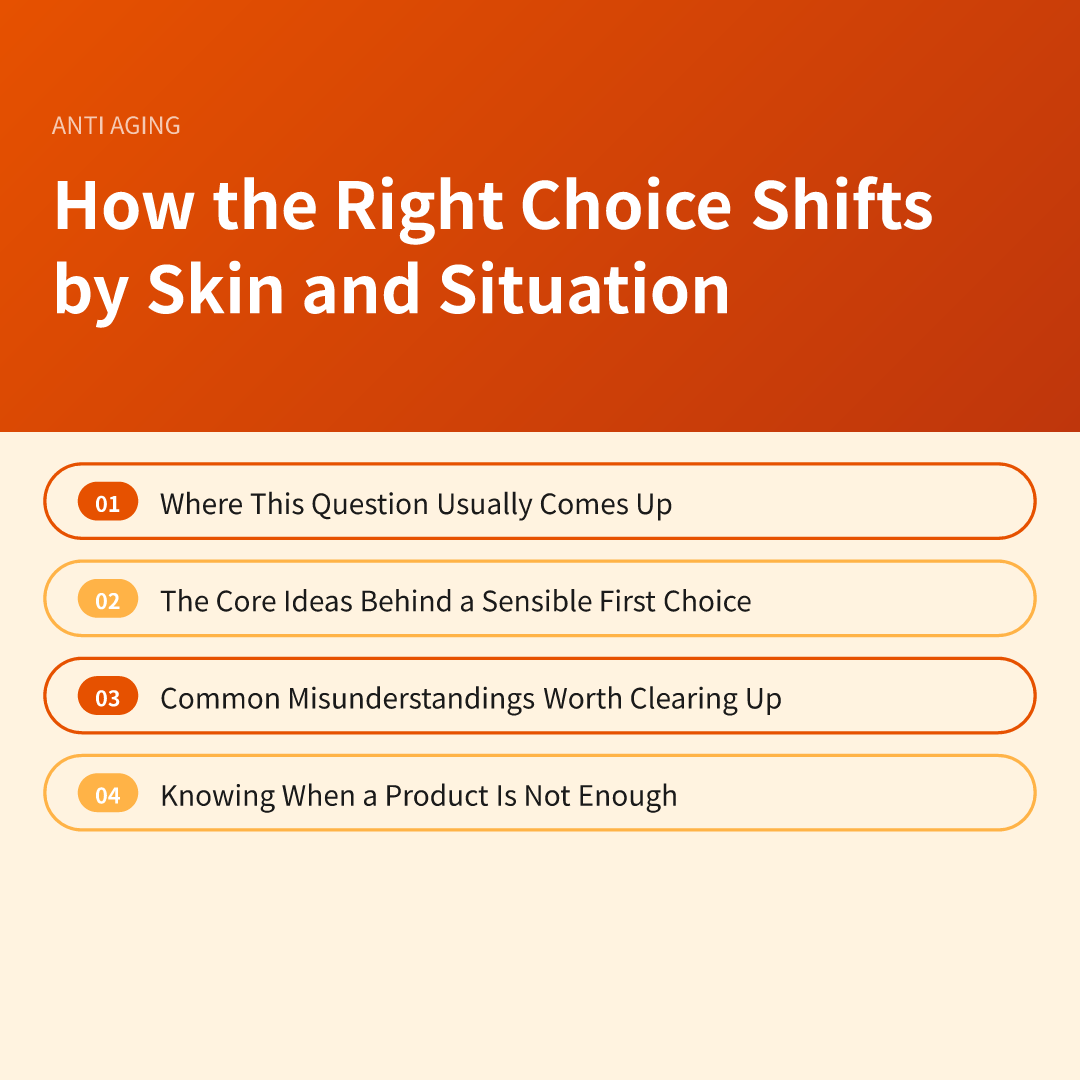
How the Right Choice Shifts by Skin and Situation
Returning to the two situations above shows how the same checklist of ideas plays out differently.
For the minimalist in their late twenties, a hydrating moisturizer with humectants and a daily sunscreen is a common starting point. If they later want something more active, they might read about retinoids and ask a pharmacist or dermatology professional how to introduce one gradually. Product instructions, not general articles, should guide how often and how much to use.
For the combination-skin person in their forties, patch-testing a new product on a small area before wider use is a commonly shared piece of general advice, and many brands print similar guidance on the package. A barrier-supporting moisturizer with ceramides or niacinamide may feel gentler than a strong exfoliating product. If past products caused stinging, it helps to change one thing at a time so the cause is easier to identify.
Skin types and sensitivities
- Dry skin: richer textures and humectant-plus-emollient formulas are often more comfortable.
- Oily or acne-prone skin: lighter, non-greasy formulas are often preferred, and some people look for products labeled non-comedogenic, though that term is not tightly standardized.
- Sensitive or reactive skin: simpler ingredient lists and fragrance-free formulas are common choices, and strong actives may need more caution.
- Skin conditions such as eczema, rosacea, or active acne: products that suit healthy skin may not suit these, so personalized professional guidance is worth seeking.
Pregnancy, medications, and other special circumstances
Some ingredients, particularly retinoid-type products, come with extra considerations during pregnancy or while breastfeeding. People using prescription skin treatments should also check compatibility. The sensible move is to ask a pharmacist or physician before adding a new active. Details about use belong to the product label and a professional, not to a general article.
Related reading: How to Build a Simple Skincare Routine That Sticks
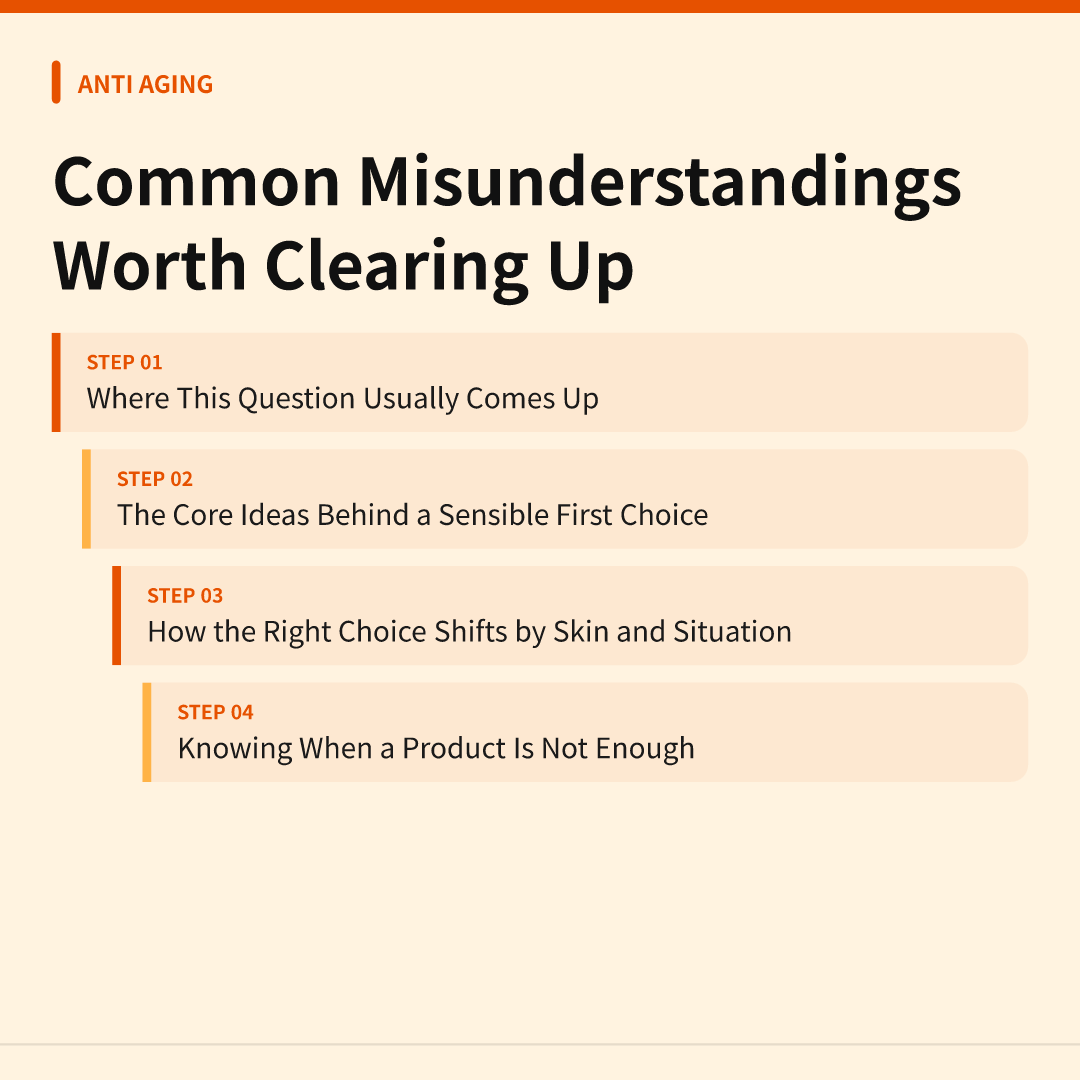
Common Misunderstandings Worth Clearing Up
"More expensive means more effective"
Price reflects marketing, packaging, and brand positioning as well as formulation. A costly cream is not automatically better suited to your skin than a modest one. What matters more is whether the ingredients fit your needs and whether you can use the product consistently.
"Stronger is better, and stinging means it's working"
Mild tingling can happen with some products, but persistent burning, peeling, or redness is generally a sign the skin is unhappy rather than a sign of progress. According to the American Academy of Dermatology's general guidance, irritation can damage the skin barrier and make skin more reactive. If a product causes ongoing discomfort, stopping and consulting a professional is a sensible response.
"I need a whole routine at once"
Adding many new products together makes it hard to tell which one helped or caused a reaction. Introducing one product at a time is a commonly shared approach, and it keeps the budget manageable too.
"Anti-aging claims are all regulated and verified"
Marketing terms like "clinically proven," "miracle," or "age-defying" are not a guarantee of results. The U.S. Federal Trade Commission requires that advertising claims be truthful and not misleading, but wording on a shelf still varies in how well it is supported. Reading the ingredient list, not just the front label, gives a more reliable picture.
"Results should be quick"
Skin renews gradually, and visible changes from a cosmetic generally appear over weeks to months, if at all. Hydrating products may make skin look smoother fairly soon, but deeper changes in tone or texture take longer. Individual results differ, and some people see little change.
Knowing When a Product Is Not Enough
Cosmetics have limits. Sudden changes in a mole, a sore that does not heal, persistent rashes, or skin that is painful, swelling, or oozing are not matters for a moisturizer or serum. The American Academy of Dermatology encourages people to seek a professional skin check for changing or unusual spots. Likewise, if you are considering in-office procedures or prescription-strength options, a licensed clinician can discuss what fits your skin, goals, and health history.
Short Conclusion
Finding what to look for in a first anti aging product comes down to a few steady habits rather than a perfect pick. Here is the core in three lines:
- Start simple: a gentle, well-labeled product with a clear main ingredient, paired with daily sun protection.
- Match the formula to your skin type and sensitivities, add one new product at a time, and be wary of bold promises.
- Keep expectations realistic, since cosmetics support the look of skin and results vary from person to person.
Consider seeing a licensed professional, such as a dermatology clinician or pharmacist, if you have a skin condition, are pregnant or nursing, take prescription skin medications, react badly to products, or notice any unusual or changing spots on your skin.
Disclaimer: This article is for informational purposes only and is not a substitute for professional medical advice, diagnosis, or treatment. Please consult a licensed professional for personal health decisions.