How Often to Exfoliate: Skin Type and Signs to Watch
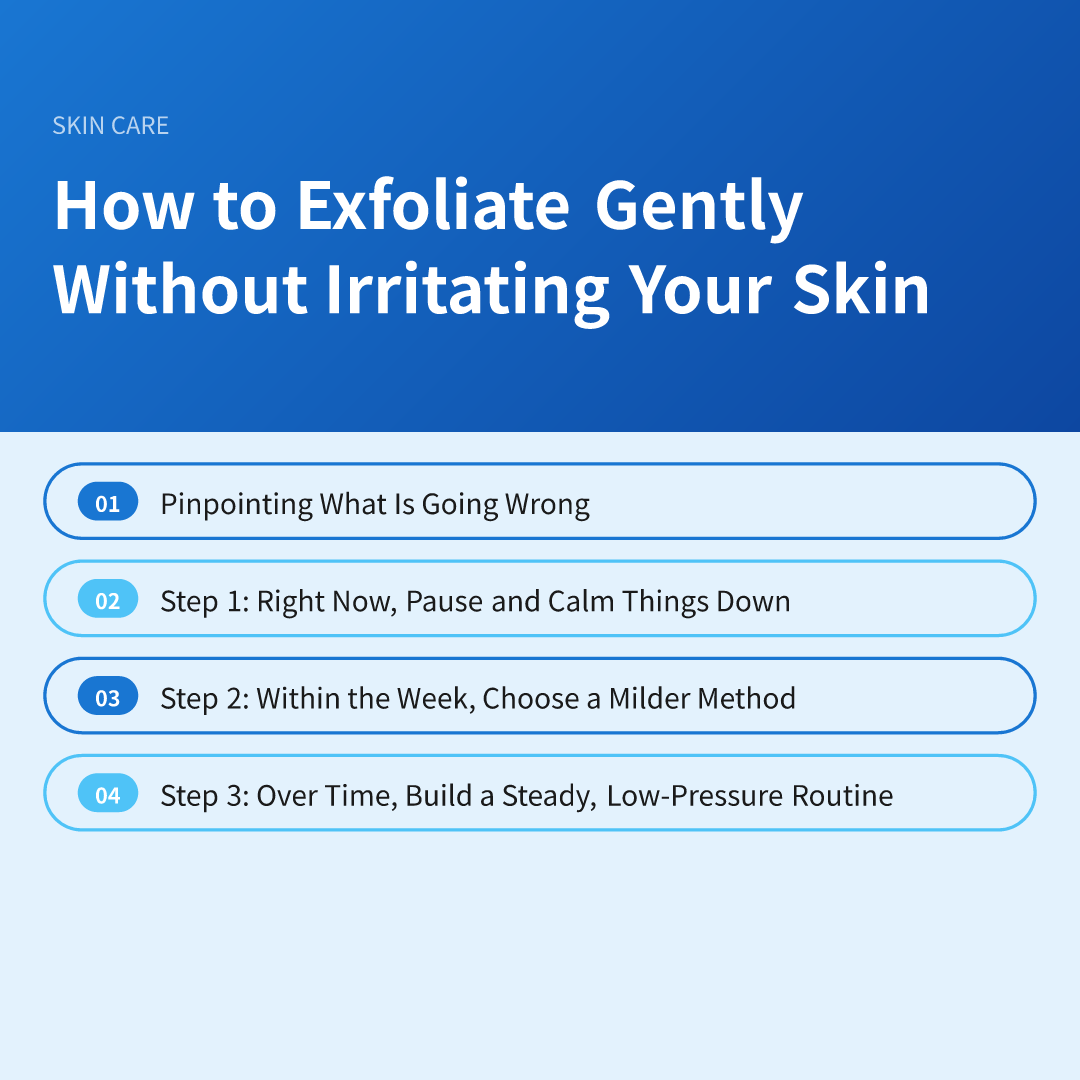
Your skin feels rough, makeup is catching on dry patches, and a friend swears by a scrub she uses constantly while another says she barely touches hers. The honest answer to how often to exfoliate is that it depends on your skin type, the kind of exfoliant, and how your skin reacts, and most people do better starting gently and going slowly rather than scrubbing often.
This guide is written from an editor's point of view, not as medical or dermatological advice. It explains the general logic behind exfoliation schedules, the differences between product types, and the signs that suggest you are overdoing it. Where a product's label or a professional's guidance applies, that should always take priority over general information here.
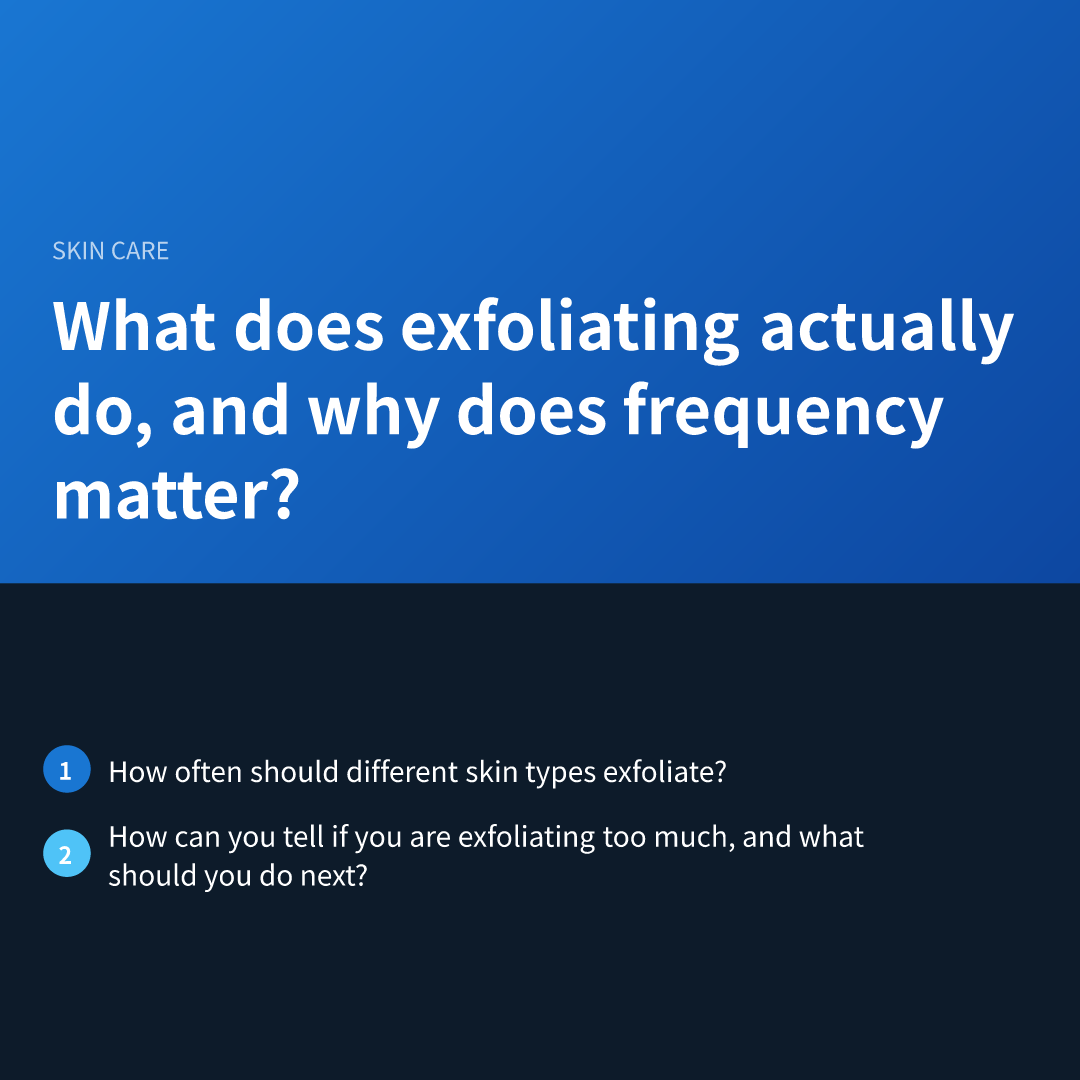
What does exfoliating actually do, and why does frequency matter?
Exfoliation is the process of loosening or removing dead cells from the skin's surface. Skin sheds these cells naturally, but the process can seem uneven, which is why some people notice dullness, flaking, or a rough texture. Exfoliating products are commonly used to help the surface look smoother and more even.
Frequency matters because the outer layer of skin also works as a protective barrier. According to the American Academy of Dermatology's general guidance, skin care that is too harsh can leave skin irritated, so more is not automatically better. When exfoliation outpaces how quickly skin can recover, the barrier may become stressed.
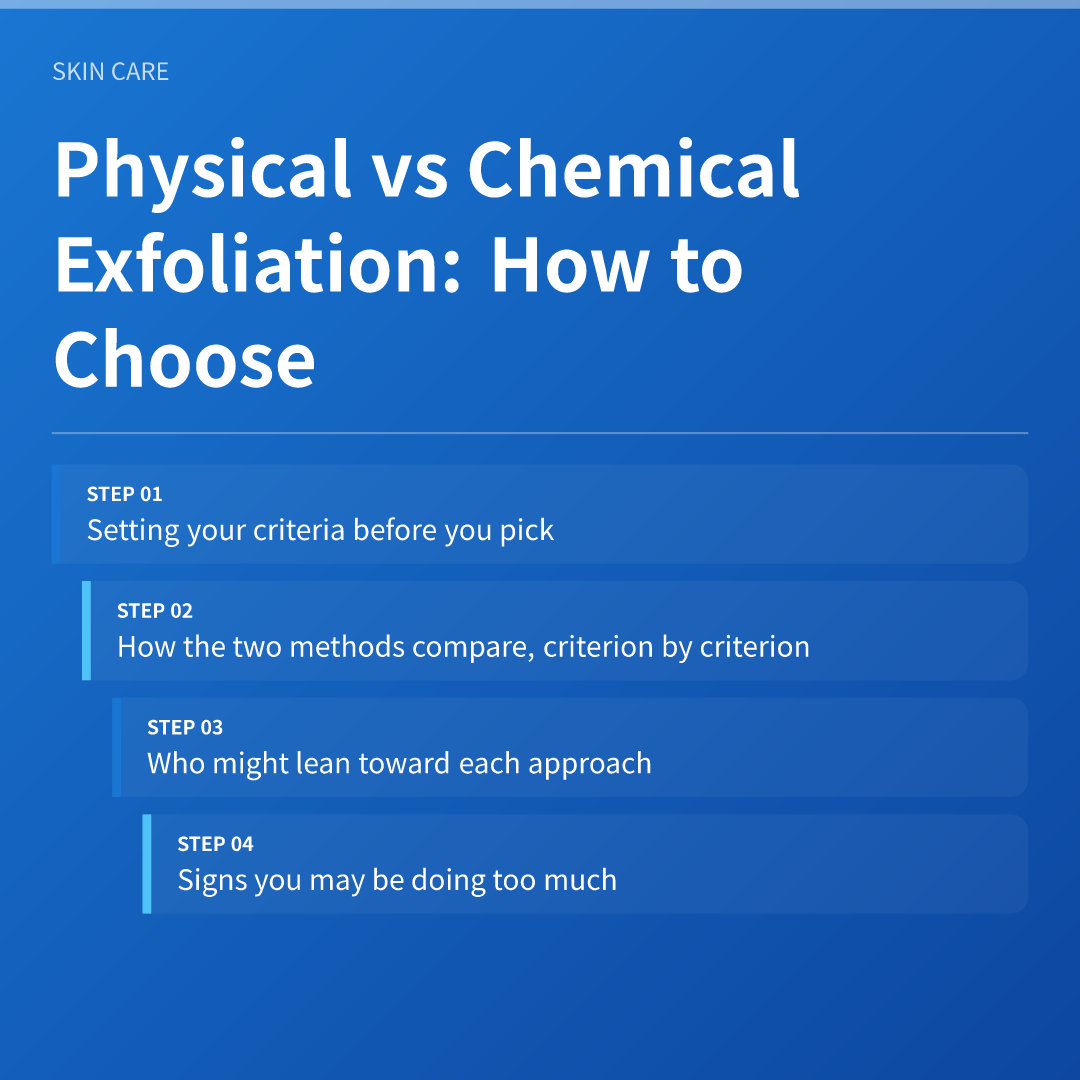
There are two broad families of exfoliants, and they behave differently.
- Physical exfoliants: scrubs, textured cloths, and brushes that work by manual friction.
- Chemical exfoliants: products with ingredients such as alpha hydroxy acids (AHAs), beta hydroxy acids (BHAs), or polyhydroxy acids (PHAs) that loosen the bonds between surface cells.
The word "chemical" can sound harsh, but it simply describes how the product works. Some people find acids gentler than gritty scrubs, while others find the opposite. Individual reactions vary.
Why more is not always better
It is tempting to think that if a little exfoliation helps, a lot will help more. In practice, repeated exfoliation can leave skin feeling tight, shiny, or stinging, which are common signs the barrier is under strain. Skin that is irritated often looks duller, not brighter, which defeats the purpose.
Another point worth knowing: exfoliated skin is often more sensitive to sun. The U.S. Food and Drug Administration has noted in its consumer guidance on alpha hydroxy acids that these ingredients may increase sun sensitivity, which is why daily sunscreen and sun protection habits are commonly discussed alongside them.
How often should different skin types exfoliate?
There is no single schedule that suits everyone, but general patterns can help you think it through. A common approach is to begin with a low frequency and watch how your skin responds over a few weeks before changing anything. Treat the descriptions below as broad starting points for discussion, not rules.
Dry or sensitive skin
Dry and sensitive skin usually tolerates less frequent exfoliation. Many people with these skin types prefer mild, low-strength options and give their skin plenty of recovery time between uses. Gritty scrubs are often considered a poor fit because the friction can aggravate an already fragile surface.
If your skin is prone to redness, stinging with new products, or conditions like eczema or rosacea, it is sensible to talk with a dermatologist before adding any exfoliant. Those conditions can make the barrier more reactive, and some exfoliants may worsen them.
Normal or combination skin
Normal and combination skin tends to be more flexible. Some people in this group use an exfoliant a few times in a typical week, while others do fine with less. The T-zone may tolerate more than the cheeks, so some people adjust by area rather than treating the whole face the same way.
Watching your skin matters more than following a calendar. If your skin looks calm and comfortable, that is generally a better sign than any number on a schedule.
Oily or acne-prone skin
Oily skin is often assumed to need aggressive exfoliation, but that is a common misconception. Over-scrubbing can irritate skin that is already inflamed, and irritation may make breakouts look worse. BHAs such as salicylic acid are widely used in products aimed at oily, congestion-prone skin, though they can be drying for some people.
If you have persistent or painful acne, the American Academy of Dermatology generally recommends seeing a dermatologist rather than relying on exfoliation alone. Some prescription acne treatments are already exfoliating, so adding more on top can cause trouble.
Mature skin
Mature skin often turns over more slowly, so some people reach for exfoliants to help with texture and dullness. At the same time, mature skin can also be drier and thinner, which means it may need a gentler hand. Mild acids paired with good moisturizing are a commonly discussed approach, but tolerance differs a great deal from person to person.
Related reading: How to Build a Simple Skincare Routine That Sticks
The face versus the body
Skin on the body is generally thicker than facial skin, so it can often handle firmer exfoliation. Even so, areas like the neck, underarms, and inner thighs can be more delicate. Skin that has been freshly shaved or waxed is another situation where extra caution is often advised.
How can you tell if you are exfoliating too much, and what should you do next?
The clearest answer is that your skin will usually tell you. Signs that you may be overdoing it often include stinging when you apply ordinary products, persistent redness, tightness, flaking, a shiny or waxy look, and new breakouts or rough patches. Skin that suddenly reacts to products it used to tolerate is another common clue.
If you notice these signs, many skincare resources suggest pausing exfoliation and simplifying your routine. That typically means a gentle cleanser, a moisturizer, and sun protection, giving the barrier time to settle. How long recovery takes varies, so patience is part of the process.
Common ways people accidentally overdo it
Overexfoliation rarely comes from a single product. It more often builds up from layering several active steps without realizing they overlap.
- Using a scrub, an acid toner, and an acid serum within the same routine.
- Combining exfoliants with retinoid products, which can also cause dryness and peeling.
- Pressing hard with a cloth or brush, thinking more pressure means better results.
- Switching to a stronger product without giving skin time to adjust.
- Exfoliating on top of sunburned, cracked, or already irritated skin.
Ingredient labels can be confusing, and many cleansers, masks, and treatments contain exfoliating acids without saying so prominently. Reading the full ingredient list helps you spot overlap.
When to get professional input
Some situations are better handled by a licensed professional than by trial and error. Consider speaking with a dermatologist or other qualified clinician if any of the following applies:
- Your skin is burning, blistering, swelling, or oozing after using a product.
- Irritation does not settle after you stop exfoliating.
- You have a diagnosed skin condition such as eczema, psoriasis, rosacea, or acne that needs treatment.
- You are using prescription topical products and are unsure how they interact with exfoliants.
- You are pregnant or nursing and want to check whether specific ingredients suit you.
- You have darker skin and are concerned about lasting dark marks after irritation.
Questions about how to use any medicated product, including how much and how often, are best directed to your prescriber or pharmacist and the product's printed instructions. This article cannot set those details for you.
Related reading: Skin Barrier Basics: What It Is and How to Look After It
Limits of what exfoliation can do
It helps to keep expectations realistic. Exfoliation may help the skin surface look smoother and can make other products feel like they spread more evenly, but it does not change your skin type, remove deep scars, or resolve underlying skin conditions. Results develop gradually and differ from person to person.
Cosmetic products are also not meant to treat disease. If something about your skin worries you, such as a mole that changes, a patch that will not heal, or a rash that keeps returning, a professional evaluation is the appropriate step rather than another exfoliant.
Frequently asked questions
Should I exfoliate before or after cleansing?
Exfoliation is generally discussed as something that follows cleansing, since the surface should be free of makeup and oil first. Specific product instructions can differ, so the label is the best guide for any particular item. If you are unsure how it fits with your other products, a pharmacist or dermatologist can help.
Is it fine to exfoliate in summer or when I have a tan?
Extra care is commonly advised in sunny conditions, because exfoliating products may make skin more sun sensitive according to the FDA's consumer information on alpha hydroxy acids. Sunburned or peeling skin is usually best left alone until it recovers. Daily sun protection is a widely recommended habit regardless of exfoliation.
Can I use a face exfoliant if I already use a retinoid?
Combining the two is a common source of dryness and irritation, so many people ask a professional before layering them. Retinoids already encourage surface turnover, and adding exfoliants on top can be too much for some skin. Your prescriber or pharmacist can advise on what suits your particular product and skin.
Disclaimer: This article is for informational purposes only and is not a substitute for professional medical advice, diagnosis, or treatment. Please consult a licensed professional for personal health decisions.