What Antioxidants in Skincare Do and Where They Fit
Antioxidant serums, creams, and even sunscreens have become hard to miss on store shelves and social feeds. Part of the attention comes from a broader interest in "protecting" skin from everyday environmental stress, and part comes from how many products now carry labels like vitamin C, vitamin E, niacinamide, or green tea extract. If you have ever stood in a skincare aisle wondering whether you need one of these, you are in good company.
What antioxidants in skincare do, in plain terms, is help counter the effects of unstable molecules called free radicals, which form when skin is exposed to things like ultraviolet light and pollution. Cosmetic antioxidants are generally described as supporting the skin's own defenses and helping skin look more even and healthy over time. They are not a medical treatment, they do not replace sun protection, and results vary from person to person.
Where antioxidants show up in everyday skincare

Antioxidants appear in several product types, which is part of why they can feel confusing. You will find them in daytime serums, moisturizers, eye creams, and some sunscreens. Some brands also add them to nighttime products, though the reasoning differs from one formula to the next.
Two everyday situations
Consider a hypothetical commuter who spends a lot of time outdoors and in city traffic. She notices her skin looks dull by afternoon and wonders whether a serum might help. Products with antioxidants are often marketed to people in her position, based on the idea that daily environmental exposure adds stress to skin.
Now consider a second, equally general scenario: someone with sensitive, easily flushed skin who is mostly indoors. He has heard about vitamin C but worries about stinging. His situation shows why the same ingredient category can feel very different depending on skin type, formula strength, and how well the skin tolerates new products.
Both examples are illustrations, not real cases, and they will come back in the sections below to show how context changes the picture.
Common antioxidant ingredients you may see on labels
- Vitamin C (ascorbic acid and its derivatives): widely used and often discussed for brightening and for supporting skin against environmental stress.
- Vitamin E (tocopherol): frequently paired with vitamin C in formulas and common in moisturizers.
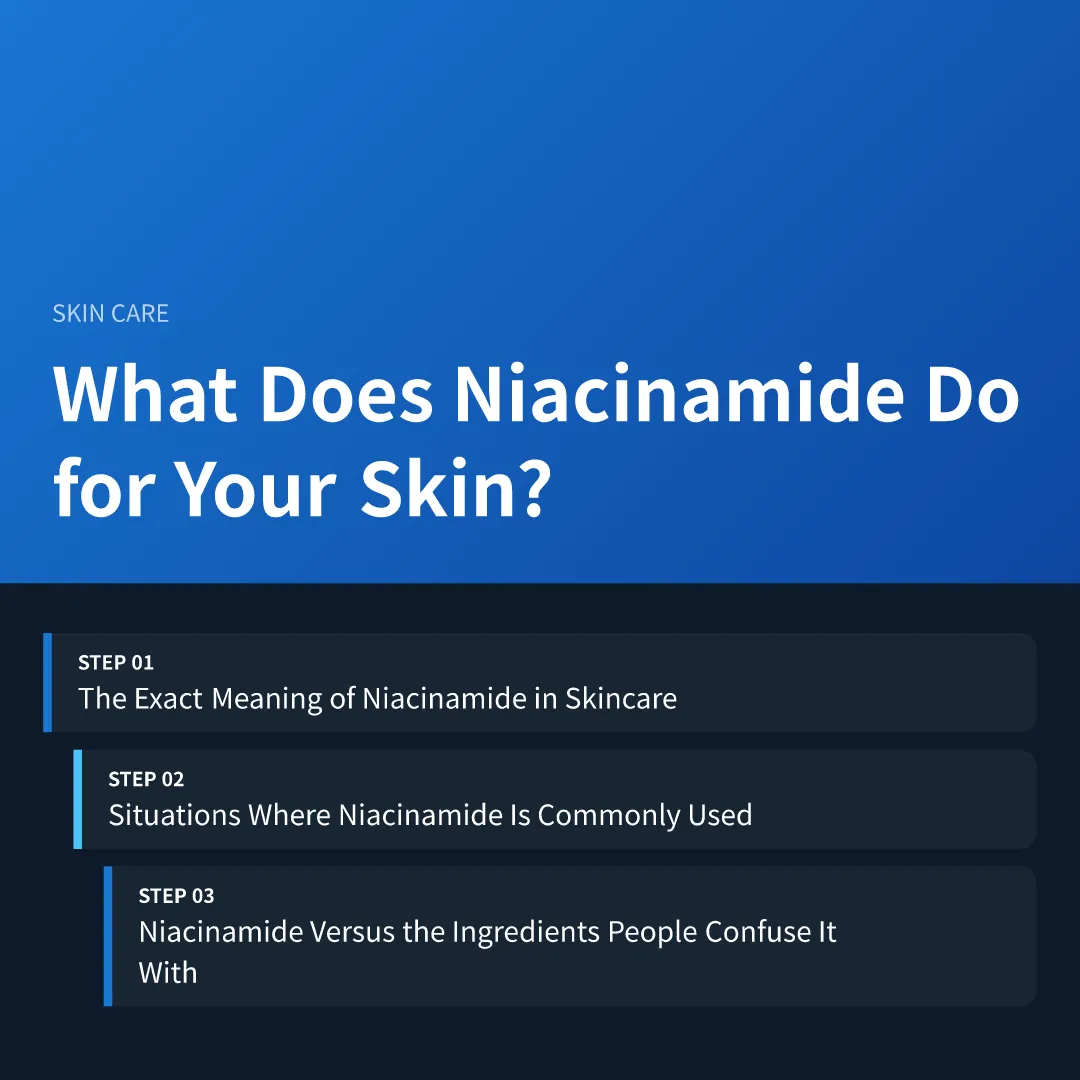
- Niacinamide (a form of vitamin B3): often described as supporting the skin barrier and a more even-looking tone. It is sometimes grouped with antioxidants, though people classify it differently.
- Green tea extract: a plant-based ingredient commonly included for its polyphenols.
- Resveratrol, ferulic acid, and coenzyme Q10: less familiar names that show up in more elaborate serums.
Related reading: How to Read Skincare Product Claims With Confidence
The core idea: free radicals and how antioxidants fit in
Skin constantly interacts with its surroundings. Ultraviolet light, pollution, and normal metabolism can all produce reactive molecules often called free radicals. According to the American Academy of Dermatology's general public guidance on skin care, protecting skin from sun exposure is a central part of caring for it, and antioxidants are sometimes discussed as a complementary layer rather than a substitute.
Antioxidants are substances that can neutralize some of these reactive molecules before they affect nearby cells. In a lab or in the body, this is a well-described chemical process. What is harder to say with certainty is how much a given cosmetic product changes real-world outcomes for any one person's face, since formulas, concentrations, and skin differ widely.
What they are commonly used for
In cosmetic contexts, antioxidant products are most often chosen to support a brighter-looking complexion, a more even-looking tone, and general skin resilience. Some people also use them hoping to soften the look of fine lines over time. Because these are cosmetic goals, the changes tend to be gradual and subtle rather than dramatic, and some people notice little difference.
Why formulation matters
Many antioxidants are unstable. Vitamin C in particular can break down when exposed to light and air, which is why you often see it in dark or airtight packaging. A product's pH, the form of the ingredient, and how it is stored can all affect how well it holds up. This is one reason two serums with the same headline ingredient can behave quite differently.
Ingredient lists alone cannot tell you how stable or well tolerated a formula is. Reading brand guidance on storage and shelf life is a reasonable habit, and a pharmacist or dermatology professional can help interpret products if you have questions.
The relationship with sunscreen
The U.S. Food and Drug Administration's consumer information on sunscreen emphasizes that sunscreen and other sun-protective habits are the main tools for reducing sun-related skin damage. Antioxidants are generally described as an extra step, not a replacement. A serum with antioxidants is not a substitute for broad-spectrum sunscreen, shade, or protective clothing.
How the picture changes depending on your situation
Antioxidant products are not one-size-fits-all. Skin type, existing conditions, climate, and the rest of a routine all shape how a product feels and whether it seems worthwhile.
The outdoor commuter
Our hypothetical commuter spends many hours in daylight and city air. For someone like her, antioxidant products are often discussed as one small piece of a wider routine that already includes sunscreen and gentle cleansing. She may prefer a lightweight serum that sits well under sunscreen and makeup.
Even so, she should expect gradual, modest changes at best. If she sees no difference, that is not unusual, and it does not mean something is wrong with her skin or her routine.
The person with sensitive skin
Our second example, with reactive skin, faces a different calculation. Some antioxidant formulas, especially those with higher concentrations or lower pH, can sting or cause redness for certain people. Fragrance, essential oils, and alcohol in a product can add to irritation.
People with sensitive skin often look for simpler formulas and introduce new products one at a time, so that a reaction is easier to trace. Patch testing is commonly mentioned in general skin care guidance, and following the product's own directions is important. If you have eczema, rosacea, or a history of allergic reactions, it is sensible to talk with a dermatology professional or pharmacist before adding something new.
Other factors worth thinking about
- Acne-prone skin: some people find lightweight antioxidant serums fit well, while heavier creams may feel too rich. Individual response varies.
- Dry skin: antioxidants in a moisturizing base may feel comfortable, but the base formula often matters more than the antioxidant itself.
- Pregnancy or nursing: ingredient questions are best taken to an obstetric care provider or pharmacist, since individual guidance differs.
- Prescription skin products: if you already use prescribed topical treatments, ask your prescriber how other products might interact with them.
Common misunderstandings about antioxidant skincare
Because the term sounds scientific and reassuring, it attracts some myths. A few are worth clearing up.
"More antioxidants always means better skin"
Stacking several antioxidant products does not automatically multiply benefits. Layering too many active ingredients can increase the chance of irritation, especially for people with sensitive skin. More is not necessarily better, and a simple routine that you can stick with is often more practical than a complicated one.
"Antioxidants replace sunscreen"
This is one of the most common mix-ups. Antioxidants may support the skin's defenses, but they do not block ultraviolet light the way sunscreen does. Public health guidance from agencies like the FDA and the American Academy of Dermatology consistently puts sun protection first.
"Natural antioxidants are automatically gentler"
Plant-derived does not mean non-irritating. Some botanical extracts and essential oils are common triggers for contact reactions in sensitive people. A "natural" label is a marketing term, not a guarantee about how your skin will respond, and reactions vary from person to person.
"You will see results right away"
Cosmetic antioxidants are typically used over time, and any visible changes tend to be gradual. Expecting dramatic, quick transformations often leads to disappointment or to overusing products. Realistic expectations help, and a professional can talk through what is reasonable for your skin.
"A food-based antioxidant claim means the same thing for skin"
Antioxidants in food and antioxidants applied to the skin are not interchangeable. A varied, balanced diet is a general part of overall wellbeing, but it does not mean a particular food will change the look of your skin in a predictable way. Likewise, a topical product is not a stand-in for eating well.
"If it tingles, it must be working"
Stinging, burning, or lasting redness is generally a sign to pause rather than a sign of effectiveness. Persistent discomfort is worth mentioning to a pharmacist or dermatology professional.
Related reading: Morning vs Evening Skincare Routine: How to Choose What Fits You
Putting it together
Antioxidant products can be a reasonable, optional addition to a routine, particularly for people who already protect their skin from the sun and want a little extra support. They are best understood as supportive cosmetic ingredients, not treatments for skin conditions. The formula, packaging, and your own skin type all influence how a product feels and performs.
When choosing one, it helps to look at the whole routine rather than a single ingredient. Consider how a product fits with your sunscreen, cleanser, and moisturizer, and think about introducing new items gradually. Labels, brand storage guidance, and a pharmacist's input can all help you make a more comfortable decision.
When to talk with a professional
It is worth seeking advice from a licensed dermatology professional or pharmacist if any of the following apply:
- You have persistent redness, burning, itching, or swelling after using a product.
- You have a diagnosed skin condition such as eczema, rosacea, or psoriasis and are unsure how new products might interact.
- You are using prescription topical treatments and want to add something else.
- You notice a changing mole, a sore that does not heal, or any other skin change that concerns you. These should be evaluated rather than managed with cosmetics.
- You are pregnant, nursing, or managing a health condition and have ingredient questions.
Short conclusion
Here is the quick version of what antioxidants in skincare do and how to think about them:
- They are ingredients commonly used to support skin against everyday environmental stress, and any cosmetic changes tend to be gradual and vary by person.
- They complement, but never replace, sunscreen and other sun-protective habits.
- Skin type, formula stability, and your existing routine all shape whether a product suits you, so a professional is the right person to ask when something feels off.
Disclaimer: This article is for informational purposes only and is not a substitute for professional medical advice, diagnosis, or treatment. Please consult a licensed professional for personal health decisions.