What Does pH Balanced Mean on a Cleanser?
Flip over almost any face wash these days and you will find some version of "pH balanced" printed near the front. It has become one of those phrases that sounds reassuring even if most of us could not say exactly what it refers to. Social media routines, ingredient breakdowns, and the general rise of "barrier care" talk have pushed the term into everyday shopping conversations.
In short, a pH balanced cleanser is a face wash formulated so its acidity or alkalinity sits in a range considered gentle for skin, which is typically slightly acidic. The label describes how the product was made, not a promised outcome for your skin, and it is not a regulated claim with a single fixed number behind it. Below is a plain-language look at where the phrase comes from, what it can and cannot tell you, and how it plays out for different skin types.
Where the Term Shows Up and Why People Care
The phrase appears most often on gentle gel, cream, and foam cleansers, and it is especially common on products aimed at dry, sensitive, or reactive skin. Brands use it as shorthand for "this will not feel harsh." Shoppers, in turn, use it as a quick filter when they are overwhelmed by shelves of options.
Two everyday situations show why the label matters to people. Imagine a first scenario: someone with tight, slightly flaky cheeks notices that their old bar soap leaves their face feeling squeaky clean and uncomfortable. They start reading labels and gravitate toward anything that says pH balanced, hoping for something milder.
Now picture a second, quite different scenario: someone with an oily T-zone who wears sunscreen and makeup daily. They want a cleanser that removes buildup but do not want that stripped feeling by mid-afternoon. They also see the phrase and wonder whether it is actually meaningful for their needs or just marketing language.
Both examples are hypothetical, but they reflect questions that come up constantly. Keep them in mind, because they help show how the same label can mean different things in practice.
Related reading: How to Choose a Cleanser for Hard Water Skin
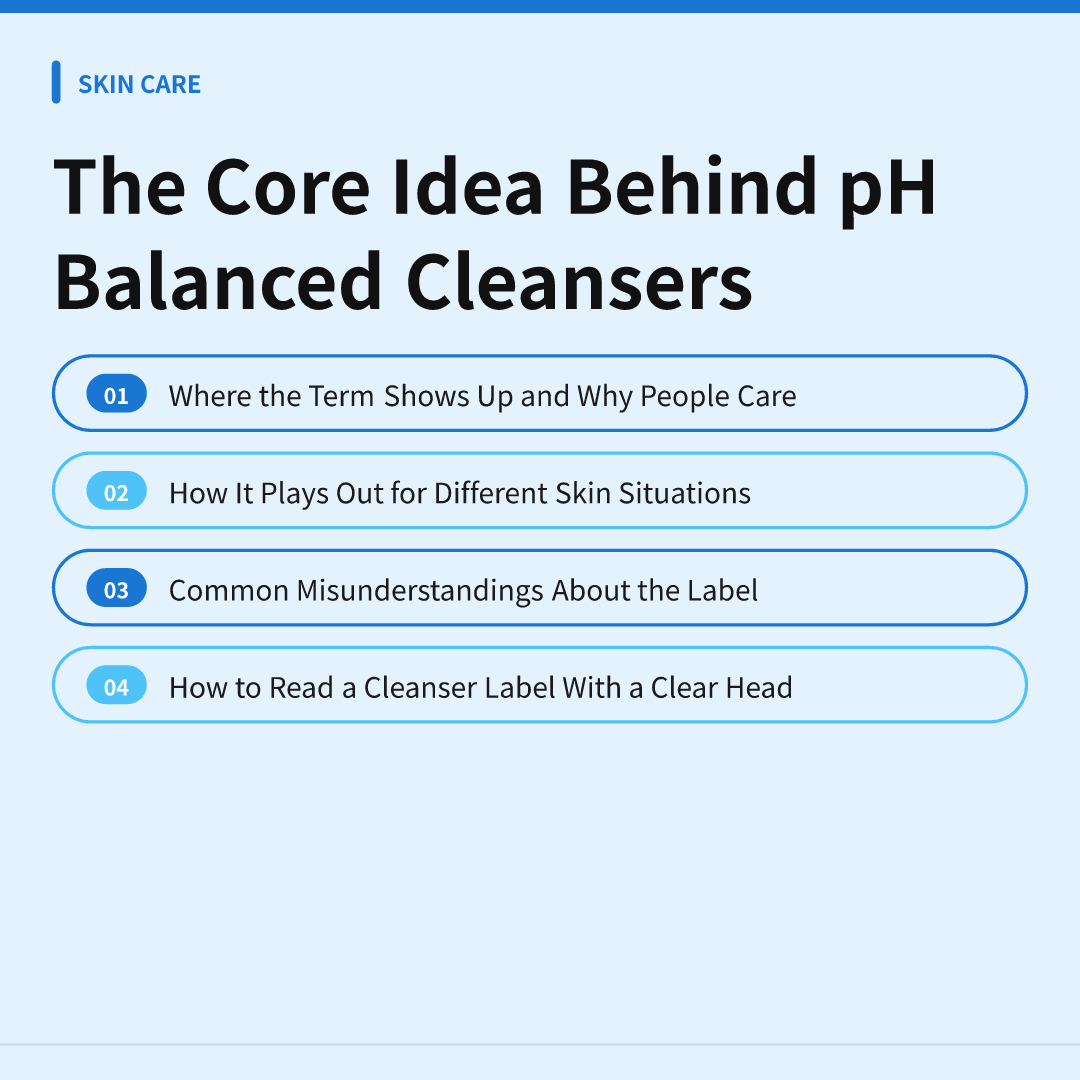
The Core Idea Behind pH Balanced Cleansers
A quick refresher on pH
pH is a scale used to describe how acidic or alkaline a water-based substance is. Lower values are more acidic, higher values are more alkaline, and the middle of the scale is considered neutral, like pure water. It is a general chemistry concept used in everything from cooking to swimming pools.
Why skin's acidity gets mentioned
Skin's surface is generally described as slightly acidic. This mildly acidic environment is often called the acid mantle, a term widely used in skincare discussions to describe the thin, protective film on the skin's surface. According to general information from the American Academy of Dermatology, gentle cleansing is a common part of caring for skin without unnecessarily disrupting its outer layer.
Many traditional soaps are made through a process that tends to produce a more alkaline product. Because of that, they can feel stripping to some people, particularly those with dry or sensitive skin. A pH balanced cleanser is made to avoid that jump, usually by using different cleansing agents and by adjusting the formula toward the slightly acidic side.
What the label actually communicates
When a brand says "pH balanced," it generally means the formula was adjusted to a range considered compatible with skin. There is no single universal definition printed on the bottle, and the claim is not a promise of how your skin will respond. Think of it as a design intention rather than a performance promise.
It also does not tell you about the rest of the formula. A cleanser can have a skin-friendly pH and still contain fragrance, essential oils, or other ingredients that irritate a particular person. The label speaks to one property, and skin reactions depend on many.
How It Plays Out for Different Skin Situations
Dry or sensitive skin
Returning to our first scenario, someone with tight, easily irritated skin may find that a mild, low-foaming cleanser feels more comfortable than a harsher wash. Many people in this group appreciate formulas that avoid heavy fragrance and strong surfactants. A pH balanced label can be a helpful starting clue, though it works best alongside a short ingredient list and a patch test on a small area.
If skin is already red, burning, or cracking, a cleanser label will not solve the underlying issue. That is the time to talk with a dermatologist or other qualified professional rather than swapping products repeatedly.
Oily or acne-prone skin
In the second scenario, the person with an oily T-zone may reasonably want a cleanser that feels thorough. A pH balanced formula can still clean effectively, because the pH does not determine how well the product lifts away sunscreen, sebum, or makeup. Cleansing strength depends more on the type and amount of surfactants and on whether an oil-based or double-cleansing step is involved.
Some people with oily skin find gentle formulas perfectly adequate. Others feel they need something a bit more clarifying. Both preferences are common, and neither is wrong. If breakouts are persistent, painful, or leaving marks, a skin professional can discuss options that go beyond cleanser choice.
Mature, combination, and everyday skin
For many people with fairly balanced skin, the pH label is simply a nice-to-have rather than a deciding factor. Texture, scent, how the cleanser rinses off, and how skin feels afterward often matter more in daily use. Climate and season also play a role, since the same face wash may feel perfect in humid months and too drying in cold, dry weather.
Related reading: Skincare Routine for Sensitive Skin: Build It Around Habits You Already Have
Makeup, sunscreen, and heavier products
Water-resistant sunscreens and long-wear makeup are often removed more comfortably with a dedicated first step, such as a cleansing oil or balm, followed by a gentle water-based wash. A pH balanced cleanser fits naturally into that second step. The key point is that the label does not replace thoughtful removal of heavier products.
Common Misunderstandings About the Label
Because the phrase sounds scientific, it tends to attract a few persistent myths. Clearing them up can save money and frustration.
- "pH balanced means neutral." Not necessarily. Skin is generally described as slightly acidic, and neutral sits in the middle of the scale. A product labeled pH balanced is usually aiming near skin's range, not at pure neutrality.
- "It will never irritate me." Reactions vary from person to person. Fragrance, preservatives, botanical extracts, and other ingredients can bother some skin regardless of pH.
- "It repairs my skin barrier." A cleanser is designed to clean. A gentle one may be less likely to disturb the skin's surface, but cleansing products are rinsed off and are not generally positioned as repair treatments.
- "Every pH balanced cleanser is basically the same." Formulas differ widely in texture, cleansing agents, scent, and added ingredients. Two products with the same label can feel very different on the skin.
- "If a cleanser leaves skin tight, that means it is working." A squeaky or tight feeling is often a sign that a product may be too stripping for that person, although preferences and tolerance differ.
- "I should test my skin's pH at home." Strips and gadgets are sold for this, but readings can be hard to interpret, and they are not a substitute for paying attention to how your skin looks and feels over time.
Another subtle point: a product's pH can matter more for leave-on items, such as exfoliating acids, where acidity is part of how the formula works. For a cleanser that spends a short time on the face before being rinsed away, the pH is one factor among many rather than the whole story.
How to Read a Cleanser Label With a Clear Head
Rather than relying on one phrase, it helps to look at the whole package. Check the ingredient list for things you already know bother you, such as certain fragrances or botanical extracts. Notice whether the product is described for your general skin type, and whether the brand offers a clear way to contact them with questions.
A patch test on a small area, like the inner forearm or behind the ear, is a commonly mentioned precaution before adding something new. The U.S. Food and Drug Administration notes in its general consumer guidance that cosmetics are not subject to the same pre-market approval as drugs, which is one more reason to read labels carefully and pay attention to your own reactions. If a product causes ongoing discomfort, stopping its use and speaking with a qualified professional is the sensible next step.
It also helps to give any new product a fair, calm trial instead of changing several things at once. When multiple products change together, it becomes nearly impossible to tell which one is responsible for a reaction, good or bad.
When to Talk With a Professional
A cleanser is a small part of skin health, and some concerns go beyond what any label can address. Consider reaching out to a dermatologist or other licensed professional if you notice any of the following:
- Persistent redness, burning, stinging, or swelling after cleansing
- Rashes, blistering, or skin that cracks or weeps
- Breakouts that are painful, deep, or leave lasting marks
- A known condition such as eczema, rosacea, or psoriasis, where product choices may need individual guidance
- Skin changes that seem sudden or unusual for you
A professional can look at your skin in person, consider your history, and talk through products and routines that suit your situation. That kind of individualized guidance is something an article cannot offer.
Wrapping Up: What pH Balanced Means for Your Face Wash
So, what does pH balanced mean on a cleanser? It points to a formula adjusted toward skin's naturally slightly acidic range, usually with the aim of feeling gentler than traditional alkaline soaps. It is a useful clue, but it is neither a regulated claim nor a promise of how your skin will behave.
- The phrase describes how a cleanser was formulated, not a promised result, and definitions are not identical across brands.
- Fragrance, surfactants, and other ingredients still influence comfort, so pH works best as one clue among several.
- Skin types and conditions differ, so persistent irritation or breakouts are worth discussing with a qualified professional.
Disclaimer: This article is for informational purposes only and is not a substitute for professional medical advice, diagnosis, or treatment. Please consult a licensed professional for personal health decisions.