Why Skin Feels Tight After Washing: Real Causes
The most common explanation for why skin feels tight after washing is that your skin is simply "dry," but that label usually misses the real story. In general, tightness tends to come from a stressed skin barrier, the stripping of surface oils, and water loss, and these can happen even in people with oily skin. Understanding the difference helps you choose gentler habits and recognize when a tight, uncomfortable feeling deserves a closer look from a professional.
That squeezed, shrink-wrapped sensation is one of the most frequent complaints in skin care. It is also easy to misread, because it can feel like a sign of "clean" skin to some people and a sign of damage to others. This article pairs the popular myths with what is generally understood, so you can sort out which explanation fits your situation.
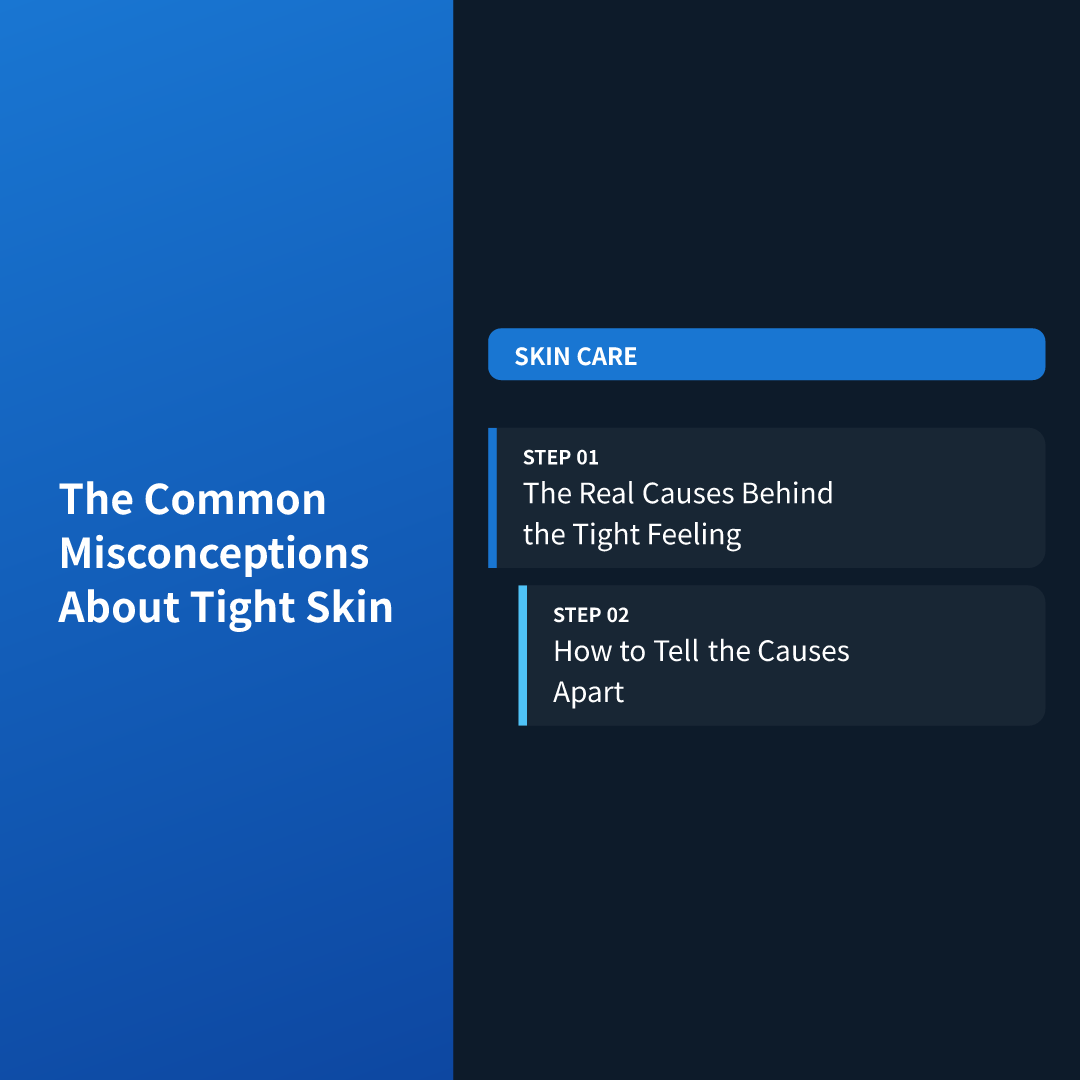
The Common Misconceptions About Tight Skin
Before looking at real causes, it helps to clear away a few beliefs that circulate widely. Each one contains a grain of truth, which is why they stick around, but each also leaves out something important.
Myth: Tight skin means you have dry skin type
Many people assume that tightness proves a dry skin type. In reality, a skin type describes your usual oil production, while tightness describes a temporary state right after cleansing. Someone with an oily or combination complexion can feel just as tight after a harsh wash, because the cleanser removed oils faster than the skin could handle.
This is why skin type and skin condition are often treated as separate ideas. Skin type is relatively stable, while condition shifts with weather, products, stress, and habits. A person can have an oily skin type and a dehydrated, irritated condition at the same time.
Myth: That tight feeling means the skin is squeaky clean
Some people grew up believing that a "squeaky" finish is proof a cleanser is working well. Generally speaking, that feeling points to the removal of more than dirt. Surface lipids that help keep skin comfortable may be stripped along with it, and the skin can feel taut as a result.
Clean skin should not necessarily feel stretched or squeaky. Many people find that skin feels comfortable and soft after washing when the cleanser removes makeup, sweat, and sunscreen without overdoing it. Comfort is usually a more useful signal than squeakiness.
Myth: Tightness only happens because of a bad product
It is tempting to blame one cleanser and move on. Sometimes a product really is a poor match, but habits around the product matter too, including water temperature, how long you wash, and how you dry your face. Switching cleansers without changing the rest of the routine may not solve the problem.
The Real Causes Behind the Tight Feeling
Several mechanisms often work together. Rather than one single culprit, tightness is frequently the combined result of a few small stressors adding up.
Surfactants that remove too much oil
Cleansers contain surfactants, which are ingredients that lift oil and debris so water can rinse them away. Some surfactants are stronger than others, and stronger formulas can also strip the natural lipids that help the skin hold onto moisture. Many foaming cleansers are formulated to give a rich lather, and some people find that very foamy products feel more drying than creamy or lotion-like ones.
Formulas differ widely, so a gentle-sounding label does not guarantee a gentle experience for every person. Ingredient lists and personal reactions both matter. If you want to understand more about reading labels,
A disrupted skin barrier
The outermost layer of skin works like a protective wall, helping keep water in and irritants out. According to the American Academy of Dermatology's general skin care guidance, gentle cleansing and moisturizing are commonly recommended to support the skin's protective function. When the barrier is compromised, skin tends to lose water more easily, and the result can be tightness, rough texture, or stinging.
Barrier disruption can come from over-cleansing, frequent exfoliation, strong active ingredients, or environmental stress. It often builds gradually, so people may not connect today's tightness with last week's new product.
Hot water and long washing times
Very hot water is a well-known contributor to dryness. Heat can dissolve more of the skin's surface oils, and a long, steamy wash may leave the face feeling stretched afterward. Lukewarm water is generally considered gentler for facial skin.
Many people enjoy hot showers, especially in cold weather, and that is understandable. Keeping the face away from the hottest stream, or washing it separately at the sink, is a small change some people find more comfortable.
Hard water and mineral residue
In some regions, tap water contains higher levels of minerals. The U.S. Geological Survey describes hard water as water with a high mineral content, and some people report that their skin feels different in hard-water areas. Research on the exact link between water hardness and skin comfort is still developing, so it is best treated as one possible contributor rather than a proven cause.
Low humidity and weather
Dry indoor air, winter wind, and air conditioning all pull moisture from the skin surface. A cleanser that feels fine in a humid season may feel too drying when the air turns dry. Because of this, many people adjust their routine across seasons rather than using the same products year-round.
Too many actives in the routine
Retinoids, exfoliating acids, benzoyl peroxide, and similar ingredients are widely used, and they can also make skin more reactive. When a cleanser is added on top of these, the skin may feel tight even if the cleanser alone would have been fine. People who use several active products often notice tightness first after washing, because the barrier is already under strain.
If you use a prescription product, how it fits with your cleanser is a question for your prescriber or pharmacist rather than something to adjust on your own.
Skipping moisturizer afterward
Cleansing removes some of the oils and water-binding surface components, and moisturizer is commonly used to help replace that comfort. Leaving the skin bare after washing can make the tight sensation last longer. Moisturizers differ in texture and ingredients, and what suits one person may feel heavy or irritating to another.
How to Tell the Causes Apart
Because several factors overlap, sorting them out is partly a matter of observation. The goal is not to diagnose yourself, but to notice patterns you can describe if you later talk to a professional.
Notice when the tightness appears
If skin feels tight only immediately after washing and eases as it settles, the cleanser or water temperature may be a bigger factor. If it stays tight for hours or feels worse by evening, the barrier may be more strained. Pay attention to whether the feeling shows up after every wash or only in certain situations.
Look at what else has changed
Recent changes are often the clue. Ask yourself whether you started a new cleanser, added an exfoliating product, changed seasons, traveled to a place with different water, or began a new medication. A change that happened a week or two before the tightness began is worth noting.
Watch for accompanying signs
Tightness alone is common and usually mild. Tightness together with other signs points to a different level of concern:
- Stinging or burning when applying ordinary products often suggests a stressed barrier.
- Visible flaking or rough patches may reflect ongoing dryness or irritation.
- Redness that lingers can come from irritation and, in some cases, from skin conditions that need a professional opinion.
- Itching or a rash may suggest a reaction to an ingredient.
Consider the difference between dryness and dehydration
These two words are often used interchangeably, but they are generally described differently. Dry skin usually refers to a shortage of oil, while dehydrated skin refers to a shortage of water, and skin can be oily and dehydrated at once. This is one reason an oily-skinned person can feel tight and still notice shine by midday.
When to seek professional care
Persistent tightness that does not improve after you simplify your routine deserves attention. So do cracked or painful skin, a spreading rash, swelling, signs of infection, or discomfort that interferes with daily life. The American Academy of Dermatology notes that a board-certified dermatologist can evaluate ongoing skin concerns, and conditions such as eczema, rosacea, or contact dermatitis can look similar to simple dryness at first.
If you are unsure whether a product reaction is behind the problem, a pharmacist or clinician can help you think through which products to pause and what to ask. A written list of the products you use is often helpful to bring along. For more on building a calmer routine, gentle skin care routine basics
Limits of at-home observation
It helps to be realistic. Noticing patterns can point you toward likely contributors, but it cannot confirm a cause, and individual skin varies a great deal. What soothes one person may do little for another, so results differ, and changes usually take time to show.
Frequently asked questions
Is a tight feeling after washing always a sign of damaged skin?
No, a brief tight feeling does not always mean lasting damage. Mild tightness can come from a single wash with warm water or a stronger cleanser and may settle on its own. If it happens regularly, comes with stinging or redness, or lingers, it is more likely a sign the barrier is under stress.
Can oily skin feel tight after cleansing?
Yes, oily skin can feel tight after cleansing. Oil production and water content are separate, so a person can have shiny skin that is still dehydrated or irritated. Over-washing to control oil can sometimes make the tight feeling more noticeable.
Does the type of water I wash with really matter?
It may matter for some people, though the evidence is not settled. Water temperature is generally the more commonly discussed factor, and hot water tends to be less comfortable for the face. Mineral content in local water is another possible influence, and experiences differ from person to person.
Should I stop using my cleanser if my skin feels tight?
Not necessarily, because the cleanser may not be the only cause. Looking at water temperature, other active products, and seasonal changes can give a clearer picture. If you are using prescription or medicated skin products, check with a pharmacist or clinician before changing anything.
Disclaimer: This article is for informational purposes only and is not a substitute for professional medical advice, diagnosis, or treatment. Please consult a licensed professional for personal health decisions.