Double Cleansing Explained: What It Is and Who Needs It
You wash your face at night, wipe your eyelid, and the cotton pad comes away with a smudge of mascara you thought was gone. Or you see "oil cleanser first, then a water-based one" on a product page and wonder if that is a real routine or just a way to sell two bottles. Double cleansing explained simply: it means using an oil-based cleanser first to loosen makeup, sunscreen, and oily buildup, then a water-based cleanser to rinse away what remains, and it suits some people far more than others.
The idea became popular through Korean and Japanese beauty routines, but it is a technique rather than a rule. Whether it earns a place in your evening depends on what you wear, how your skin behaves, and how it feels afterward.
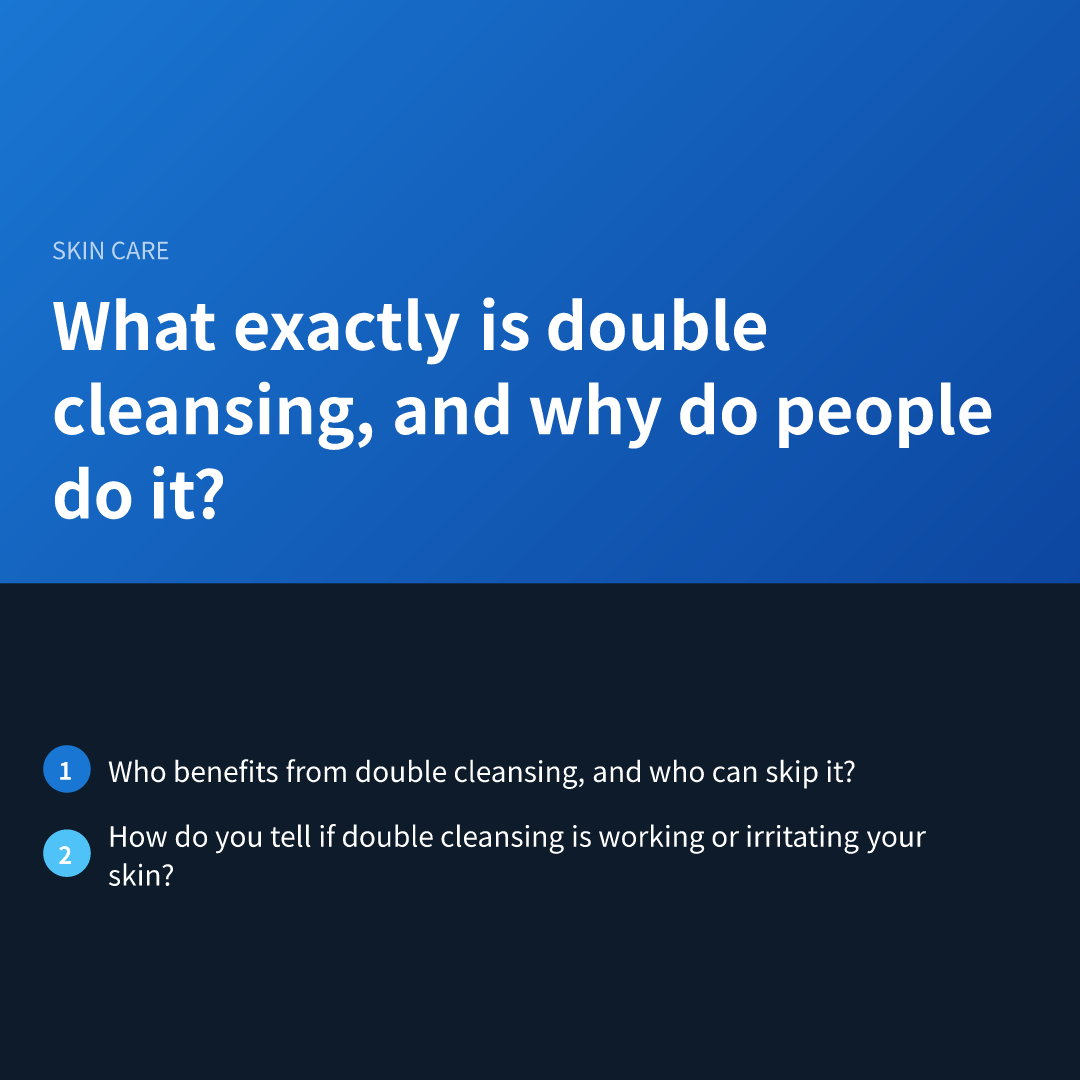
What exactly is double cleansing, and why do people do it?
It is a two-step wash done in one session. The first step uses an oil-based product, such as a cleansing oil, balm, or oil-based milk, and the second uses a water-based cleanser, such as a gel, foam, or cream formula. The first step targets what water struggles to lift, and the second targets what oils leave behind.
The reasoning rests on a basic principle of chemistry: like dissolves like. Many sunscreens, long-wear foundations, and waterproof mascaras are built with oils, silicones, or film-forming ingredients that cling to skin. A cleanser with an oil base can bind to those ingredients more readily than a watery formula can. The water-based step then handles sweat, residue from the first cleanser, and other water-soluble debris.
The two steps, in plain terms
- Step one, the oil-based cleanser: designed to break up makeup, sunscreen, and sebum. Texture varies from liquid oil to solid balm to a milky emulsion.
- Step two, the water-based cleanser: designed to rinse away leftover residue so skin does not feel coated. Gentle, low-foaming formulas are common here.
Product directions differ by brand, formula, and skin type, so the label is the best guide for how much to use and how long to massage. If you are using a prescription or medicated product elsewhere in your routine, a pharmacist or clinician can help you decide how cleansing fits around it.
Where the idea gets oversold
Marketing sometimes implies that two cleansers are automatically better than one, or that skipping the first step leaves skin "dirty." That is not how it works for everyone. Skin does not need to be stripped to be clean, and a single well-chosen cleanser is enough for many people on days with little or no makeup.
Double cleansing also cannot change your skin's underlying tendencies. It does not treat acne, correct pigmentation, or reshape pores, and cosmetic cleansing has limits. If a concern is persistent, a dermatologist is the right person to ask.
Who benefits from double cleansing, and who can skip it?
People who wear water-resistant sunscreen, full-coverage makeup, or waterproof eye products are the most common candidates. Those products are made to stay put through sweat and humidity, which also makes them harder to remove with one quick wash. Anyone who finds that a single cleanser leaves a film or a faint trace on a pad may reasonably try a two-step approach.
On the other side, many people with dry, sensitive, or reactive skin find two cleansing steps to be more than they need. If you wear little or no makeup and a light sunscreen, one gentle cleanser is often enough. It is also fine to double cleanse only on days when your skin has more to remove.
Skin types and common considerations
- Oily or combination skin: some people with oily skin like an oil-based first step, since it can feel counterintuitive but is often well tolerated. Others find it heavy. Individual response varies.
- Dry skin: the oil-based step may feel comfortable, but a second, harsh foaming wash can undo that. A mild second cleanser tends to suit this group better.
- Sensitive or acne-prone skin: fragrance, essential oils, and certain heavy oils can bother some people. Patch testing a new product on a small area is a common precaution, and reactions vary from person to person.
- Mature skin: there is no age requirement either way. The deciding factor is what is on your face and how it feels afterward.
According to the American Academy of Dermatology's general skin care guidance, gentle cleansing and avoiding harsh scrubbing are widely recommended for most skin types. That supports a "less aggressive is usually better" mindset, whether you use one cleanser or two.
Situations that call for extra care
If your skin has an active condition such as eczema, rosacea, or a flare of acne, adding cleansing steps may not help and can sometimes add irritation. People using prescription topicals or in-office treatments have specific instructions from their prescriber, and those take priority over general routines. When in doubt, a dermatologist or pharmacist can say how cleansing should fit with what you already use.
Related reading: What Essence Means in Skincare and How It Fits Your Routine
How do you tell if double cleansing is working or irritating your skin?
Skin that feels comfortable, looks calm, and is not tight or stinging after you rinse is generally a good sign. Skin that feels squeaky, tight, hot, or itchy suggests the routine may be too much. There is no single "right" feeling for everyone, but comfort is a reasonable thing to pay attention to.
Cleansing is meant to remove product and debris, not to strip skin completely. The skin barrier, the outer layer that helps hold in moisture and keep out irritants, can be disrupted by over-washing, hot water, rough scrubbing, or harsh surfactants. When that happens, people often notice dryness, redness, stinging with products that used to feel fine, or an increase in flaking.
Signs your routine may be too much
- Tightness or a "squeaky clean" feeling after rinsing
- New redness, stinging, or burning when applying ordinary products
- Flaking or rough patches that were not there before
- Breakouts that seem to increase after adding a new cleanser
These signs are not a diagnosis of anything. They are simply cues that it may be worth simplifying: for example, switching to one cleanser, trying a gentler second step, or reserving the first step for makeup days. Making one change at a time makes it easier to see what is actually helping or bothering you.
Common mistakes that cause trouble
One frequent issue is pairing a gentle oil cleanser with a strong, stripping second cleanser, which cancels out the comfort of the first step. Another is rubbing hard around the eyes, where skin is thin and delicate. Hot water can add to dryness, and lukewarm water is a more common recommendation.
Leftover residue is another quiet problem. If an oil or balm is not rinsed well, it can leave a film that some people feel contributes to congestion or irritation. Thorough rinsing, and a second step that actually removes what the first left behind, is the whole point of the method.
When to involve a professional
Persistent burning, swelling, blistering, widespread rash, or discomfort that does not settle after you stop a product deserves professional attention rather than more experimenting. The same applies to breakouts that are painful, scarring, or not responding to over-the-counter care. A dermatologist or other qualified clinician can assess what is going on and advise on next steps. The U.S. Food and Drug Administration also notes in its general cosmetics guidance that consumers who have a bad reaction to a cosmetic product can report it, which is worth knowing if a product seems to be the cause.
Related reading: What Ceramides Do for Skin and the Barrier
Frequently asked questions
Can I double cleanse in the morning too?
Most people do not need to, since the main reason for the first step is removing makeup and sunscreen from the day. In the morning, skin usually has only overnight oil and any leftover products, which a single gentle cleanser or even a water rinse often handles. Preferences vary, and some people with very oily skin like a more thorough wash.
Do I need a dedicated cleansing oil, or can a balm or milk work?
Oils, balms, and oil-based milks all follow the same principle, so the choice often comes down to texture and how your skin reacts. Balms can feel richer, oils can feel lighter, and milks may suit people who dislike a greasy feel. Ingredient lists matter if you are sensitive to fragrance or particular botanical oils, so checking labels or asking a pharmacist is reasonable.
Is double cleansing the same as using a makeup remover wipe first?
Not really, although both aim to lift makeup before a regular wash. Wipes rely on friction and a pre-soaked formula, and some people find they can be rough on skin, especially around the eyes. An oil-based cleanser is usually massaged on and rinsed off, which many people find gentler, though individual experience varies.
Disclaimer: This article is for informational purposes only and is not a substitute for professional medical advice, diagnosis, or treatment. Please consult a licensed professional for personal health decisions.