What Ceramides Do for Skin and the Barrier
You stand in the skincare aisle holding a moisturizer that proudly says "with ceramides," and you wonder whether that word means anything or is just label decoration. Maybe your cheeks feel tight after washing, or your skin stings when you try a new product, and someone mentioned ceramides as the fix. What ceramides do for skin, in short, is act as part of the fatty "mortar" that helps hold the outer layer together, which supports moisture retention and barrier comfort, though results vary from person to person.
Below, the questions are arranged from simple to more detailed: what ceramides are, how they relate to the skin barrier, and how to think about them in products without overpromising. This is general information from an editor's point of view, not personal medical advice.
What exactly are ceramides?
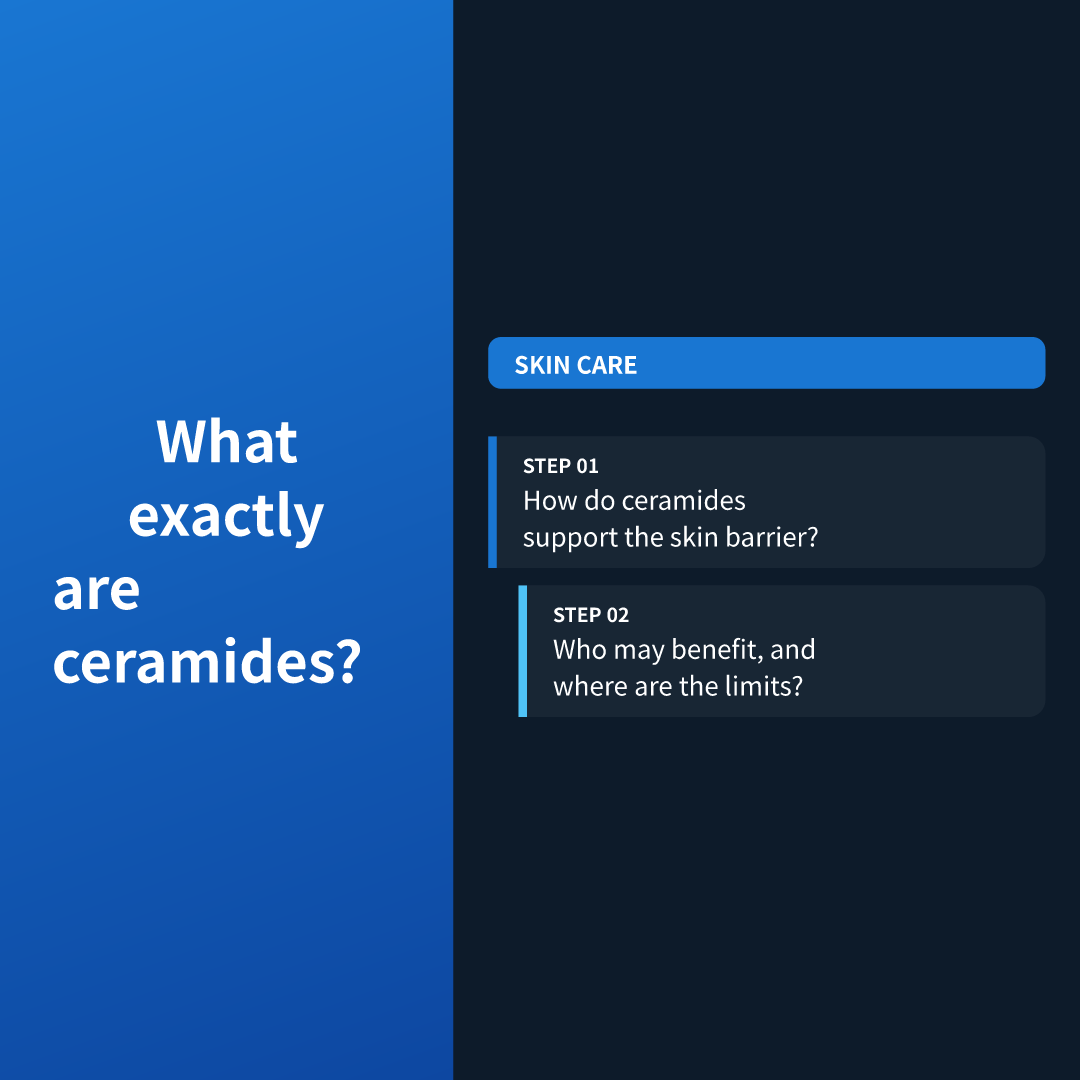
Ceramides are waxy lipids, a type of fat-like molecule, that occur naturally in the outermost layer of skin. Together with other lipids such as cholesterol and fatty acids, they help form the structure between skin cells.
A common way to picture it is a brick wall. The skin cells are the bricks, and the lipids, including ceramides, are the mortar that fills the gaps. When that mortar is well maintained, skin tends to hold water more comfortably and feel less reactive.
Your body makes its own ceramides, so they are not an exotic extra. Skincare brands simply include versions of these lipids in creams and lotions, either ones that mimic the skin's own or ones derived from other sources.
Are all ceramides on ingredient labels the same?
Not exactly. On labels you may see names such as ceramide NP, ceramide AP, or ceramide EOP, and older naming like ceramide 3, 6-II, or 1. These refer to different structural types that appear in skin.
Some products also list phytosphingosine or similar related ingredients, which are building blocks connected to ceramide production. Whether one type performs better than another for a particular person is not something a label can tell you, so it is wise to treat the names as descriptive rather than as a quality ranking.
Why do ceramide levels matter at all?
The skin barrier's job is two-sided: keeping water in and helping keep irritants out. Lipids in that barrier are a big part of how it does this.
Because ceramides are one piece of a larger system, they are rarely the whole story. Hydration, sleep, sun exposure, cleansing habits, and overall skin condition all play into how the barrier behaves.
How do ceramides support the skin barrier?
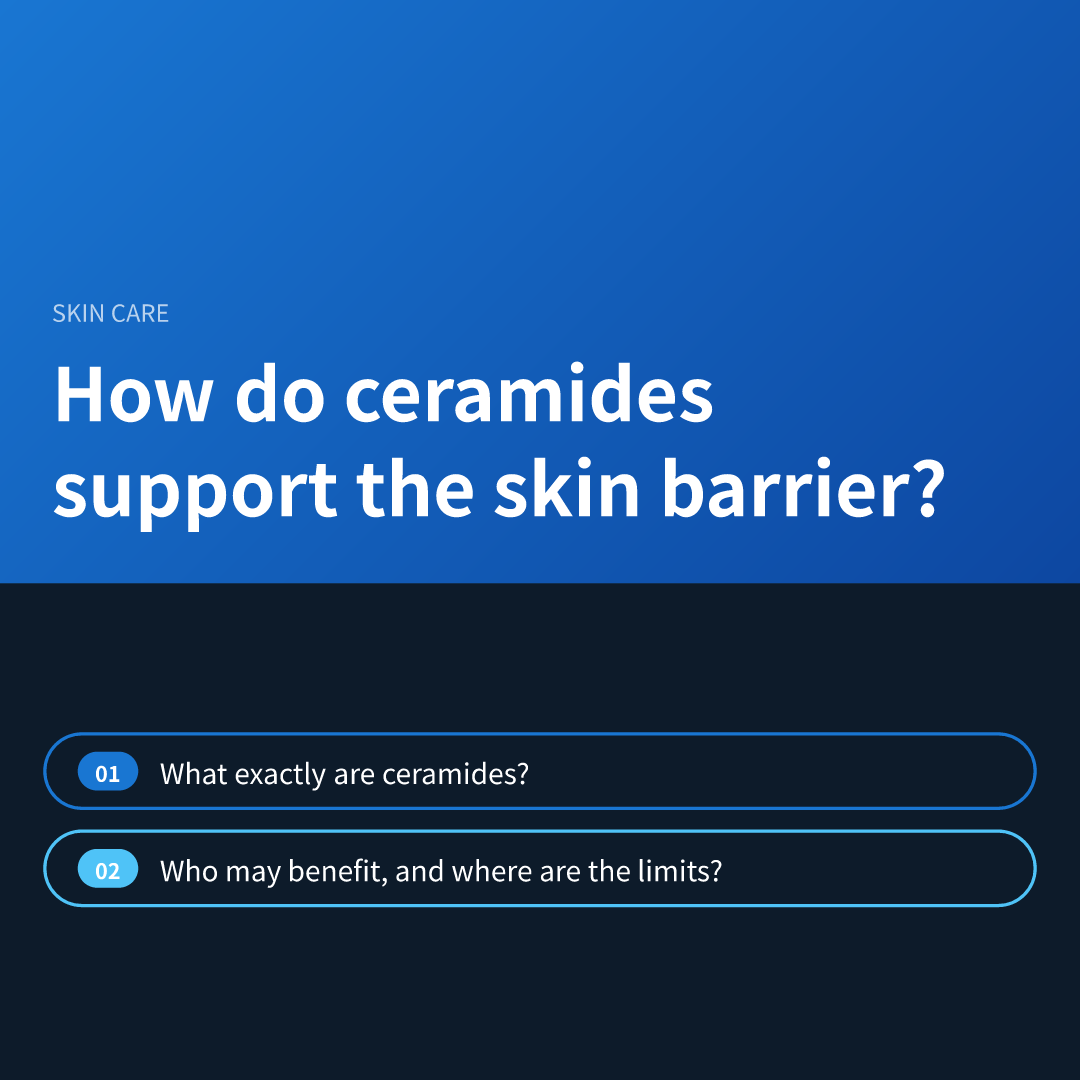
Ceramides help the outer layer of skin hold onto water and maintain its structure. According to general educational material from the American Academy of Dermatology, a healthy moisturizer routine often aims to support the skin's natural barrier, and lipid-containing moisturizers are one common approach.
When the lipid layer is disrupted, skin can lose water more easily. People often describe that as dryness, tightness, roughness, or flaking, and skin may feel more sensitive to products that were previously fine.
What can weaken the lipid barrier in the first place?
Several everyday factors are commonly linked with a barrier that feels compromised. These include:
- Harsh or frequent cleansing that strips natural oils from the skin surface
- Very hot water, which many people find drying
- Cold, dry air or indoor heating, which can pull moisture from skin
- Overuse of strong actives such as exfoliating acids or retinoids, which can cause irritation in some people
- Aging, since skin generally becomes drier and produces fewer lipids over time
- Certain skin conditions, such as eczema, where barrier function is often described as altered
Research summarized by institutions such as the National Eczema Association and other dermatology organizations has discussed the link between reduced barrier lipids and dry, easily irritated skin. How strong that link is for any one person, and whether adding ceramides changes the picture, differs from case to case.
What do ceramide moisturizers actually do on the surface?
A ceramide moisturizer typically combines the lipids with humectants, which draw in water, and emollients or occlusives, which smooth the surface and slow moisture loss. The ceramides are one team member rather than a standalone solution.
Many people find that this kind of formula feels comforting on dry or tight skin. It is better described as supporting the barrier over time than as repairing it instantly, and the feel of a cream does not guarantee any particular outcome.
Related reading: Skin Barrier Basics: What It Is and How to Look After It
Who may benefit, and where are the limits?
People with dry, tight, or easily irritated skin are the group most often interested in ceramide products. Those with skin that feels comfortable and balanced may notice little difference, and that is a perfectly normal result.
Ceramides are a cosmetic-type ingredient in most moisturizers, so they are generally positioned to support skin comfort, not to treat a medical condition. The U.S. Food and Drug Administration separates cosmetics, which affect appearance and feel, from drugs, which are intended to treat or prevent disease, and ordinary moisturizers fall on the cosmetic side.
Do different skin types respond differently?
Yes, and that is worth remembering before assuming a product will suit you.
- Dry skin: Often finds richer, lipid-containing creams comforting, though texture preference varies.
- Oily or acne-prone skin: May still use ceramides, but heavy, occlusive formulas can feel too rich for some. Lighter lotions or gel-creams are commonly chosen, and labels such as "non-comedogenic" are a marketing term rather than a promise.
- Sensitive skin: May appreciate simpler formulas, but fragrance, essential oils, or other additives in a ceramide product can still cause reactions.
- Mature skin: Often drier, so lipid-rich moisturizers are a popular category, with individual results differing.
Because reactions vary from person to person, a product that works well for a friend may not suit you. Reading the full ingredient list matters, not only the ceramide line.
What are the realistic limits of ceramide products?
Ceramides in a cream do not replace the skin's natural lipid production, and they cannot change how your skin behaves overnight. Benefits, when people notice them, tend to appear gradually and depend on the whole routine.
Several caveats are worth keeping in mind:
- Ingredient lists show what is in a product, not how much, so a label mentioning ceramides does not reveal the amount.
- Marketing language like "barrier repair" is not a clinical promise.
- Persistent redness, intense itching, cracking, oozing, or a rash that does not settle can point to something beyond ordinary dryness.
If you are dealing with those signs, or you have a diagnosed condition such as eczema or psoriasis, a dermatologist or other qualified clinician can advise on what fits your situation. Questions about prescription products, or about using a moisturizer alongside medicated treatments, are best settled with a pharmacist or doctor rather than guessed at from a label.
Related reading: How Often to Exfoliate: Skin Type and Signs to Watch
Can ceramides be combined with other skincare ingredients?
Ceramides are commonly paired with ingredients like hyaluronic acid, glycerin, and cholesterol in the same formula, and many routines place them alongside gentle cleansers and daily sunscreen. They are not widely described as clashing with other mainstream actives, though sensitive skin can react to combinations in unpredictable ways.
If you use strong actives or prescription topicals, how a moisturizer fits into that routine is a question for the clinician or pharmacist who knows your plan. New products are often introduced one at a time so that any reaction is easier to trace, which is a general habit many people find sensible rather than a rule.
Frequently asked questions
Can you get ceramides from food or supplements instead?
Some oral ceramide supplements exist, but the evidence for what they do for skin is limited and still developing, and claims should be viewed cautiously. Anyone considering a supplement, especially with allergies, pregnancy, or medications in the picture, should check with a pharmacist or doctor first.
Is a patch test worth doing with a new ceramide cream?
Many people like to test a new product on a small area before using it more widely, particularly if their skin is sensitive or reactive. A patch test is not a perfect predictor, since reactions can be delayed, so stopping and seeking advice if irritation appears is the more reliable guide.
Do ceramides expire or lose their usefulness in a product?
Moisturizers generally have a shelf life, and the packaging often shows a period-after-opening symbol or date guidance. Changes in smell, texture, or color are commonly treated as signs a product may be past its best, and manufacturer directions are the best reference for storage.
Disclaimer: This article is for informational purposes only and is not a substitute for professional medical advice, diagnosis, or treatment. Please consult a licensed professional for personal health decisions.