What Does Hyaluronic Acid Do? Reading the Label Together
Hyaluronic acid is a humectant, which means it attracts and holds water, so in skincare it is mostly used to help skin feel more hydrated and smoother on the surface. That is the short answer to what hyaluronic acid does, and it is also where the marketing tends to get carried away. Let's pick up a bottle and read the back of it together, line by line, so you know what the words really tell you.
Hyaluronic acid shows up in serums, moisturizers, cleansers, sheet masks, and even some makeup. Because it appears in so many formats, the label can look confusing. Below, each label detail is paired with what it generally means and the misunderstanding that tends to follow it.
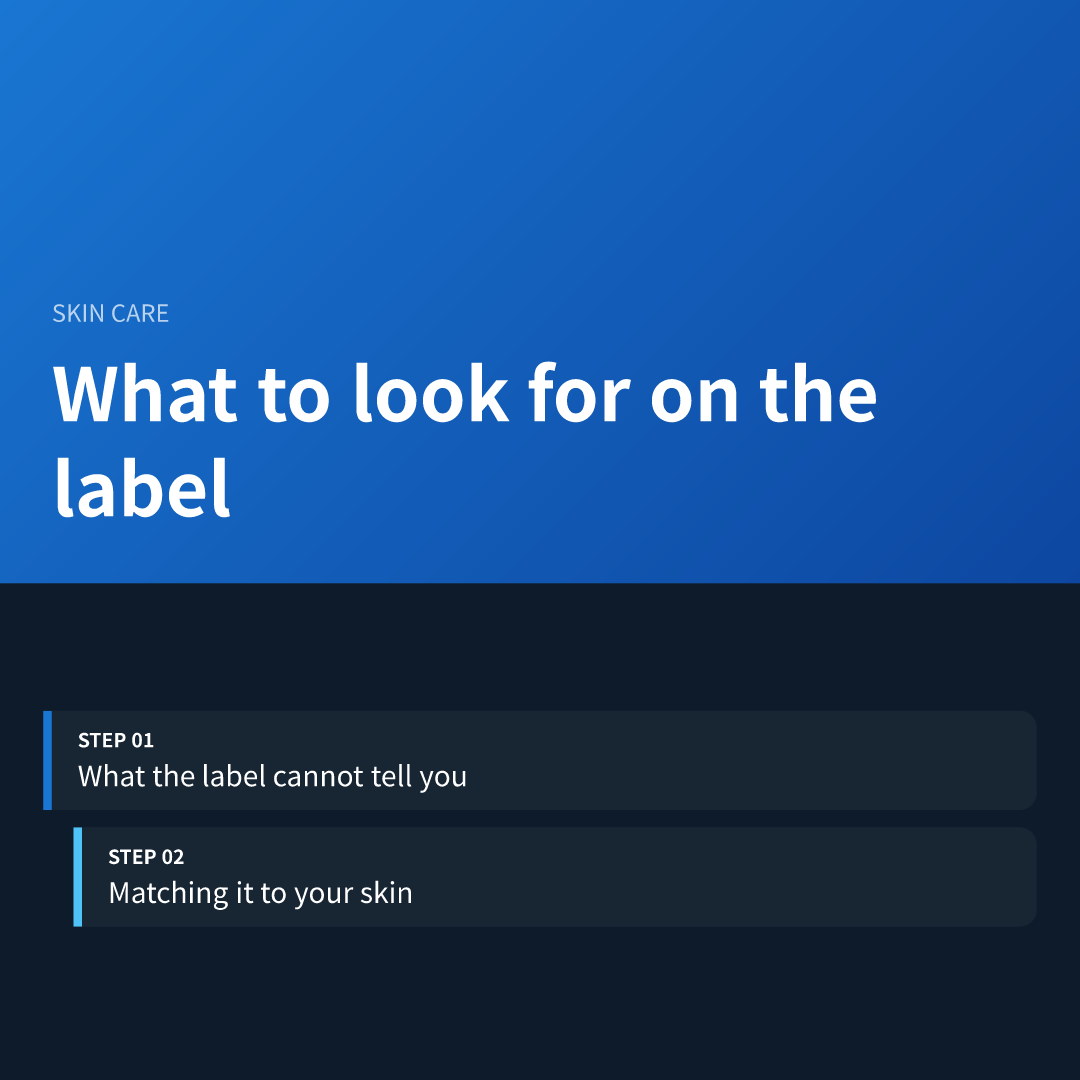
What to look for on the label
The ingredient name and its variations
What it means: You will rarely see just "hyaluronic acid." Labels often list sodium hyaluronate, which is the salt form of the same molecule and is commonly used in cosmetics. You may also see hydrolyzed hyaluronic acid or sodium acetylated hyaluronate, which are modified or smaller-fragment versions.
The common mix-up: Many people assume the acid form is stronger or more "active" than the salt form. In practice, these are different presentations of a similar water-binding ingredient, and a name alone does not tell you how a product will feel on your skin.
Where it sits in the ingredient list
What it means: In many regions, ingredients are listed in descending order of concentration, at least for the larger share of the formula. An ingredient near the top is generally present in a bigger amount than one near the bottom.
The common mix-up: Seeing hyaluronic acid on the list does not mean the formula is built around it. A product can include a small amount and still print the name prominently on the front. Position is a clue, not a verdict.
Molecular weight claims
What it means: Some labels mention low, medium, or high molecular weight, or say "multi-weight." Larger molecules are generally described as sitting on the skin's surface, while smaller fragments are often marketed as reaching slightly deeper into the outer layers.
The common mix-up: "Smaller is better" is a tidy story, but it is not a guarantee of better results. How a product feels and performs depends on the whole formula, and individual response varies. Treat molecular weight as a descriptive detail rather than a ranking.
The product format
What it means: A serum, a gel, a cream, and a mask can all contain the same ingredient while behaving differently. Lightweight gels and serums often feel watery and quick to absorb, while creams usually pair humectants with ingredients that help limit moisture loss.
The common mix-up: People sometimes expect a hyaluronic acid serum to work as a full moisturizer on its own. A humectant draws water, but other ingredients are usually involved in keeping that moisture from evaporating, which is why the rest of the formula matters.
Claim words on the front
What it means: Phrases like "plumping," "hydrating," or "smoothing" generally describe how skin looks or feels right after use, since cosmetics are meant to affect appearance rather than change the body's structure or treat conditions.
The common mix-up: "Plumping" is easy to read as "filling lines permanently." Surface hydration can make fine, dry-looking lines appear softer for a while, but that is a cosmetic effect and not the same as an in-office filler procedure.
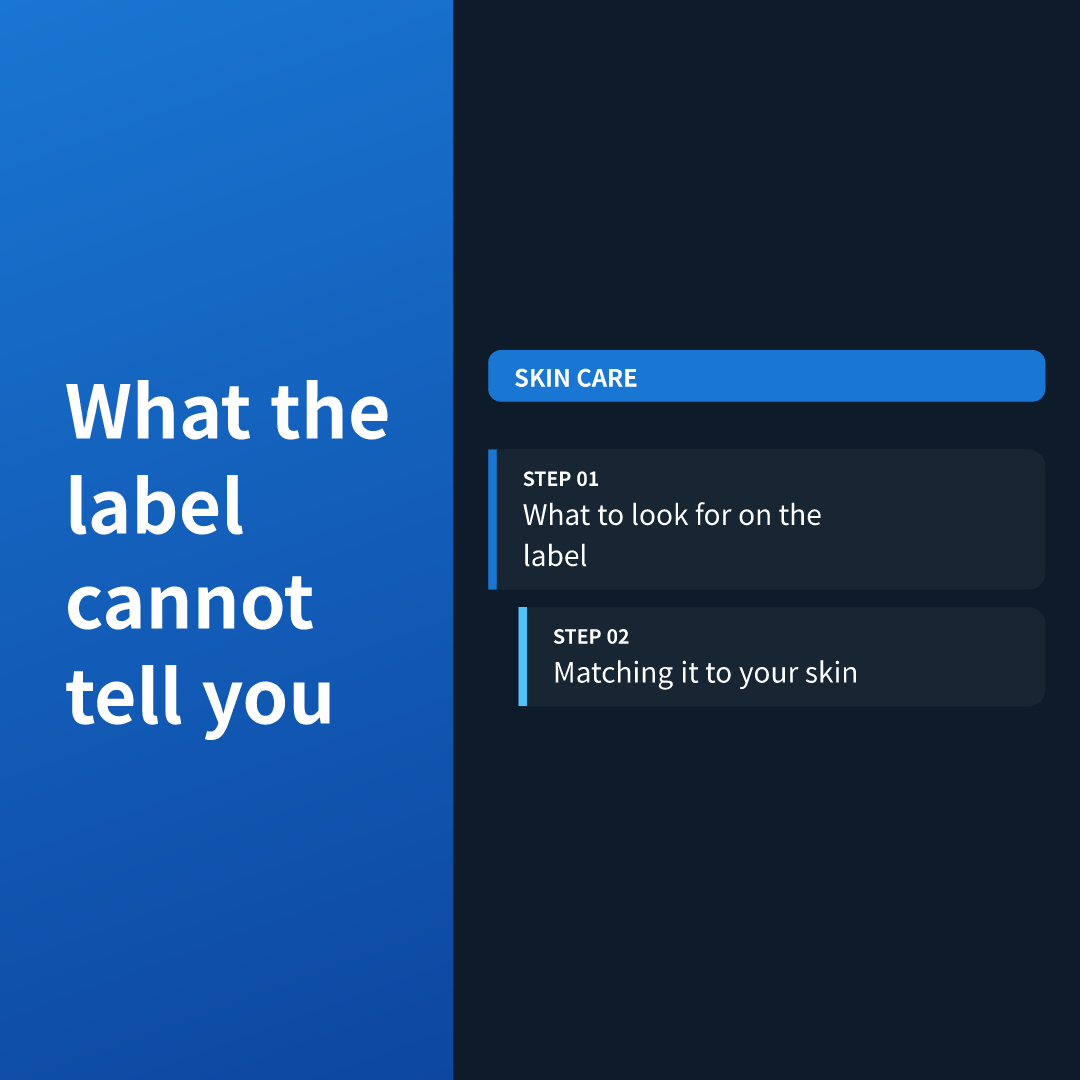
What the label cannot tell you
How much is actually inside
Most cosmetic labels do not state the exact concentration of hyaluronic acid. Even when a percentage is printed, it does not reveal which molecular weights are used or how the ingredient behaves alongside everything else in the bottle. A higher number is not automatically a better experience.
How your skin will react
Hyaluronic acid is widely used and often well tolerated, but reactions vary from person to person. The ingredient list also includes preservatives, fragrance, plant extracts, and other components that can bother sensitive skin. If you have a history of reactions, the supporting ingredients deserve as much attention as the headline one.
Whether it will suit your climate
Humectants pull water from somewhere. In humid conditions, they can draw moisture from the air toward the skin. In very dry air, some people notice their skin feels tight or drier if they use a water-binding product without a moisturizer over it. The label will not mention this, but it explains why the same serum can feel different in summer and winter.
Whether it replaces other care
Hyaluronic acid does not take the place of sun protection, gentle cleansing, or a moisturizer. It also is not a treatment for skin conditions. Skin that is persistently dry, itchy, or inflamed may involve something a cosmetic cannot address, and that is a conversation for a qualified professional.
What it does beyond cosmetics
Hyaluronic acid also occurs naturally in the body, and forms of it are used in medical settings, such as certain injectable products and eye or joint care. Those are regulated differently from cosmetics and are handled by licensed professionals. According to the U.S. Food and Drug Administration, cosmetics and drugs are treated as distinct categories, which is why a face serum cannot be assumed to do what a medical product does.
Matching it to your skin

If your skin runs dry
Dry skin often lacks both water and the oils that seal it in. A humectant can be one part of a routine, but it tends to work best alongside a moisturizer rather than alone. If dryness is severe or comes with cracking, redness, or itching, it is reasonable to check in with a dermatologist instead of adding more products.
If your skin is oily or acne-prone
Oily skin can still be dehydrated, and lightweight, water-based textures are popular among people in this group. Even so, individual formulas differ, and some contain oils or thickeners that may not suit breakout-prone skin. Reading the full ingredient list matters more than relying on the hyaluronic acid name.
If your skin is sensitive or reactive
Fragrance, essential oils, and some preservatives are common triggers, and they can appear in hyaluronic acid products just as they do elsewhere. Many people with sensitive skin look for simpler formulas and test a new product on a small area before using it more widely. If you have eczema, rosacea, or a known allergy, ask a dermatologist or pharmacist before adding something new.
If you are mature or concerned about fine lines
Skin tends to hold less water with age, so hydrating products can make it look and feel more comfortable. That said, a humectant will not remove wrinkles. Expectations are best kept modest: it may soften the look of dryness-related fine lines, and results differ between people.
If you are pregnant, using prescription skincare, or having procedures
Hyaluronic acid is a common ingredient, but your routine may include other actives that need guidance. If you are pregnant, using prescription topicals, or planning a cosmetic procedure, confirm your routine with your prescriber or care team. How products are combined and timed should come from them, not from a general article.
building a simple routine for dry skinFrequently asked questions
Can hyaluronic acid make skin drier?
It can for some people, particularly in very dry air when a water-binding product is used without a moisturizer to help hold moisture in. Reactions vary, and the rest of the formula also plays a role. If your skin feels tight or irritated, a pharmacist or dermatologist can help you work out why.
Is a serum with hyaluronic acid different from a moisturizer containing it?
Generally, yes, because the texture and supporting ingredients differ. Serums tend to be lighter and focused on water-binding, while moisturizers usually include ingredients that help reduce moisture loss. Many people use both, but how you build a routine is a personal choice.
Does eating or taking hyaluronic acid supplements do the same thing as applying it?
Not necessarily, and the evidence is less clear than label claims might suggest. Supplements are regulated differently from skincare, and whether they are suitable depends on your health history and medications. Please talk with a pharmacist or doctor before considering one.
How do I know whether a product is right for me?
Start by reading the full ingredient list, not just the front of the package, and look for anything you have reacted to before. Patch testing is a common approach, and a dermatologist can advise if you have a history of sensitivity. One last thing to check before buying: scan the whole ingredient list for anything that has bothered your skin in the past, since that matters more than the hyaluronic acid name on the front.
Disclaimer: This article is for informational purposes only and is not a substitute for professional medical advice, diagnosis, or treatment. Please consult a licensed professional for personal health decisions.