What a Toner Is For: Myths vs. What It Really Does
Many people assume that what a toner is for is "closing pores" or "fixing" oily skin, but that is not what these products generally do. Toners are most often used as a rinse-like step that helps prepare skin for the products that follow, and some add light hydration or mild exfoliating ingredients. Pores do not have muscles that open and shut, so the idea of a toner sealing them is a popular belief rather than a well-supported skin-care fact.
The word "toner" covers a wide range of liquids, from watery hydrating splashes to acid-based exfoliating formulas. That variety is a big reason the topic feels confusing. This article pairs common misunderstandings with more accurate explanations, so you can decide whether a toner fits your routine at all.
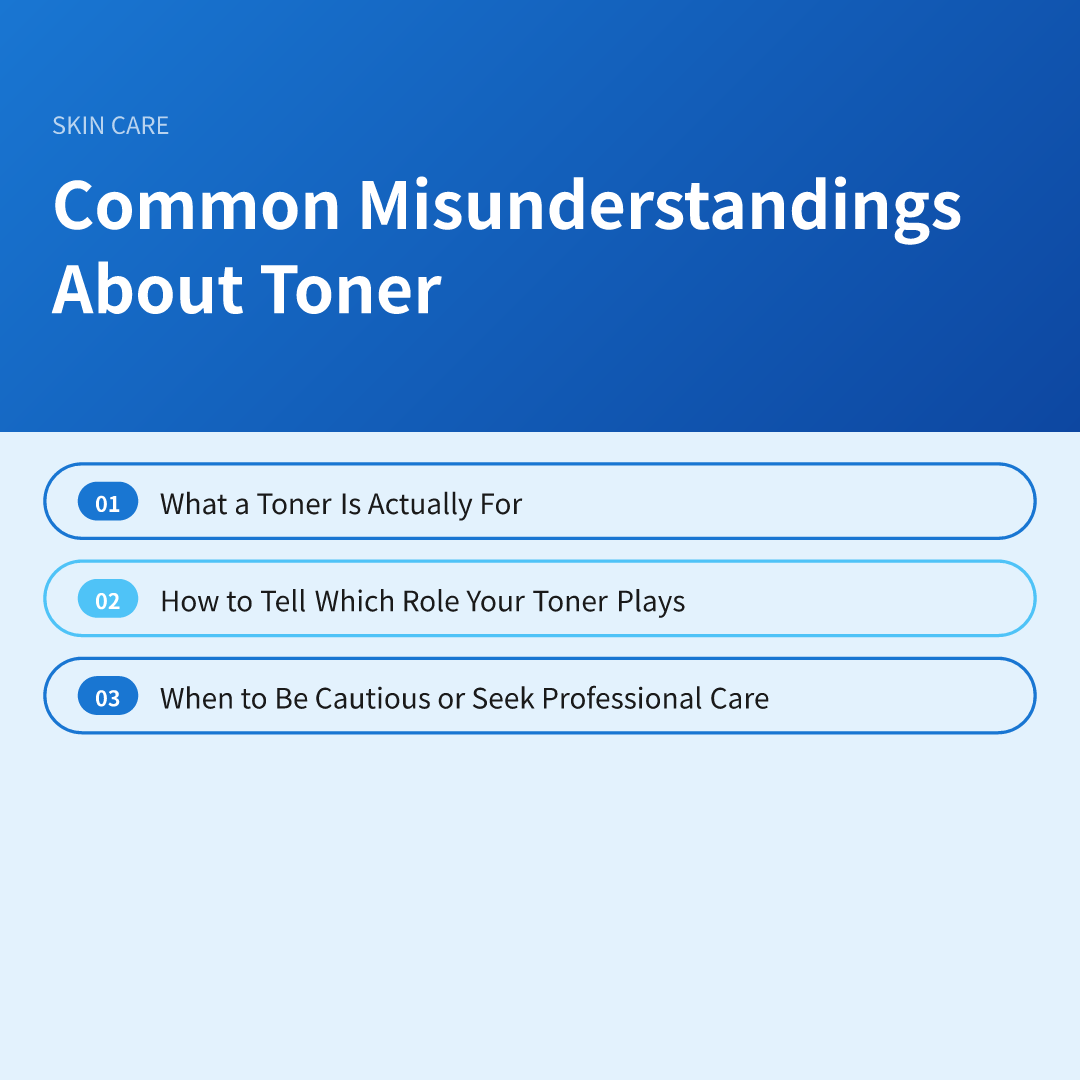
Common Misunderstandings About Toner
Skin-care marketing has repeated certain ideas for decades, and some of them stuck. Here are the ones that come up most often, along with a more careful reading of each.
Myth: A toner closes your pores
The belief that a toner "shrinks" or "closes" pores is probably the most widespread one. Pore size is influenced by things like genetics, oil production, and the way skin ages, and individual differences are large. A product may leave skin feeling tighter or look temporarily smoother, but that sensation is not the same as changing the pore itself.
Myth: A toner is needed to restore skin's natural pH
Older toners were often designed as astringent products that followed harsher, alkaline soaps. Many modern cleansers are formulated to be gentler, so the "rebalancing" job is less relevant for many people today. Skin has its own buffering abilities, and individual responses vary, so a toner is rarely essential for this purpose.
Myth: The stronger the tingle, the better it works
Stinging, burning, or a tight, squeaky feeling is sometimes interpreted as proof that a product is "working." In general, those sensations are more often a sign that the skin barrier is being stressed. Alcohol-heavy or highly fragranced formulas are common culprits for people with sensitive or dry skin.
Myth: Oily skin must use a toner, and dry skin must avoid one
Skin type alone does not decide this. Someone with oily skin may find a hydrating toner pleasant, while someone with dry skin may enjoy a soothing, alcohol-free one. The formula matters far more than the label on the bottle.
What a Toner Is Actually For
Rather than one single purpose, toners tend to serve a handful of modest roles. Which role applies depends on the ingredients and on your own skin.
A light second step after cleansing
Some toners are used to remove leftover traces of cleanser, makeup, or tap-water residue. For people who live in areas with hard water, or who wear heavier makeup, this can feel like a useful finishing rinse. It is not a replacement for a proper cleanser, though.
Hydration and comfort
Many contemporary toners are built around humectants, which are ingredients that attract and hold water on the skin's surface. Glycerin, hyaluronic acid, and certain plant extracts are common examples. These formulas are often used to add a thin layer of moisture before a serum or moisturizer. Results vary, and they are not a substitute for a moisturizer.
Mild exfoliation
Some toners contain chemical exfoliants such as alpha hydroxy acids (AHAs) or beta hydroxy acids (BHAs). These are intended to loosen the bond between dead surface cells, which may leave skin feeling smoother over time. According to the U.S. Food and Drug Administration's consumer guidance on cosmetics, products sold for cosmetic purposes are not meant to change the body's structure or function, so these formulas are best understood as surface-level refreshers. They can also increase irritation and sun sensitivity for some people.
Soothing or supportive ingredients
Other toners lean on ingredients such as panthenol, centella, or ceramides, which are often marketed for comfort and barrier support. Individual reactions differ, and "soothing" on a label is a marketing description rather than a guarantee. If a product causes redness or discomfort, it is not a good match for that person, regardless of the claims.
Helping other products absorb
You may see claims that a toner "boosts absorption." In practice, damp skin can feel more receptive to lightweight products, and a toner may simply provide that dampness. The effect is subtle, and it is not a reason by itself to add another step.
How to Tell Which Role Your Toner Plays

Because the category is so broad, the most useful habit is reading the formula instead of relying on the word "toner." A few clues help sort out what a given bottle is designed to do.
Read the ingredient list
- Humectants first: Glycerin, butylene glycol, or hyaluronic acid near the top suggest a hydrating product.
- Acids present: Glycolic, lactic, mandelic, or salicylic acid point to an exfoliating formula.
- Alcohol and fragrance: Denatured alcohol and strong fragrance are more likely to bother dry or reactive skin, though sensitivity differs from person to person.
- Soothing additions: Ingredients like panthenol or allantoin often signal a comfort-focused formula.
Notice how skin feels afterward
Skin that feels comfortable, slightly dewy, and calm is generally a good sign. Skin that feels tight, hot, or itchy often suggests the formula is a poor fit. Because skin changes with season, stress, and other products, a toner that worked once may not work later.
Check what else is in your routine
Layering several active products can add up quickly. If you already use a retinoid or another exfoliating product, an acid toner may be one step too many. The American Academy of Dermatology's general skin-care guidance notes that gentle routines are often better tolerated, and that irritation can build when too many active products overlap.
Related reading: Skincare Routine for Sensitive Skin: Build It Around Habits You Already Have
Think about whether you need one at all
A toner is optional for most people. A gentle cleanser, a moisturizer, and daily sunscreen form the core routine that is commonly described in general skin-care guidance. If a toner makes your routine more enjoyable and your skin stays comfortable, it can be a pleasant extra. If it adds cost, time, or irritation, skipping it is a reasonable choice.
When to Be Cautious or Seek Professional Care
Toners are cosmetics, but reactions can still happen. Redness, burning, swelling, blistering, or a rash that does not settle should be taken seriously. The FDA's consumer information on cosmetics notes that people can react to ingredients in these products, and that concerns can be reported to the agency.
People with conditions such as eczema, rosacea, or persistent acne may find that a product marketed as "gentle" still bothers them. Anyone using prescription topical medicines should ask a pharmacist or dermatologist before adding exfoliating acids or other active products. The same goes for pregnancy or breastfeeding, where ingredient questions are best discussed with a clinician.
Patch testing a new product on a small area before wider use is a commonly mentioned precaution, but reactions can still appear later. Persistent symptoms, or anything that worries you, deserve a conversation with a licensed professional rather than more experimenting at home.
Frequently asked questions
Can a toner replace a moisturizer?
No, a toner generally cannot replace a moisturizer. Hydrating toners add a light layer of water-attracting ingredients, but most do not contain enough occlusive or emollient components to hold moisture in. People with very dry skin often find they still need a separate moisturizer.
Is it a problem to use a toner with cotton pads versus hands?
Both methods are common, and neither is universally better. Pads can feel more cleansing, while using clean hands may waste less product and cause less friction. If your skin is easily irritated, many people prefer the gentler touch of hands, but personal preference and skin response should guide you.
Why does my skin feel tight after using a toner?
Tightness is often a sign that the formula is drying or not well suited to your skin. Alcohol, strong fragrance, or exfoliating acids can contribute, especially when combined with other active products. If the feeling persists or comes with redness or stinging, it may help to talk with a pharmacist or dermatologist about alternatives.
Do toners work differently for different skin types?
Yes, responses vary quite a bit. A formula that feels refreshing on one person can feel irritating on another, even when both have the same general skin type. Climate, other products, and individual sensitivity all play a role, so the product's ingredients are usually a better guide than the skin-type label.
Disclaimer: This article is for informational purposes only and is not a substitute for professional medical advice, diagnosis, or treatment. Please consult a licensed professional for personal health decisions.