How to Care for Skin After Exercise: A Beginner's Guide
Caring for skin after exercise usually comes down to a few gentle habits: getting out of sweaty clothes, rinsing away sweat and grime, keeping the skin comfortable and hydrated, and paying attention to how it reacts. If you are new to working out, or new to thinking about your skin at all, it is completely normal not to know where to begin. Nobody is born knowing which cleanser suits a post-run face or why the back breaks out after a spin class.
We will walk through this in order, from what is good to know before you start, to the first things you will actually do after a workout, to the worries beginners tend to have, and finally one small step you can take today. Skin differs a lot from person to person, so treat everything here as general information rather than a personal plan.
What to Know Before You Start
Before any routine, it helps to understand what exercise does to your skin. Knowing the basics makes the later steps feel less like rules and more like common sense.
What sweat is, and what it is not
Sweat is mostly water released by sweat glands to help your body cool down. It also carries small amounts of salts and other substances. On its own, sweat is not "dirty" or "toxic," and you do not need to scrub it off aggressively. The trouble tends to start when sweat sits on the skin for a long time, mixing with oil, dead skin cells, sunscreen, makeup, and the fabric of your clothes.
That mixture can make skin feel sticky or itchy. For some people it contributes to clogged pores or irritation, especially in areas where clothing rubs or traps heat. Reactions vary a lot, so one person may feel fine after a long workout while another notices bumps within a day.
Why friction and heat matter
Exercise often means heat, rubbing, and moisture all at once. Think of a waistband, a sports bra strap, a helmet strap, or a backpack. According to the American Academy of Dermatology's general guidance, skin problems linked to sports and activity can come from this combination of sweat, friction, and shared equipment. This is why the places that feel most "trapped" are often the places that react first.
A few terms, explained simply
- Cleanser: a wash designed to lift away sweat, oil, and product from the skin's surface.
- Moisturizer: a cream or lotion that helps skin hold onto water and feel comfortable.
- Non-comedogenic: a label that suggests a product is formulated to be less likely to clog pores. It is a marketing term, not a promise, and reactions still vary.
- Fragrance-free: made without added scent, which some people with sensitive skin prefer.
- Moisture-wicking: a fabric type designed to move sweat away from the body so it dries faster.
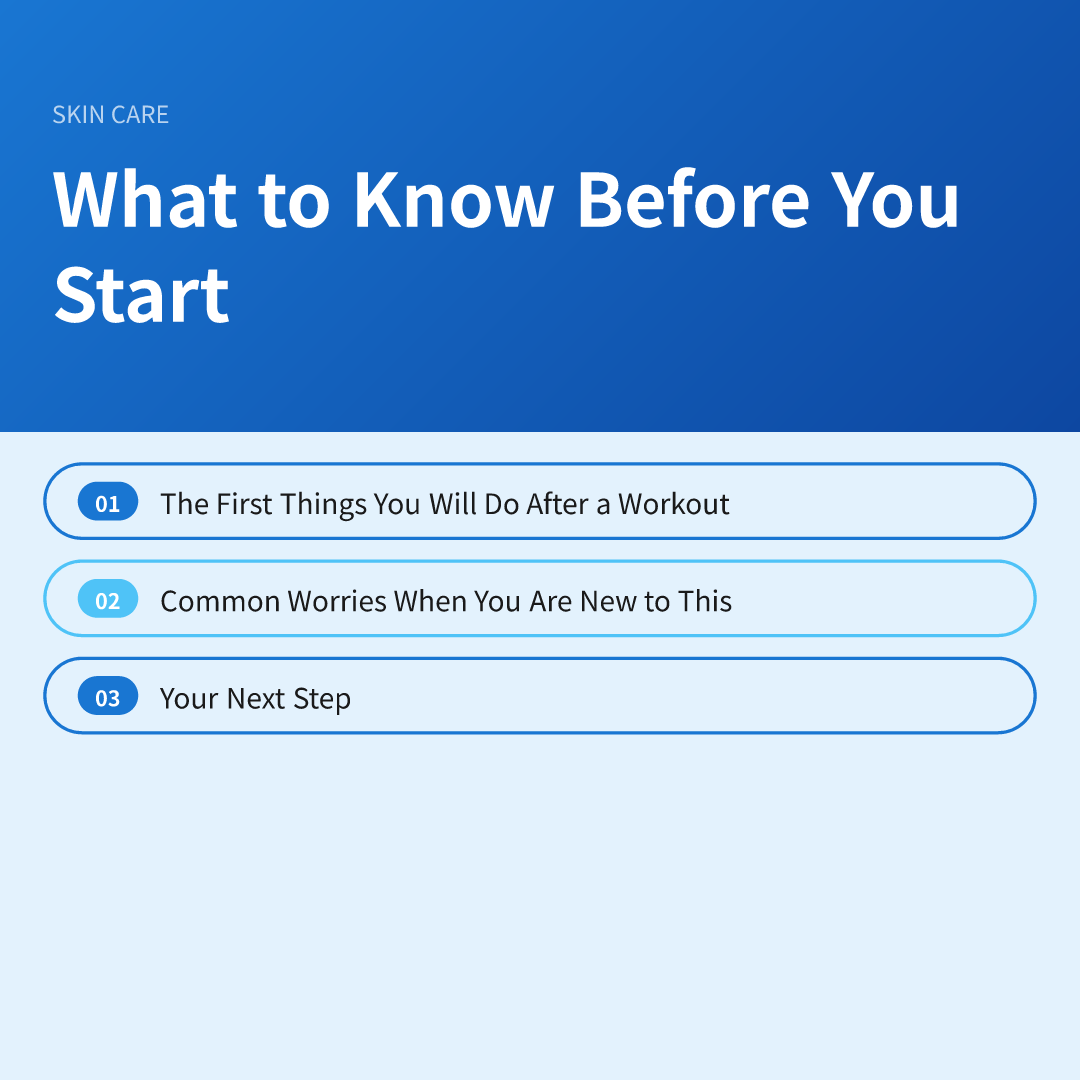
The First Things You Will Do After a Workout
Here is the usual order of events. You do not need every step every time, and a simple version is perfectly reasonable.
Step one: change out of damp clothes
This is the easiest habit and often the most useful. Staying in sweaty clothes keeps moisture and heat against the skin. Many people find that changing into dry, breathable clothing soon after exercising helps them feel more comfortable and may reduce the chance of irritation in areas like the chest, back, and groin. Loose, soft fabrics are often easier on skin than tight, rough ones.
Step two: rinse or wash gently
A shower with lukewarm water is a common choice. Very hot water can leave skin feeling tight and dry, so many people prefer something milder. For the face, a gentle cleanser is generally enough. For the body, a mild wash used on the areas that tend to get sweaty is often described as sufficient.
If you cannot shower right away, patting the skin with a clean towel is a reasonable stopgap. Some people also use a gentle face wipe, though wipes can be drying or irritating for certain skin types. If a wipe stings or leaves redness, that is a good sign to switch to something else.
Scrubbing hard does not make skin "cleaner." Rough rubbing, strong scrubs, and harsh soaps may leave the skin barrier (the outer layer that keeps moisture in and irritants out) feeling stressed. Gentle is usually the better direction.
Step three: moisturize and keep things simple
After washing, skin can feel dry or tight, especially if you exercise often. A basic moisturizer is commonly used to help skin feel comfortable and supple. People with oily or breakout-prone skin often look for lighter, gel-style textures, while those with dry skin may prefer richer creams. These are general tendencies, and personal preference and trial matter.
It is wise to introduce new products one at a time. That way, if something irritates your skin, you know which product to suspect. If you are already using a prescription or medicated product for a skin condition, ask your pharmacist or doctor how it fits with a post-workout routine before changing anything.
Related reading: How Often to Exfoliate: Skin Type and Signs to Watch
Step four: remember sun protection if you train outdoors
If your exercise happens outside, sun exposure is part of the picture. According to the U.S. Food and Drug Administration's general consumer guidance, sunscreen is one of several ways to help reduce sun damage, alongside shade and protective clothing. Sweat and water can make sunscreen wear off, so the product label's directions about reapplication and water resistance are the place to look for specifics. For personal advice about sun protection, a pharmacist or dermatologist can help.
Step five: care for the clothes and gear too
Skin care after exercise does not stop at your body. Workout clothes, towels, mats, and headbands can hold sweat and bacteria. Many people wash exercise clothing after use and avoid sharing towels or equipment that touches bare skin. The Centers for Disease Control and Prevention's general hygiene guidance for athletes points to showering after activity, using clean clothes, and not sharing personal items as common ways to reduce the spread of skin infections. Gym equipment is often wiped down before and after use for the same reason.
Common Worries When You Are New to This
Almost everyone has the same handful of concerns at the start. Here they are, with some reassurance that avoids overpromising.
"I broke out after working out. Did exercise cause it?"
It is a very common worry. Exercise itself is not generally described as a cause of acne, but the surrounding conditions can play a role: sweat, heat, friction from straps or clothing, and leaving sweaty skin untreated for a long time. Hormones, stress, products, and genetics also influence breakouts, so it is hard to point to one cause. Many people notice improvement when they change out of damp clothes sooner and use gentler products, though results differ. If breakouts are painful, spreading, or not settling down, a dermatologist or other licensed professional can look at what is going on.
"Should I wash my face before or after the gym?"
Many people rinse or cleanse after, since that is when sweat and grime have built up. Some also remove makeup or heavy products beforehand so they do not mix with sweat. Neither choice is universally right. Your skin type, the intensity of your workout, and what you wear all shape what feels best.
"My skin is red and flushed. Is that normal?"
Temporary redness during and shortly after exercise is common, because blood flow to the skin increases to help cool the body. For many people it fades as they cool down. Redness that lingers, burns, or comes with swelling, hives, or trouble breathing is different and deserves prompt attention. Trouble breathing or swelling of the face or throat is a reason to seek urgent medical help.
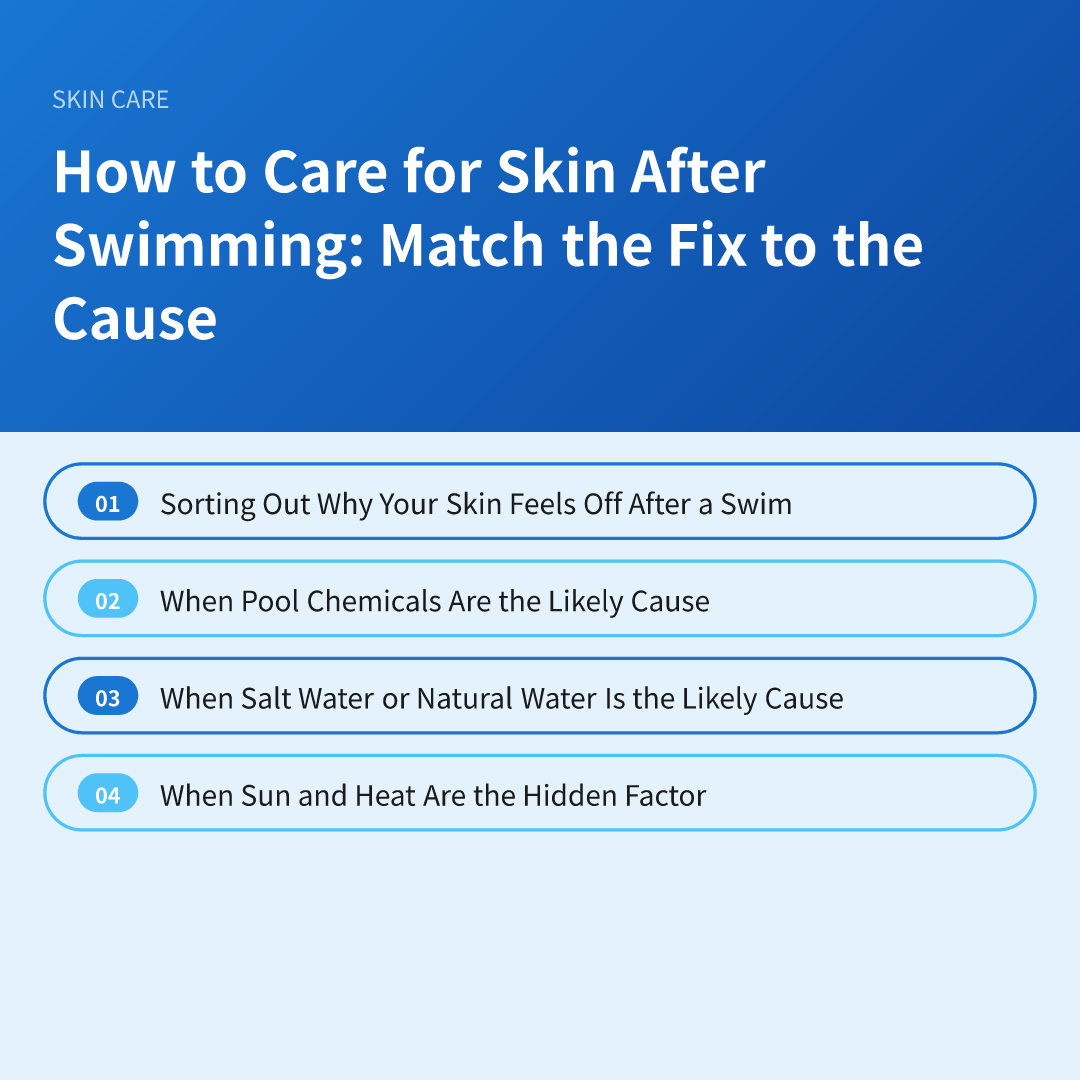
"My skin gets itchy and dry after swimming. Is something wrong?"
Pool water and chlorine can leave some people's skin feeling dry or itchy. A gentle rinse and a basic moisturizer are common ways people look after skin after swimming. If itching is severe, if a rash appears, or if it keeps returning, it is worth asking a professional, since several different things can look similar.
"Do I need a long, complicated routine?"
Usually not. Many people do well with a short routine: change clothes, rinse or cleanse gently, moisturize if the skin feels dry, and protect from the sun when outdoors. Adding lots of active products, such as strong exfoliating acids or retinoids, right after exercise can sometimes be too much for already warm, sensitive skin. If you use those, ask a pharmacist or dermatologist about timing, since individual tolerance varies widely.
Related reading: How to Care for Skin After Swimming: Match the Fix to the Cause
"What about body acne on my back and chest?"
Bumps on the back, chest, or shoulders are common among active people. Tight or non-breathable clothing and sweat that stays on the skin are often mentioned as contributing factors. Changing out of damp clothes and washing soon after sweating are widely suggested habits. Because these bumps can have several causes, including a condition that looks similar but is actually a different issue, a persistent case is best looked at by a licensed professional rather than guessed at.
When to get professional advice
Most post-workout skin concerns are minor, but some signs mean it is time to check in with a doctor, pharmacist, or dermatologist:
- A rash that is spreading, very itchy, blistering, or painful
- Skin that is hot, swollen, or oozing, which can point to infection
- Bumps that keep coming back despite gentle care
- Reactions to a new product that do not settle after you stop using it
- Any sudden swelling of the face, lips, or throat, or trouble breathing, which needs urgent medical help
- Existing conditions such as eczema, rosacea, or psoriasis that flare with exercise or sweat
People who are pregnant, have sensitive or reactive skin, or take medications that affect skin sensitivity may want to ask a professional before adding new products. Cosmetic products can only do so much, and they are not meant to diagnose or treat skin conditions.
Your Next Step

You have seen the whole journey now: understanding sweat and friction, changing clothes, washing gently, moisturizing, protecting from the sun, and knowing when to ask for help. None of it has to happen perfectly. Skin responds differently to different people, and small adjustments over time often matter more than any single product.
If you want one thing to try, make it this: after your next workout, change out of your sweaty clothes soon, and rinse or cleanse gently with lukewarm water. That single habit is a simple starting point for how to care for skin after exercise, and it costs nothing. Notice how your skin feels over the next few sessions, and adjust from there.
Disclaimer: This article is for informational purposes only and is not a substitute for professional medical advice, diagnosis, or treatment. Please consult a licensed professional for personal health decisions.