How to Know When to Change Your Skincare Routine
Knowing when to change your skincare routine usually comes down to noticing a pattern, not reacting to a single bad day. A useful way to catch those patterns is habit linking: you attach a small observation to something you already do every day, like brushing your teeth or making coffee. Over time, those tiny check-ins give you a clearer picture of whether your skin is doing fine, changing, or telling you something needs attention.
This approach is practical because most routines fail from lack of attention, not lack of products. Skin can shift with seasons, stress, sleep, hormones, climate, and new products, so a routine that suited you once may feel off later. Below is an editor's overview of how to build the habit, what to watch for, and how to recover when life gets in the way. Reactions and results differ from person to person.
Finding the Habits You Already Have
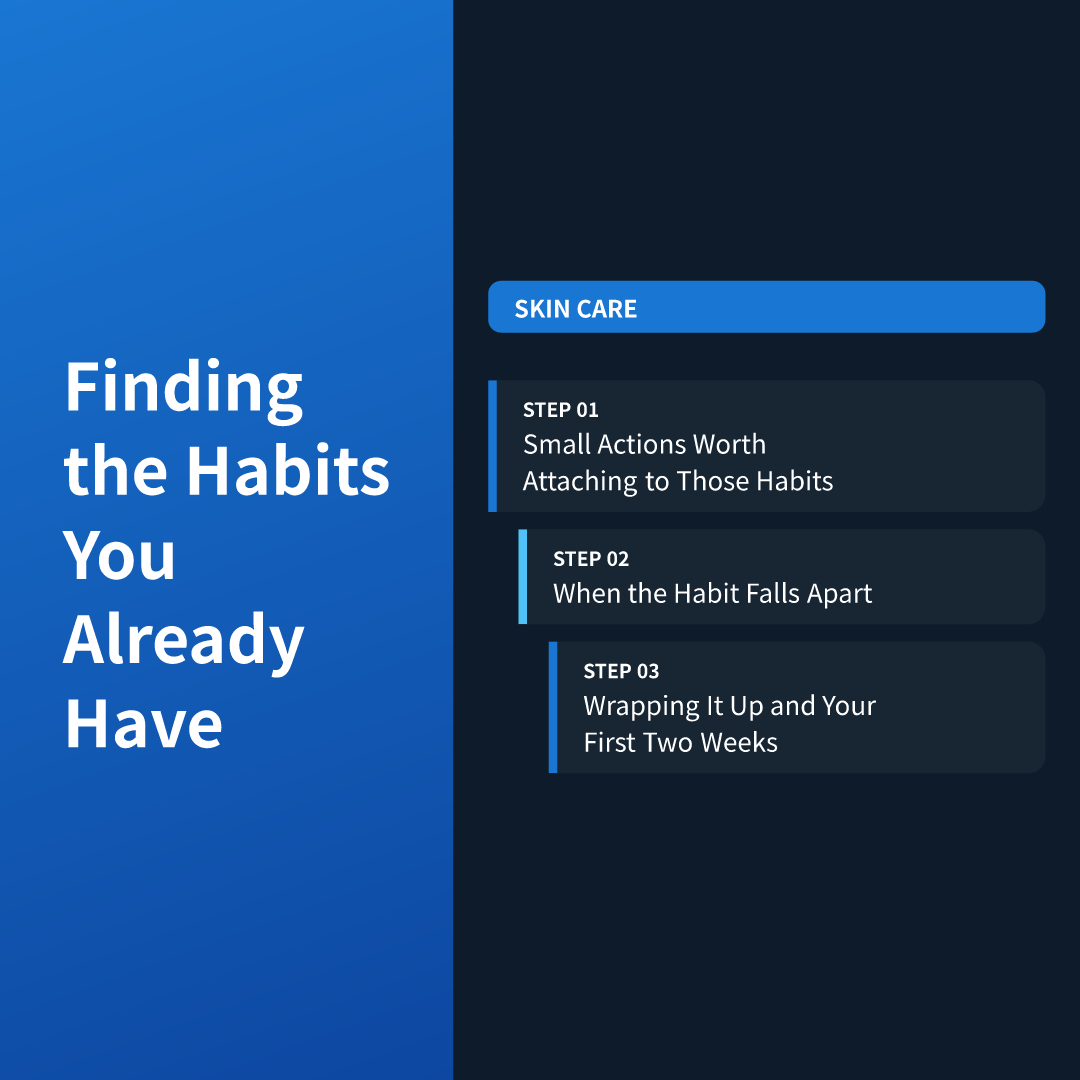
Habit linking works because you are not building a new routine from scratch. You are borrowing the reliability of something automatic. The first step is simply listing what you already do without thinking, then picking one or two anchors that happen at consistent times.
Anchors that tend to be reliable
- Brushing your teeth: it happens at roughly the same time each day, and the bathroom mirror is right there.
- Your first drink of the day: coffee, tea, or water while the kettle heats up is a natural pause.
- Charging your phone at night: plugging in is a clear end-of-day signal.
- Washing your hands before a meal: a frequent moment to glance at hand and face skin in good light.
- Changing into sleepwear: a dependable cue that the day is winding down.
What makes an anchor a good fit
A good anchor is specific, frequent, and not easily skipped. "After dinner" is vague, while "right after I brush my teeth at night" is concrete. If your mornings are chaotic but your evenings are calm, choose an evening anchor and do not force a morning one.
Lighting matters too. Observations made under harsh or dim bulbs can mislead you, so consider linking your check-in to a spot with steady, natural-ish light. building a simple morning and evening skincare routine
Small Actions Worth Attaching to Those Habits

The goal here is observation, not intervention. You are gathering information about your skin so that any change you make later is deliberate. Think of each pairing as "existing habit plus one quick look or note."
Habit plus action pairings
- Brushing teeth, then a ten-second face scan. Notice whether your skin feels tight, oily, rough, or comfortable compared with how it usually feels.
- Morning drink, then a mental note on yesterday. Did anything stand out, such as stinging, flaking, or new bumps?
- Phone charging, then one line in a notes app. A few words are enough: "dry cheeks," "calm," "new breakout near jaw."
- Changing into sleepwear, then checking for product reactions. Redness or discomfort in the places a product touched can be worth writing down.
- Weekend laundry, then a pillowcase and towel reminder. Linen and towels touch your skin often, so their routine matters to how your skin feels.
Signals that may suggest your routine needs a second look
Certain patterns are commonly cited as reasons people reconsider their routines. None of them is a diagnosis, and each can have several causes, but they are useful prompts to pay closer attention.
- Persistent dryness or tightness that was not there before, especially after cleansing.
- More oiliness or congestion than usual that lasts beyond a few days.
- Stinging or burning from products that used to feel fine, which can hint that the skin barrier is stressed.
- Seasonal shifts, such as heating in winter or humidity in summer, that change how your skin feels.
- A life change, like a new climate, new medication, pregnancy, or a stressful period, which may alter how skin behaves.
- A plateau, where something that once seemed to help no longer seems to make a noticeable difference.
According to the American Academy of Dermatology's general consumer guidance, skin can change with age, environment, and health, so it is normal for needs to shift. That is a general principle, not a rule for any one person.
Changing one thing at a time
When you do decide to adjust, the common advice is to change a single element and then give it time before judging it. If you swap a cleanser, a moisturizer, and an active product together and your skin reacts, you will not know which one caused it. Patience is less exciting than a full overhaul, but it produces cleaner information.
New products are often introduced gradually, and many people use a patch test on a small area first. Whether and how to do that for a specific product is best confirmed with the product's label and a pharmacist or dermatology professional, especially if you have sensitive skin or a skin condition. how to patch test a new skincare product
When the Habit Falls Apart

It is realistic to assume you will miss days. Travel, illness, deadlines, and plain tiredness all interrupt routines. A habit system that only works when everything goes smoothly is not much of a system, so it helps to decide in advance how you will recover.
Recovery rules for a broken streak
- Never double up to make up. Skipping a note or a check-in does not need to be compensated for. Just resume at the next anchor.
- Shrink the habit instead of quitting it. If a one-line note feels like too much, go back to a quick look in the mirror. Something small keeps the link alive.
- Restart at the anchor, not the calendar. You do not need to wait for Monday or the first of the month. The next toothbrushing is a perfectly good restart.
- Pause product changes during chaos. If you are traveling or sleeping badly, it is usually a poor time to introduce something new, because you will not be able to read your skin clearly.
- Keep a minimum routine. Decide in advance what the bare-bones version looks like for hard weeks, and treat that as a legitimate version of your routine rather than a failure.
Telling "off week" from "real change"
One rough patch after a poor night's sleep is not the same as weeks of ongoing discomfort. A gentle rule of thumb is to look for repetition. If something shows up again and again across your notes, it is more likely worth acting on than a one-time blip.
A routine is easier to adjust when you have a record of what your skin actually did, rather than a memory of what you think it did.
When to involve a professional
Some situations are better handled by a qualified professional than by routine tinkering. These include skin that is painful, swelling, blistering, or oozing, a rash that spreads or does not settle, a mole or spot that changes in size, shape, or color, and breakouts that are severe or leave marks. The American Academy of Dermatology encourages people with concerning or persistent skin changes to seek evaluation from a board-certified dermatologist.
If you are using a prescription product, never change how you use it on your own. Questions about how much, how often, or whether to combine it with other products belong with the prescriber or a pharmacist. Self-adjusting prescription skincare can interfere with the plan you were given. signs your skin may need professional care
Limits worth keeping in mind
- Cosmetic products are generally meant to cleanse, moisturize, or improve appearance, not to treat medical conditions, according to the U.S. Food and Drug Administration's general cosmetics guidance.
- Social media routines are not personalized. What suits one person's skin may not suit yours.
- Tracking can become stressful for some people. If note-taking starts to feel obsessive, scale it back.
- Skin often takes time to show changes, so judging a product too quickly can lead to unnecessary switching.
Wrapping It Up and Your First Two Weeks

Deciding when to change your skincare routine is easier when you have a steady stream of small observations instead of a vague feeling. Attach a quick check to a habit you already have, record what you see, change one thing at a time, and treat a missed day as a normal event rather than a reason to quit. If something looks or feels concerning, a licensed professional is the right person to ask.
Your first two weeks, in three rules
- Pick one anchor and one tiny action, such as a quick face check after brushing your teeth, and keep everything else in your routine the same.
- Write one short note on most days, and if you miss a day, simply pick it back up at the next anchor without making up for it.
- Change nothing until you see a pattern, and when you do, adjust only one thing and ask a pharmacist or dermatology professional if you are unsure.
Disclaimer: This article is for informational purposes only and is not a substitute for professional medical advice, diagnosis, or treatment. Please consult a licensed professional for personal health decisions.