How to Patch Test a New Skincare Product Properly
Here's a scene that plays out constantly: someone buys a new serum, gets excited, and smooths it over their entire face that same night. By morning, there's redness, tight patches, or a breakout that wasn't there before. The instinct afterward is usually to blame the product itself and toss it — but the real problem often started earlier, with skipping any warning step before full-face application. Learning how to patch test a new skincare product isn't about adding one extra rule to your routine; it's about correcting a handful of habits that quietly set people up for reactions in the first place.
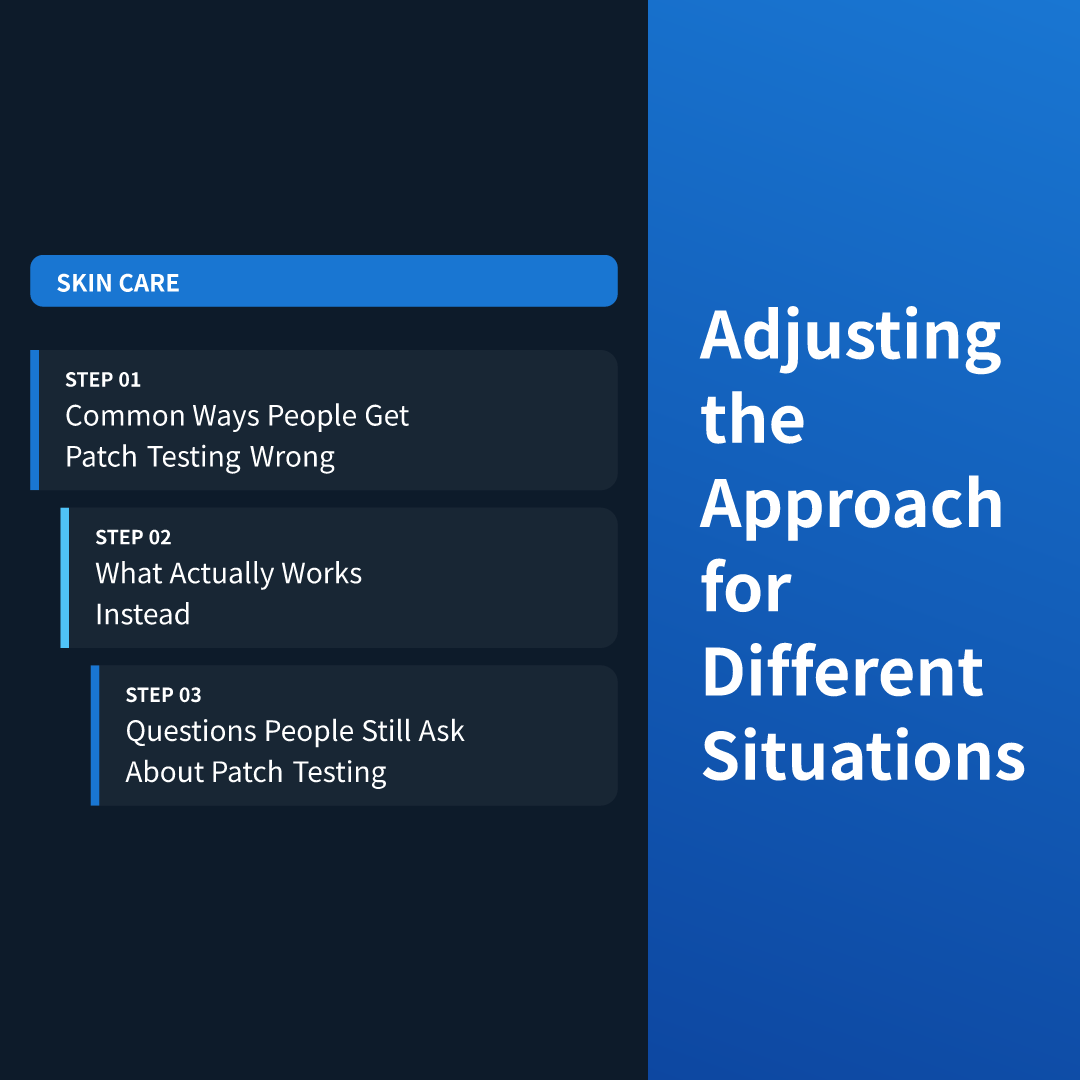
Common Ways People Get Patch Testing Wrong

Most patch-testing failures aren't from skipping the step entirely — they're from doing a version of it that doesn't actually work. A few patterns show up again and again.
Mistake: Applying the product to the whole face on day one. This is the most common shortcut, usually justified by "it's just a small amount." The reason it backfires is simple: if a reaction does occur, it now covers a visible area instead of a hidden patch of skin, and there's no way to know in advance whether that reaction will be mild or severe.
Mistake: Checking the test spot once, right after applying it, and calling it done. Irritant reactions can appear within minutes, but allergic contact dermatitis and mild sensitization often take a day or two to surface. Judging safety from a five-minute check misses exactly the reactions patch testing is supposed to catch.
Mistake: Washing off or covering the test area too soon. Some people apply the product, wash the spot an hour later, and consider that sufficient. But a clean rinse doesn't tell you whether the product would have caused irritation if left in contact with skin overnight, which is closer to how it's actually used.
Mistake: Testing several new products at once. A new cleanser, serum, and moisturizer all introduced in the same week make it nearly impossible to identify which one is responsible if a reaction shows up. The patch test technically "passed," but the information it gave you is useless once multiple variables are mixed together.
Mistake: Assuming a clear patch on the arm guarantees a clear face. The inner arm and behind the ear are useful stand-ins, but they don't perfectly match the thickness, oil production, or exposure conditions of facial skin. Treating a clean arm test as a final verdict skips an important transition step.
What Actually Works Instead

Once the common shortcuts are out of the way, the correct process is fairly straightforward — it just requires spreading it out over days instead of compressing it into one sitting.
- Pick a discreet, low-visibility spot. The inner forearm or the skin behind the ear works well because it mimics facial skin reasonably closely while keeping any reaction out of sight if one develops.
- Apply a small, coin-sized amount and leave it alone. Don't wash the area or layer other products over it. The goal is to observe how the product behaves in isolation, undisturbed.
- Check within the first hour for immediate signs. Stinging, burning, or sudden redness at this stage usually points to an irritant reaction. If nothing shows up, that's a good early sign — but not a final one.
- Keep watching for two to three days, not just one. Look daily for delayed redness, itching, small bumps, or dryness that wasn't present on day one. A quick daily photo can make subtle changes easier to spot than relying on memory.
- Only then move to a small area of the face. Once the arm test is clear, apply the product to one side of the jaw or a small patch near the cheek for several more days before using it across the entire face.
According to general guidance from dermatology organizations such as the American Academy of Dermatology, allergic skin reactions can take time to develop, which is exactly why rushing this process defeats the purpose of testing at all.
Adjusting the Approach for Different Situations
The core process stays the same, but a few situations call for small adjustments.
Retinoids, exfoliating acids, and fragranced products: These categories are more frequently linked to delayed irritation, so extending the observation window by a day or two beyond the usual routine is a reasonable precaution rather than overkill.
Sensitive skin, eczema, or a history of reacting to preservatives: Introducing one product at a time matters even more here. Layering several unfamiliar formulas at once — even if each passed its own test — can still overwhelm the skin barrier and make it hard to pin down the actual cause of a flare-up later.
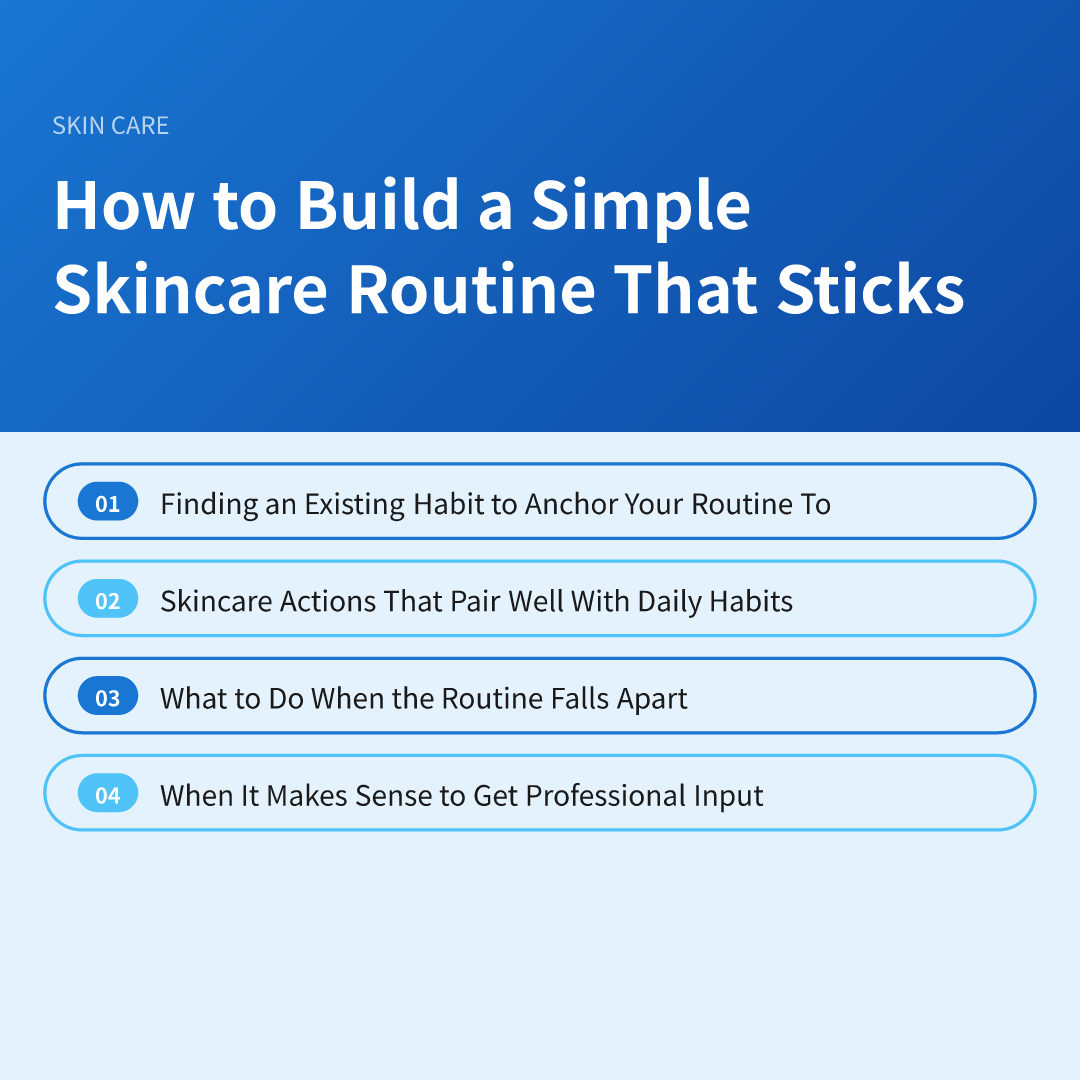
For anyone building out a routine around a newly tested product, it helps to see how a full lineup fits together — this guide on building a simple skincare routine that sticks covers that next step.
Recurring reactions across multiple products: If a pattern keeps repeating — new formula after new formula triggers some kind of response — that's less about any single product and more a signal worth bringing to a dermatologist, who can run broader allergen panels than a single at-home test allows.
Existing diagnosed skin conditions: For rosacea, eczema, or confirmed contact dermatitis, self-testing carries more uncertainty. Swelling, blistering, or intense itching — rather than mild, fading redness — is a reasonable point to stop experimenting alone and get a professional opinion instead.
Questions People Still Ask About Patch Testing

Isn't patch testing unnecessary if a product is labeled "dermatologist-tested" or "hypoallergenic"?
Those labels describe how a product performed in general testing, not how your specific skin will react. Individual sensitivities vary enough that even well-tested formulas can still cause a reaction in some people, which is exactly why patch testing a new skincare product remains worthwhile regardless of the label.
How long should I actually wait before trusting a clear result?
Two to three days on the arm is a reasonable baseline, with a few extra days for retinoids, acids, or fragranced formulas. Waiting only an hour or two catches irritant reactions but misses the delayed allergic responses that take longer to surface.
What if the test area looks fine but my face still reacts later?
This can happen, and it's a real limitation rather than a sign you did something wrong. Facial skin behaves differently from the inner arm, and some sensitivities only appear after repeated exposure over weeks. If a reaction spreads or feels more severe than mild redness, that's a reasonable point to check in with a dermatologist rather than keep troubleshooting alone.
Disclaimer: This article is for informational purposes only and is not a substitute for professional medical advice, diagnosis, or treatment. Please consult a licensed professional for personal health decisions.