How to Care for Skin After Swimming: Match the Fix to the Cause
The same post-swim problem can have very different causes, and the fix that helps one cause may do nothing for another. When people ask how to care for skin after swimming, the useful first step is working out whether the tightness, itch, or redness comes from pool chemicals, salt or lake water, sun exposure, or an existing skin condition. Once the likely cause is clear, the aftercare becomes simpler and less wasteful.
This guide is written from an editor's perspective, not a clinical one. It explains common patterns, what general public health guidance says, and where self-care reaches its limits. Skin responds differently from person to person, so treat everything here as general information rather than a personal plan.
Sorting Out Why Your Skin Feels Off After a Swim
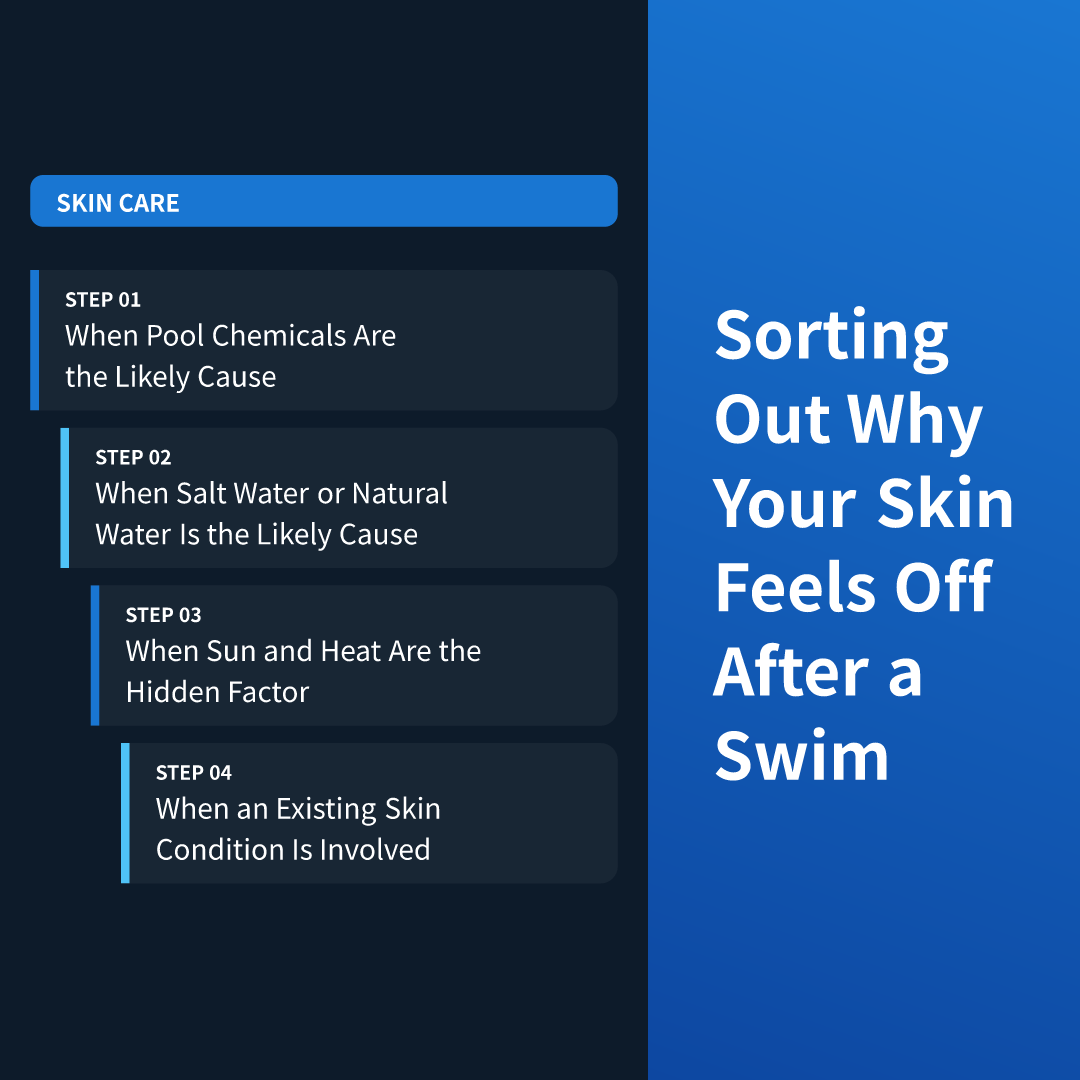
Skin that feels tight, dull, itchy, or blotchy after time in the water usually falls into a few broad groups. Water itself, whatever is dissolved in it, the sun you were standing in, and what happened to your skin before you got wet can all play a part. Often more than one factor is involved, which is why guessing wrong is so common.
Here is a rough way to think about the main groups:
- Pool water and its treatment chemicals: more likely when symptoms show up after indoor or outdoor pool sessions, especially on the whole body.
- Salt water or natural water: more likely after ocean, lake, or river swimming, sometimes with gritty or sticky skin.
- Sun, heat, and friction: more likely when redness is concentrated on exposed areas or where a swimsuit rubs.
- An underlying skin condition: more likely when you already have eczema, sensitive skin, or recurring rashes that flare after swimming.
A helpful clue is timing and location. Dryness and tightness that appear within an hour or so of leaving the water point toward the water itself. Redness on shoulders, face, and the tops of the feet points toward sun. A bumpy rash that appears later, sometimes a day or more afterward, may deserve a closer look, and that is covered further down.
When Pool Chemicals Are the Likely Cause
How to tell if this is your situation
Pool water is typically treated with disinfectants to keep it cleaner for swimmers. According to the CDC's general healthy swimming guidance, treated pool water can still irritate skin and eyes in some people, and irritation can also be related to what mixes into the water, such as sweat, sunscreen, and other substances from swimmers. In plain terms, that "pool smell" many people associate with chlorine is not always about the disinfectant alone.
You may be dealing with a pool-related cause if your skin feels dry, squeaky, or tight after pool swims but not after a shower at home. Itching on the scalp, dry hair, and irritated eyes alongside skin symptoms also fit this pattern. If the problem shows up mainly after swimming in one particular pool, that is another hint.
What commonly helps
The most widely mentioned habit is rinsing off soon after getting out, so the water and any residue are not left to dry on the skin. A gentle, fragrance-free cleanser is often suggested for people whose skin is easily irritated, and a plain moisturizer afterward is a common way to support the skin's moisture barrier. Many people also find that pat-drying is gentler than rubbing with a towel.
The mistake to avoid is over-correcting. Heavy scrubbing, very hot showers, and strongly fragranced products can add irritation on top of what the pool already did. If your skin feels raw, more products usually do not mean better results.
Related reading: Skin Barrier Basics: What It Is and How to Look After It
When this is probably the wrong diagnosis
If you spend hours in a pool and your skin is fine, but a particular product, such as a new body wash, seems to trigger symptoms, the pool may not be the culprit. Likewise, if symptoms appear even without swimming, the cause is likely elsewhere. Swapping goggles, switching pools, or buying a "chlorine removing" product will not help much in that case and can waste time and money.
When Salt Water or Natural Water Is the Likely Cause
How to tell if this is your situation
Ocean water leaves salt on the skin as it dries, which many people notice as a stiff, gritty, or sticky feeling. Lakes, rivers, and other natural water can carry sand, silt, and in some places microorganisms. If your skin feels rough and itchy mainly after open-water swims, this group is worth considering.
The CDC's general guidance on healthy swimming notes that natural waters can carry germs, and that people with open cuts or scrapes may want to take extra care. If you notice a rash that appears after swimming in natural water, especially itchy bumps in areas covered by a swimsuit, it is worth keeping the timing in mind when you talk to a clinician.
What commonly helps
A fresh-water rinse and a gentle wash are the usual first steps, since they remove salt, sand, and debris that can irritate skin as it sits. Changing out of a wet swimsuit promptly is also often recommended, because damp fabric against the skin can add friction and moisture that some people find irritating. A simple, unscented moisturizer is a common choice for dry skin afterward.
For people who surf, snorkel, or swim for long periods, the main problem is often friction rather than the water. Rubbing from suit seams, straps, or equipment can cause chafing that looks like a rash. In that case, the useful change is usually fit and fabric rather than a new skincare product.
Where self-care stops
If a rash is spreading, painful, blistering, or accompanied by fever, or if a cut seems to be getting redder or more tender after being in natural water, that is a reason to contact a healthcare professional rather than keep experimenting at home. Skin infections can look similar to simple irritation in the early stages, and guessing can delay appropriate care.
When Sun and Heat Are the Hidden Factor
Many "swimming rashes" are actually sun-related. Water can make the skin feel cool, so people often do not notice how much sun they are getting. The American Academy of Dermatology and the CDC both provide general guidance on sun protection, including shade, protective clothing, and broad-spectrum sunscreen, and they note that water-resistant sunscreen still needs to be reapplied according to its label.
How to tell if this is your situation
Redness, warmth, or tenderness on the shoulders, nose, cheeks, back, and tops of the feet, especially several hours after getting out of the water, often points to sun exposure. The pattern usually follows what was uncovered rather than the whole body. Peeling a few days later is another common sign.
What commonly helps
Cooling the skin gently, staying out of further sun, and keeping the area moisturized are the kinds of general comfort measures often discussed in public health materials on sunburn. How to use any specific product, including over-the-counter creams, is something to review with a pharmacist or on the product's own label. Severe sunburn, blistering, or symptoms such as feeling very unwell are reasons to seek medical care.
The wasteful mistake here is treating sunburn as if it were chlorine irritation. A richer cleanser or a "detox" product will not address the underlying issue, and scrubbing burned skin can make it worse.
When an Existing Skin Condition Is Involved
For people with eczema, rosacea, or very reactive skin, swimming can be a trigger regardless of which water they are in. The National Eczema Association and the American Academy of Dermatology, among other organizations, offer general information on managing flare-ups, and many of these resources discuss how water, chemicals, and drying can affect sensitive skin.
How to tell if this is your situation
If you already have a diagnosed condition and your usual symptoms flare after swimming, that is a strong clue. Another clue is when different pools or bodies of water all trigger similar reactions. In these cases, a general aftercare routine may help with comfort but may not prevent flares, and the right approach is something to discuss with whoever manages your skin condition.
What to do about it
Rather than adding products, it is more useful to bring specific details to an appointment: which water types trigger symptoms, how soon they appear, and what you have already tried. A dermatologist or primary care clinician can say whether a prescription or particular routine fits your situation. Any medicated creams or ointments should be used only as prescribed or as directed on the label, and a pharmacist can answer questions about how they work with your usual routine.
Allergic reactions are a separate category. Swelling of the face or lips, trouble breathing, or widespread hives are emergencies and call for urgent medical help rather than home care.
What Tends to Help Regardless of the Cause
Some habits are broadly useful because they reduce the time irritants spend on your skin and support its natural barrier. They are not a cure for any condition, and results vary, but they are commonly mentioned in general skincare education.
- Rinse soon after swimming. Getting water, salt, sweat, and residue off the skin is a common first step, and a shower before getting in can also reduce how much the skin absorbs from the water.
- Keep cleansing gentle. Mild, fragrance-free formulas are often preferred by people with easily irritated skin.
- Pat dry. Rubbing with a rough towel can add friction to skin that is already stressed.
- Moisturize while skin is slightly damp. Many people find that this helps skin feel more comfortable, though preferences differ.
- Change out of wet swimwear. Staying in a wet suit can add friction and moisture against the skin.
- Protect from the sun. Shade, covering up, and sunscreen used according to its label are widely recommended.
- Drink water and rest the skin. If you swim often, giving skin a day or two with no added exfoliants or strong actives is a common suggestion.
Skin type matters too. Dry or sensitive skin may need a richer moisturizer and fewer rinse-off products, while oilier skin may prefer a lighter texture. Since people respond differently, it can help to change one thing at a time so you can tell what made the difference.
Hair, scalp, and shaving
Scalp itch and dry hair after swimming often travel with skin symptoms. A quick rinse before and after swimming is a common habit for people who notice this. Shaving right before a swim can also leave skin more reactive, since freshly shaved skin is often more easily irritated by water and chemicals. If that sounds familiar, timing shaving differently may be worth a try.
Putting It Together: Choosing the Next Step
Taking care of skin after swimming works best when the fix matches the cause. Tightness and dryness after pool sessions usually call for prompt rinsing and gentle moisturizing. Gritty, itchy skin after open water often points to salt, sand, or friction, and a rinse plus a prompt change of swimwear is the common approach. Redness on exposed areas is more likely sun, which needs sun protection rather than a new cleanser. And if you already live with a skin condition, swimming may simply be a trigger that is better managed with professional input than with trial and error.
If you cannot tell which group you fall into, a simple approach is to note when symptoms start, where on the body they appear, and which water you were in. A few swims of note-taking often make the pattern clearer. When the pattern stays unclear, or when symptoms are painful, spreading, blistering, keep returning, or come with fever or swelling, a pharmacist, primary care clinician, or dermatologist can help sort it out. Anyone with persistent symptoms should not rely on home care alone.
Disclaimer: This article is for informational purposes only and is not a substitute for professional medical advice, diagnosis, or treatment. Please consult a licensed professional for personal health decisions.
Disclaimer: This article is for informational purposes only and is not a substitute for professional medical advice, diagnosis, or treatment. Please consult a licensed professional for personal health decisions.