How to Care for Hands in Cold Weather: Fix Common Mistakes
Running scalding hot water over chilly hands feels like the fastest way to warm up, but it is one of the habits that tends to leave winter skin drier and more irritated. If you want to know how to care for hands in cold weather, the short answer is this: protect the skin barrier, go easy on heat and harsh cleansing, and pair gentle moisturizing with sensible coverings. Below, each common mistake is matched with a reason it backfires and a practical swap you can try, with notes on when it makes sense to check in with a professional.
A quick note on perspective: this is an information-based guide from a beauty and lifestyle editor, not medical advice. Skin varies a lot from person to person, so treat these ideas as starting points rather than rules.
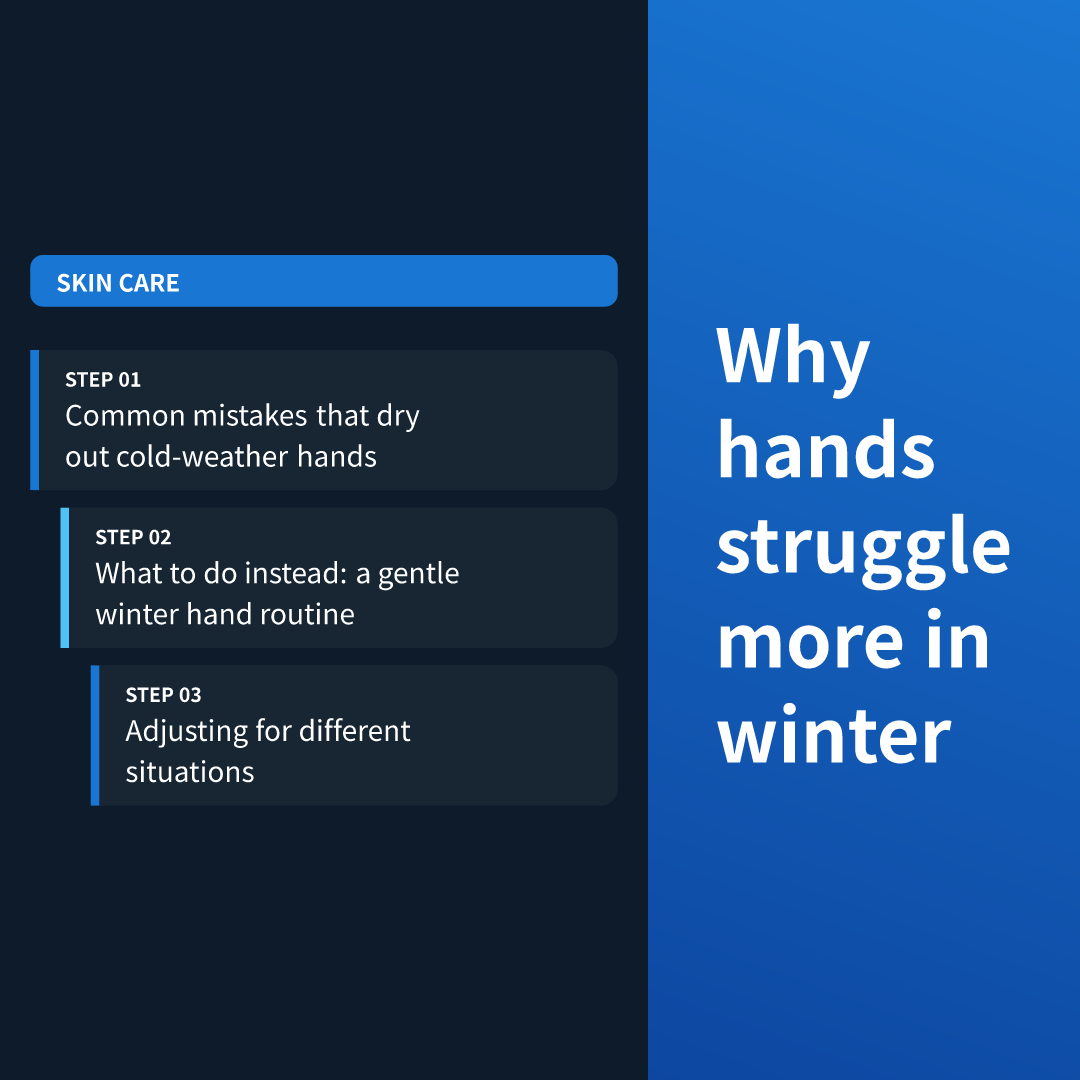
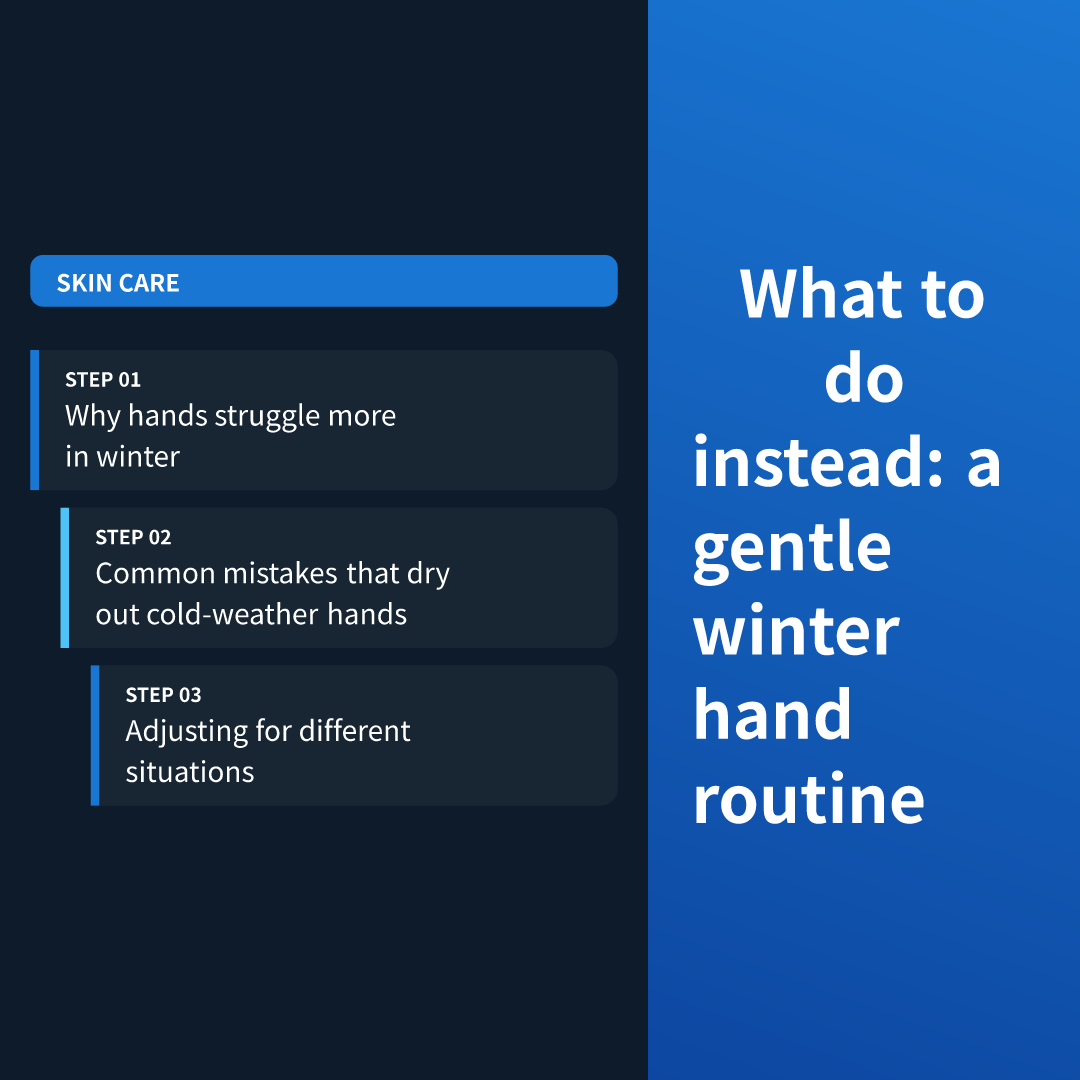
Why hands struggle more in winter
Hands have fewer oil-producing glands than many other parts of the body, and they are washed, sanitized, and exposed to the elements all day. Cold outdoor air tends to hold less moisture, and indoor heating often dries the air further. According to the American Academy of Dermatology's general guidance, dry, cracked skin is common in colder months, and protecting the skin barrier is a typical focus of everyday care.
That combination explains why hands can go from fine to flaky, tight, or sore surprisingly fast. The mistakes below mostly come down to stripping moisture faster than the skin can replace it.
Common mistakes that dry out cold-weather hands

Mistake one: warming hands under very hot water
Why it backfires: Hot water can strip away the natural oils that help hold moisture in the skin. Hands that are already cold and dry may then feel tighter and more uncomfortable once they cool down again. Long soaks can add to the problem.
What to do instead: Use lukewarm water for washing and rinsing. If your hands are very cold, warm them gradually with gloves, a warm (not hot) drink in your hands, or by tucking them into a sleeve or pocket for a few minutes. Gentle warming is usually kinder than a sudden temperature swing.
Mistake two: relying on harsh, strongly fragranced soaps
Why it backfires: Foaming, heavily scented, or antibacterial-style hand washes can leave some people's skin feeling squeaky and dry. Frequent washing already removes oils, and a strong cleanser adds to that effect. Fragrance and certain additives can also bother sensitive skin.
What to do instead: Look for mild, fragrance-free or gentle hand washes, often labeled for sensitive skin. Pat hands dry rather than rubbing, and make sure to dry between the fingers, since lingering dampness can contribute to irritation. The CDC's general hand hygiene guidance still emphasizes washing at key moments, so the goal is gentler products, not skipping hygiene.
Mistake three: relying on hand sanitizer alone, then ignoring moisture
Why it backfires: Alcohol-based sanitizers are convenient, but frequent use can leave skin feeling dry for some people, especially in winter when the skin barrier is already stressed. Skipping moisturizer afterward makes that dryness more noticeable.
What to do instead: Keep a moisturizer within reach wherever you keep sanitizer, such as your bag, desk, or car. Many people find it easier to follow a sanitizer moment with a moisturizing moment, rather than waiting until the end of the day. If a particular sanitizer stings or irritates, consider asking a pharmacist about alternatives.
Mistake four: saving moisturizer for bedtime only
Why it backfires: A single evening application may not keep up with a day of washing, wind, and dry indoor air. Skin that stays dry for hours can start to feel rough or tight long before nighttime.
What to do instead: Think in terms of small, repeated touches rather than one big effort. Many people like moisturizing after washing while the skin is still slightly damp, since that is a widely mentioned approach for helping lock in moisture. Creams and ointments are generally thicker than lotions, so people with very dry hands often prefer them in winter, though texture preference varies.
Mistake five: skipping gloves because they feel inconvenient
Why it backfires: Wind and low temperatures can irritate bare skin quickly. Many people only reach for gloves once their hands already feel sore or chapped, which is later than ideal.
What to do instead: Keep a pair in your coat, bag, or car so they are available before you need them. If wool feels scratchy, a thin cotton or soft liner glove underneath may help. For wet chores such as washing dishes or cleaning, many skin care sources suggest waterproof gloves, ideally with a soft lining, to limit repeated water and detergent contact.
Mistake six: picking or peeling flaking skin
Why it backfires: Pulling at dry patches or hangnails can open the skin and make cracks more painful or more prone to irritation. It often leaves the area rawer than it started.
What to do instead: Leave flaky areas alone and focus on consistent, gentle moisturizing. If a hangnail or crack is bothering you, a pharmacist or healthcare professional can advise on how to handle it, especially if the skin is bleeding or looks inflamed.
What to do instead: a gentle winter hand routine
Rather than a rigid checklist, think of winter hand care as a few habits that work together. Most of them take only seconds.
- Cleanse gently: Choose mild washes and lukewarm water, then pat dry.
- Moisturize often: Reapply throughout the day, especially after washing, using a texture you actually enjoy so you will keep reaching for it.
- Cover up outside: Gloves help shield skin from cold and wind.
- Protect during wet work: Liners and waterproof gloves reduce repeated soaking.
- Add humidity if it suits you: Some people use a humidifier in dry, heated rooms, though comfort levels and home conditions vary.
Moisturizer ingredients people commonly look for
Product labels can feel overwhelming, but a few ingredient types come up often in hand care. Humectants such as glycerin are commonly used to attract water to the skin. Emollients such as shea butter or ceramides are often included to soften and smooth. Occlusives such as petrolatum or dimethicone are typically used to help reduce moisture loss. The National Eczema Association's general guidance on moisturizing also notes that thicker, fragrance-free products are often favored by people with very dry or sensitive skin.
Cosmetic products are generally meant to moisturize and soften, not to treat a medical condition. If you are unsure whether a product suits your skin, a pharmacist can help you narrow things down.
Overnight hand care
Some people layer a richer cream before bed and wear thin cotton gloves so the product stays on the skin instead of rubbing off on sheets. It is a popular approach for very dry hands, but comfort and skin response differ. If you notice itching, redness, or stinging, stop and consider talking to a professional about what might be going on.
Related reading: How to Care for Skin After Swimming: Match the Fix to the Cause
Adjusting for different situations

If you wash your hands all day
Healthcare workers, parents of young children, and food service staff often wash far more than average. Frequent washing is hard to avoid, so the focus shifts to gentle cleansers, patting dry, and moisturizing at natural pauses. Some workplaces provide approved barrier creams or recommended products, so it can be worth asking about those options.
If you spend a lot of time outdoors
Commuters, runners, dog walkers, and anyone who works outside face wind and cold repeatedly. Gloves are the main tool here, and layering a thin liner under an outer glove can add warmth without bulk. Cold air can also contribute to dryness on the backs of the hands, so many people give that area a little extra attention.
If you have sensitive or reactive skin
Fragrance, dyes, and certain preservatives can bother some people. Simple, short ingredient lists are often a comfortable starting point, though no label guarantees a particular reaction. A small patch test on a less visible area is a commonly mentioned precaution when trying something new.
If your hands crack or bleed
Deep cracks that bleed, ooze, or look infected are beyond everyday moisturizing. Persistent redness, intense itching, blistering, or a rash that does not settle can also point to something other than simple dryness, such as eczema or contact dermatitis. According to the American Academy of Dermatology's general guidance, ongoing or worsening hand skin problems are worth discussing with a board-certified dermatologist or another qualified healthcare provider, who can recommend appropriate options.
If you have a medical condition
Conditions such as eczema, psoriasis, or circulation-related concerns can change what is appropriate for your hands. People who notice color changes, numbness, or pain in their fingers when exposed to cold should speak with a healthcare professional rather than relying on cosmetic care alone. Prescription or over-the-counter treatments should only be used as directed by a clinician or pharmacist.
Frequently asked questions
Does it matter whether I use a lotion or a cream?
It can, because creams and ointments are generally thicker and often feel richer than lotions. Many people with very dry winter hands prefer them, while others like lighter lotions for daytime comfort. It is mostly a matter of skin needs and personal preference.
Can wearing gloves make my hands worse?
Gloves are usually helpful, but some materials can irritate certain people, and damp or sweaty gloves can bother skin. Choosing a soft, breathable liner and swapping out wet gloves may help. If you notice redness or itching that seems tied to a specific glove, a professional can help sort out what might be responsible.
Is dry skin on my hands a sign that something is wrong?
Dry hands in cold weather are very common and often respond to gentle habits. Persistent or painful symptoms, though, are worth checking out, because they can overlap with conditions that need different care. A dermatologist or primary care provider can help work out what is going on.
Caring for hands in cold weather mostly comes down to swapping a few harsh habits for gentler ones: lukewarm water, mild cleansers, frequent moisturizing, and gloves before the wind gets to your skin. Results vary from person to person, so adjust based on how your hands feel and seek professional advice if problems stick around.
Disclaimer: This article is for informational purposes only and is not a substitute for professional medical advice, diagnosis, or treatment. Please consult a licensed professional for personal health decisions.