How to Choose a Gentle Cleanser Without the Guesswork
Choosing a gentle cleanser comes down to a few things: a mild formula, a texture that suits your skin type, and a finish that leaves your face comfortable rather than tight. The most common mistake is grabbing whatever feels "squeaky clean" after rinsing, because that tight sensation usually means the skin's surface has been stripped more than it needed to be. Below, we walk through the usual missteps, what to do instead, and how to adapt your choice to different situations.
A quick note on perspective: this is an information piece from a beauty editor's point of view, not dermatology advice. Skin varies a lot from person to person, so treat everything here as general background rather than a personal recommendation.
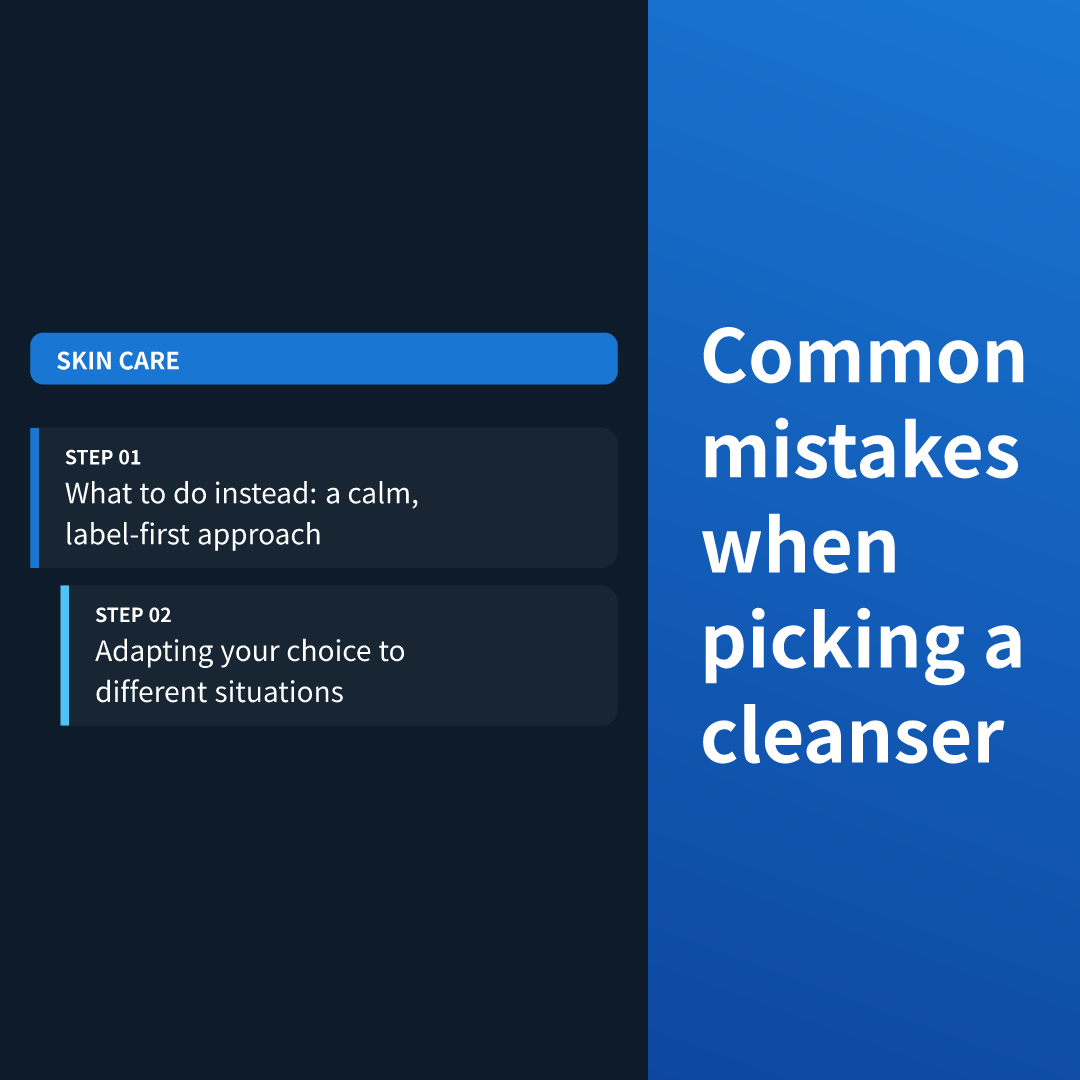
Common mistakes when picking a cleanser
Most cleanser frustration comes from a handful of habits that seem logical but tend to backfire. Each one below is paired with why it causes trouble and a practical alternative.
Mistake one: Chasing the "squeaky clean" feeling
Many people judge a cleanser by how tight or dry their skin feels afterward, assuming that means it worked. In reality, that tightness often signals that the cleanser removed not just dirt and oil but also some of the skin's natural surface lipids. Over time, this can leave skin feeling dry, reactive, or more prone to stinging with other products.
What to do instead: Aim for skin that feels clean but comfortable, soft, and flexible after you pat it dry. If your face feels tight within a minute or two of rinsing, that is a useful signal to try a milder formula.
Mistake two: Assuming oily skin needs the harshest formula
It is tempting to reach for a strong, foamy wash when your face looks shiny by midday. The trouble is that harsh cleansing can leave skin feeling uncomfortable, and some people notice their skin seems to feel oilier or more irritated afterward. Oiliness and dehydration can also exist together, which is why a stripping cleanser does not always solve the shine.
What to do instead: Look for lightweight gel or lotion cleansers described as mild or balancing. Oily skin can still benefit from gentle formulas, and the goal is to remove excess oil without leaving the skin raw.
Mistake three: Trusting the front of the bottle alone
Words like "natural," "pure," "dermatologist-loved," or "sensitive" on a label are marketing language, not guarantees. Under U.S. rules, terms like these are not tied to one strict definition for most cosmetics, so they do not reliably tell you how a formula will behave on your face. The FDA notes that cosmetics are not required to receive pre-market approval, which is one reason reading the actual ingredient list matters.
What to do instead: Flip the bottle over and read the ingredient list. Ingredients are listed in descending order of concentration, so the first several entries tell you most about what the cleanser is made of.
Mistake four: Ignoring fragrance and strong essential oils
A pleasant scent can be appealing, but fragrance and some essential oils are among the ingredients that people commonly report as irritating, especially on reactive skin. "Unscented" and "fragrance-free" are also not always the same thing, since some unscented products use masking ingredients to neutralize odor.
What to do instead: If your skin tends to sting or flush easily, consider fragrance-free options and check the ingredient list for fragrance, parfum, or heavily scented botanical extracts. This is a general starting point, and tolerance differs between individuals.
Mistake five: Cleansing too often or too aggressively
Washing multiple extra times a day, scrubbing hard, or using very hot water can all add to dryness and irritation, even with a mild product. The cleanser itself is only part of the story; technique matters too. Rough washcloths and abrasive scrubs can be an overlooked source of trouble.
What to do instead: Use lukewarm water, a gentle touch with your fingertips, and a short contact time. Pat dry with a clean, soft towel rather than rubbing.
Related reading: What Essence Means in Skincare and How It Fits Your Routine
What to do instead: a calm, label-first approach
Rather than relying on trends or packaging, a steadier method is to look at three things: the type of cleanser, the ingredient list, and how your skin responds over time. Here is how to approach each one.
Start with the cleanser format
Cleansers come in several formats, and each tends to suit different needs. None is universally better, so the right fit depends on your skin and your preferences.
- Cream or lotion cleansers: Often favored by people with dry or easily irritated skin because they tend to feel more cushioning.
- Gel cleansers: Usually lighter and fresher feeling, and often chosen by people with normal to oily skin.
- Milk or balm cleansers: Rich textures that many people with dry skin or makeup-heavy routines find comfortable.
- Foaming cleansers: Can be gentle or harsh depending on the surfactants used, so the ingredient list matters more than the foam itself.
- Micellar water: A no-rinse style some people like for quick cleansing, though some find that leftover residue bothers sensitive skin.
Read the ingredient list with a few simple questions
You do not need a chemistry degree to scan a label. A few general questions can help you narrow things down.
- Does the formula contain fragrance or strong essential oils, and does your skin tend to react to those?
- Does it contain very strong cleansing agents near the top of the list? Some harsher surfactants are more likely to leave skin feeling dry for certain people.
- Are there soothing or moisture-supporting ingredients such as glycerin, ceramides, or panthenol? Many gentle formulas include them, though their presence alone does not guarantee a good fit.
- Does it include exfoliating acids or scrubbing particles? These can be useful for some routines, but they are not what most people mean by "gentle."
Check the pH conversation, but keep it in perspective
You will often see "pH-balanced" on cleanser packaging. Skin's surface is generally described as slightly acidic, and many people find cleansers formulated closer to that range feel more comfortable. That said, pH is only one factor, and a "pH-balanced" label does not by itself make a formula suitable for everyone.
Patch test before committing
Even a mild formula can bother some skin. A common precaution described in general skincare guidance is to test a new product on a small area before using it on your whole face. The American Academy of Dermatology offers general guidance on patch testing and on recognizing signs of a reaction, and it is a useful place to read more. If you have a history of allergic reactions, ask a qualified professional how to test safely.
Give it time, but watch for warning signs
Skin often needs some time to show how it feels about a new product, so switching cleansers every few days makes it hard to tell what is working. At the same time, persistent burning, swelling, hives, or a spreading rash are not things to wait out. Those call for stopping the product and seeking advice from a healthcare professional.
Adapting your choice to different situations
Once the basics are clear, the next step is fitting them to your own circumstances. The scenarios below are general, and individual needs can differ.
Dry or tight-feeling skin
If your skin often feels dry or flaky, creamy or milky cleansers without heavy fragrance are a common place to start. Some people with dry skin also find that cleansing only once a day, usually in the evening, feels more comfortable, though this is a preference rather than a rule.
Oily or breakout-prone skin
Lightweight gel or lotion cleansers are frequently chosen here. If breakouts are persistent, painful, or leave marks, that is worth discussing with a dermatologist or other qualified professional, since a cleanser alone is not designed to address skin conditions.
Sensitive or reactive skin
Simple formulas with a short ingredient list and no fragrance are often the starting point people look for. The National Eczema Association shares general information on skin care for those with eczema-prone skin, and people with diagnosed conditions are generally encouraged to follow the guidance of their own clinician.
Wearing makeup or sunscreen daily
Water-resistant makeup and some sunscreens can be hard to remove with a very light wash. Many people use a two-step approach, starting with a cleansing balm or oil and following with a gentle water-based cleanser. If that feels like too much for your skin, a single well-formulated cleanser may be enough, and it is reasonable to adjust based on comfort.
Climate and seasonal changes
Cold, dry air and indoor heating can make skin feel drier, while hot, humid weather can make a lighter formula feel more pleasant. Many people rotate between a richer cleanser in winter and a lighter one in summer. There is no requirement to do this, but it is a common way to respond to how skin feels.
When you use active ingredients
If your routine includes retinoids, exfoliating acids, or prescription topicals, your skin may be more easily irritated, and a milder cleanser is often preferred. Instructions for prescription products come from the prescriber, so questions about combining them with a particular cleanser are best directed to your clinician or pharmacist.
Skin after a procedure or during a flare-up
Skin that has had a recent cosmetic procedure, or that is actively inflamed, cracked, or weeping, is a different situation from everyday skincare. Cleansing guidance in these cases is typically given by the treating professional, so it is best to follow their advice rather than general tips.
Frequently asked questions
Does a gentle cleanser really remove dirt and oil well enough?
Generally, yes, because cleansing power and harshness are not the same thing. Many mild formulas are designed to lift everyday dirt, sweat, and oil without leaving skin feeling stripped. If you wear heavy or water-resistant makeup, you may need an extra step, and individual results vary.
Is a more expensive cleanser automatically gentler?
No, price does not reliably predict how gentle a formula is. Some affordable cleansers are simple and well tolerated, while some pricier ones contain fragrance or other ingredients that bother certain skin types. The ingredient list and how your skin responds are more useful guides than the price tag.
Can I skip cleanser and just use water?
Some people with very dry or sensitive skin choose to rinse with water in the morning, though this is a personal preference rather than a universal recommendation. Water alone does not dissolve oil-based products like sunscreen or makeup very well, so many people still use a mild cleanser at the end of the day. If you are unsure what suits your skin, a qualified skincare professional can help you decide.
In short, learning how to choose a gentle cleanser is mostly about ignoring the "squeaky clean" myth, reading the label, and paying attention to how your skin feels after you wash. Start simple, change one thing at a time, and speak with a qualified professional if irritation does not settle.
Disclaimer: This article is for informational purposes only and is not a substitute for professional medical advice, diagnosis, or treatment. Please consult a licensed professional for personal health decisions.