Cream vs Lotion vs Gel Moisturizer: Which Fits You?
No single texture wins the cream vs lotion vs gel moisturizer debate, because the "best" one depends on your skin, your climate, and what else is in your routine. A rich cream that feels comforting in a dry winter can feel suffocating in humid summer weather, and a bouncy gel that feels perfect in July may leave dry skin tight by afternoon. The label on the jar matters less than how the formula behaves on your face or body.
Many people hear that gels are "for oily skin" and creams are "for dry skin" and stop there. That rule of thumb is a decent starting point, but it skips several details worth knowing. Here is how the three textures generally differ, when each tends to make sense, and how to switch without upsetting your skin.
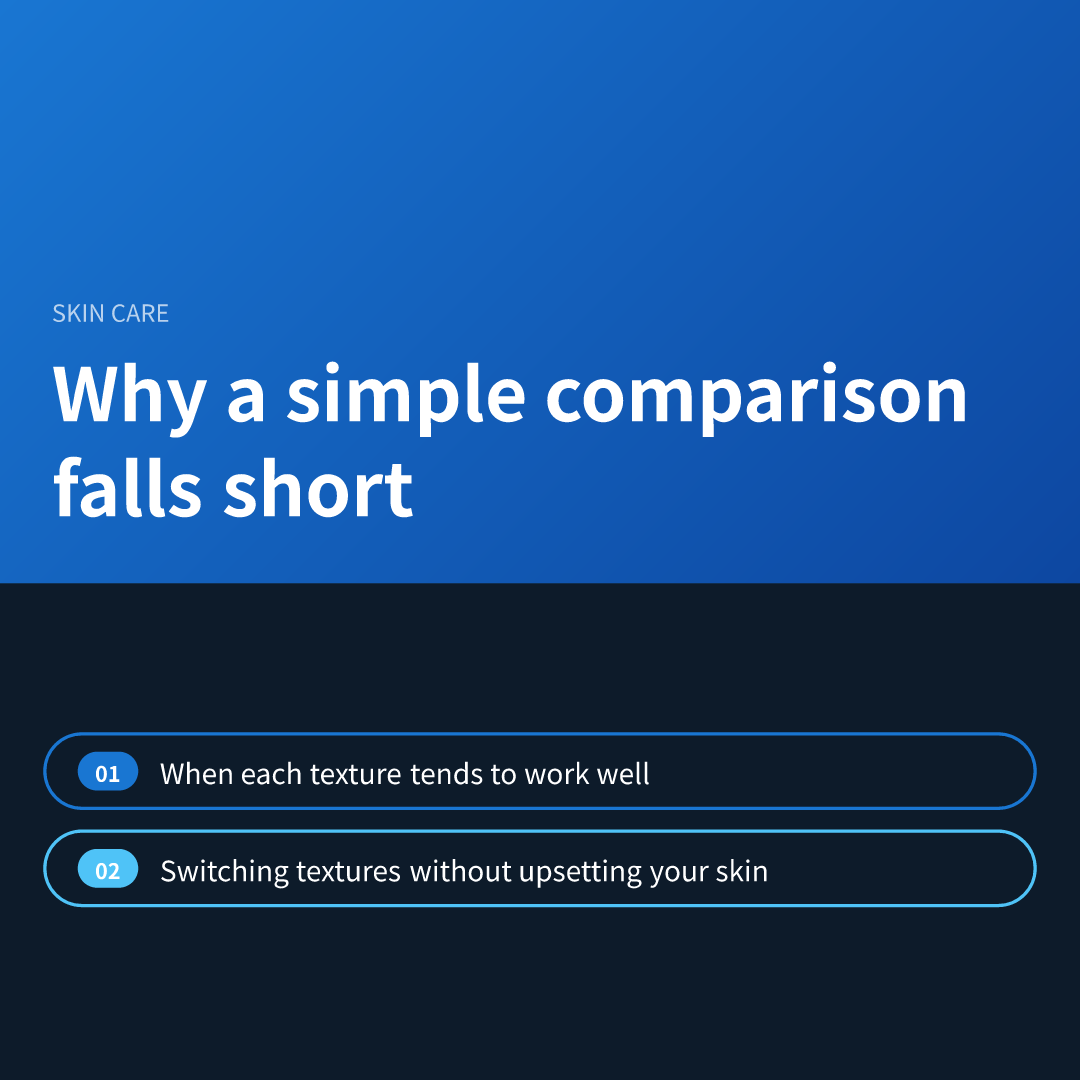
Why a simple comparison falls short
Moisturizers are usually built from a mix of ingredient types. Humectants draw water toward the skin, emollients soften and smooth, and occlusives help slow water loss from the surface. According to the American Academy of Dermatology's general skin care guidance, moisturizers are commonly used to help skin feel more comfortable and to support the skin barrier. The texture name (cream, lotion, gel) mostly describes how these ingredients are balanced with water and oils, not how well the product works.
That is why comparing textures in a vacuum can mislead. Two creams from different brands can feel nothing alike, and one gel may be more nourishing than another. Texture is a clue, not a verdict.
Variables that change the answer
- Skin tendency: Oily, dry, combination, and sensitive skin often respond differently to the same formula.
- Climate and season: Humidity, indoor heating, and air conditioning all change how skin feels over a day.
- Time of day: Many people prefer lighter products under sunscreen or makeup and richer ones at night.
- Other products: Active ingredients such as retinoids or exfoliating acids can make skin feel drier or more reactive, which may change what you want from a moisturizer.
- Where it goes: Face, body, hands, and hairy areas often call for different textures.
Leaving these variables out is where comparisons go wrong. A statement like "gels are better" has no meaning until you say better for whom, where, and when.
When each texture tends to work well
Creams: richer and more cushioning
Creams are generally thicker and contain a higher share of oils and emollients relative to water. People with skin that often feels dry, tight, or rough commonly reach for them, especially in cold or low-humidity conditions. They are also a common choice for night routines, since there is no need to layer makeup on top.
The trade-off is feel. Some people find creams heavy, and those prone to clogged pores or breakouts may want to watch how their skin responds. Ingredient lists matter here more than the texture name, and reactions vary from person to person.
Lotions: lighter and easy to spread
Lotions contain more water than creams, so they are thinner and spread easily. That makes them practical for larger areas like arms and legs, and many people like them for daytime face use when skin is normal or only mildly dry. They tend to sit between a gel and a cream in richness.
The limitation is that a lotion may not feel like enough for very dry skin or harsh weather. Some lotions also contain fragrance or alcohol-type ingredients that can bother sensitive skin, so reading the ingredient list is worthwhile.
Gels: fresh, water-based, and quick to absorb
Gel moisturizers are typically water-based and light, often with humectants such as glycerin or hyaluronic acid. They are popular with people whose skin feels oily or shiny, and with anyone who dislikes a greasy finish. Many also like them in hot, humid weather or as a base under makeup.
Gels can fall short for skin that is truly dry, because a light formula may not hold moisture in for long. Some gel products also contain ingredients like alcohols or fragrance that sensitive skin does not tolerate well. If skin feels tight soon after application, that is a sign the formula may not be enough on its own.
Related reading: How Often to Exfoliate: Skin Type and Signs to Watch
A quick side-by-side
The table below summarizes how the three textures generally compare on feel, water content, and common uses.
| Texture | Typical feel | Water vs oil balance | Common uses |
|---|---|---|---|
| Cream | Thick and cushiony | Higher oil share | Dry skin, night routines, cold weather |
| Lotion | Light and spreadable | Mostly water, some oil | Body care, everyday daytime use |
| Gel | Cool and watery | Water-based, little oil | Oily skin, humid weather, under makeup |
Switching textures without upsetting your skin
Changing moisturizers is common, especially when seasons shift. Skin that was comfortable in July may feel different by January, and swapping is often reasonable. The risk is changing too many things at once, which makes it hard to tell what caused a reaction.
Change one thing at a time
If you are moving from a gel to a cream, or the other way around, it helps to keep the rest of your routine steady while you see how skin responds. Introducing a new moisturizer alongside a new cleanser and a new active ingredient makes troubleshooting nearly impossible. Many people find it useful to test a new product on a small area first, since reactions vary and a product can look fine on paper but not suit a particular person.
Watch for signs of a poor match
Stinging, burning, persistent redness, itching, or new bumps can point to irritation or an allergic reaction. The U.S. Food and Drug Administration notes that cosmetics are not reviewed by the agency before they go on the market, so reading labels and paying attention to your own reactions matters. If a product causes discomfort, stopping use and checking with a pharmacist or healthcare professional is a sensible step.
Layering and combining
Some people use a gel in the morning and a cream at night, or layer a light hydrating product under a richer one in dry seasons. This is a matter of preference rather than a rule. If you also use prescription topical products, ask your clinician or pharmacist how a moisturizer should fit around them, since the right order and timing depend on the specific medication.
Related reading: A Simple Skincare Routine for Dry Skin: Start Small
Things texture cannot tell you
Texture does not reveal whether a product contains fragrance, essential oils, or other common irritants, and it does not tell you how a formula treats breakout-prone skin. Terms like "non-comedogenic" or "hypoallergenic" are used on many labels, but they are not guarantees, and results differ between people. Persistent dryness, scaling, or itching can sometimes be linked to skin conditions such as eczema, which is something a healthcare professional can evaluate rather than a moisturizer choice alone.
Frequently asked questions
Can I use a gel moisturizer if my skin is dry?
Some people with dry skin do use gels, often layered under a richer product or during humid weather. A gel alone may not feel like enough in dry or cold conditions, so it depends on the formula and how your skin responds. If dryness is persistent, a professional can help you work out what fits.
Does a thicker moisturizer always mean more hydration?
Not necessarily. Thickness describes texture, while hydration depends on the mix of humectants, emollients, and occlusives in the formula. A well-built lighter product can feel more comfortable on some skin than a heavy one that does not suit it.
Is it normal for my skin's needs to change through the year?
Yes, many people notice their skin feels different as weather, heating, and air conditioning change. Hormonal shifts, new products, and stress can also play a role. Because individual patterns vary, adjusting texture with the seasons is a common approach.
What should I ask a professional before choosing a moisturizer?
Bring a few specific questions to a dermatologist, pharmacist, or other qualified professional. For example: What does my skin pattern suggest about texture? Could any ingredients in my current products be bothering me? How should a moisturizer fit with any prescription products I use? Are my symptoms something a moisturizer alone can address, or should they be evaluated? Their answers can help you decide whether a cream, lotion, or gel moisturizer suits your situation.
Disclaimer: This article is for informational purposes only and is not a substitute for professional medical advice, diagnosis, or treatment. Please consult a licensed professional for personal health decisions.