How to Tell When a Product Has Expired: A Daily Routine Approach
Big organizing plans rarely last, but small checks tucked into three moments of your day tend to stick. If you want to know how to tell when a product has expired, you do not need a spreadsheet or a free weekend. You need a glance in the morning, a habit or two during the day, and a short pause in the evening. This guide walks through the day in that order and ends with a weekly checklist. It is general editorial information, not personal advice, and skin responds differently from person to person.
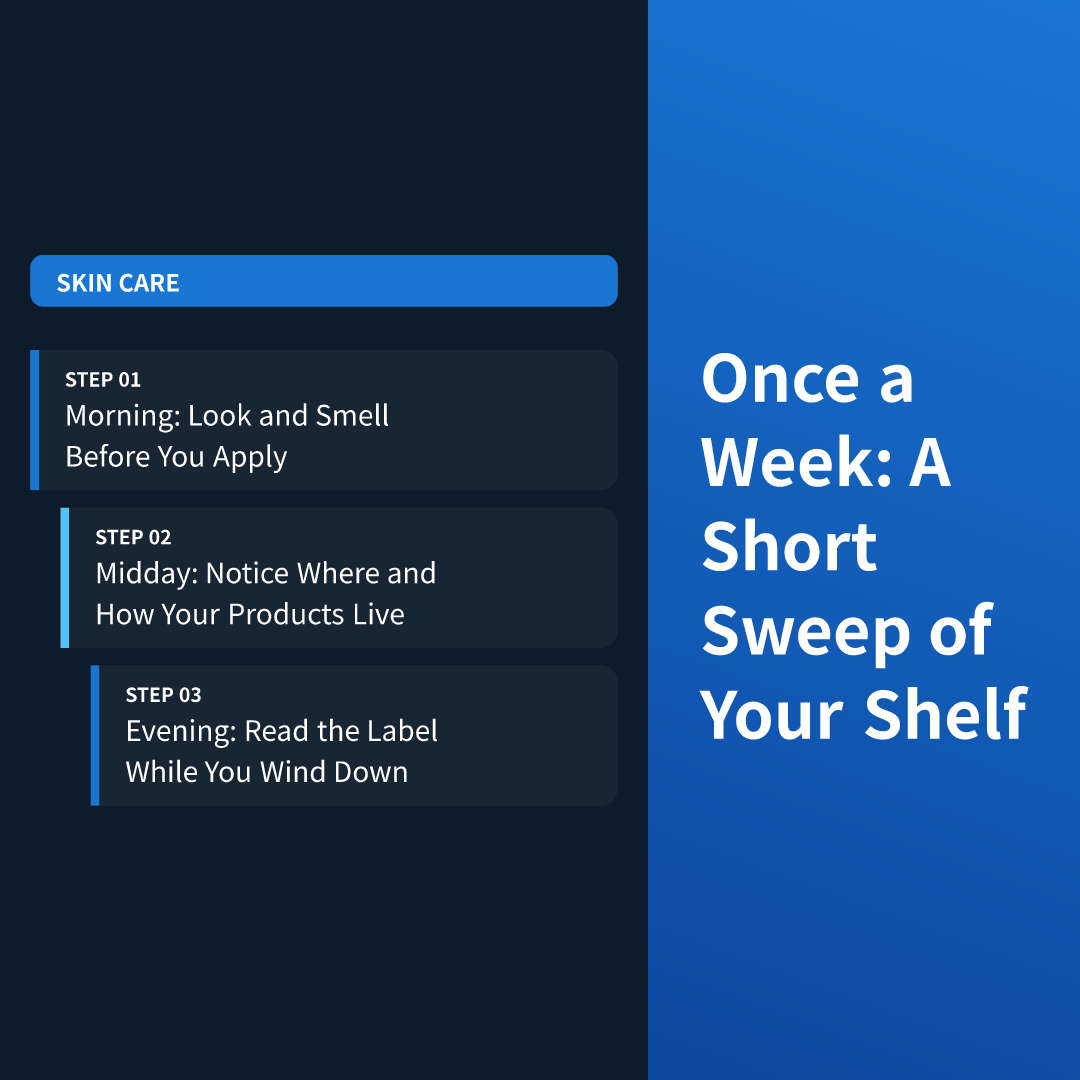
Morning: Look and Smell Before You Apply
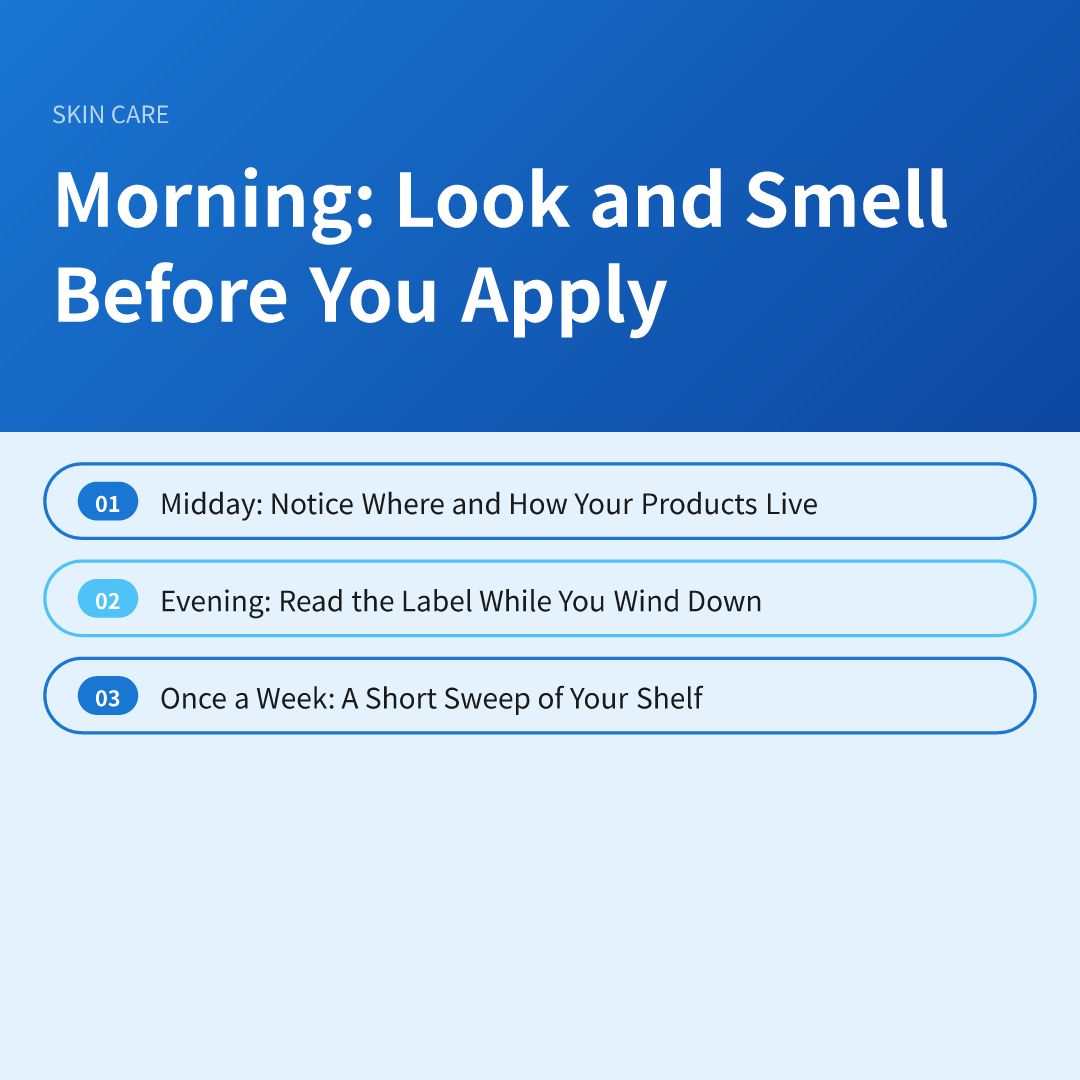
Morning is when you pick up your products with fresh senses and a clear head, which makes it the best time for the quickest check: a look and a sniff.
As you open a cleanser, serum, or moisturizer, notice whether it still seems like itself. These are the changes people commonly describe:
- Smell: a sharp, sour, rancid, or crayon-like odor that was not there at the start.
- Texture: watery and thick layers that will not blend back together, clumping, graininess, or a slimy feel.
- Color: darkening, yellowing, or patchy shifts, especially in vitamin C-type products, which can change as they age.
- Visible spots: anything that resembles mold, or specks floating in the formula.
Why now? Your nose is least dulled before you have put on fragrance or had coffee, and you are about to put the product on your face anyway. The limit: some changes cannot be seen or smelled, and some healthy products vary slightly from batch to batch. Your senses are a strong first filter, not a lab test. If something seems off, retiring it is usually the lowest-regret move.
A second morning action is to jot the opening month on any new product, on the box, the bottom of the container, or a strip of tape. Doing it when you first use something means you are not guessing later.
Related reading: What Order to Apply Skincare Products, Really
Midday: Notice Where and How Your Products Live
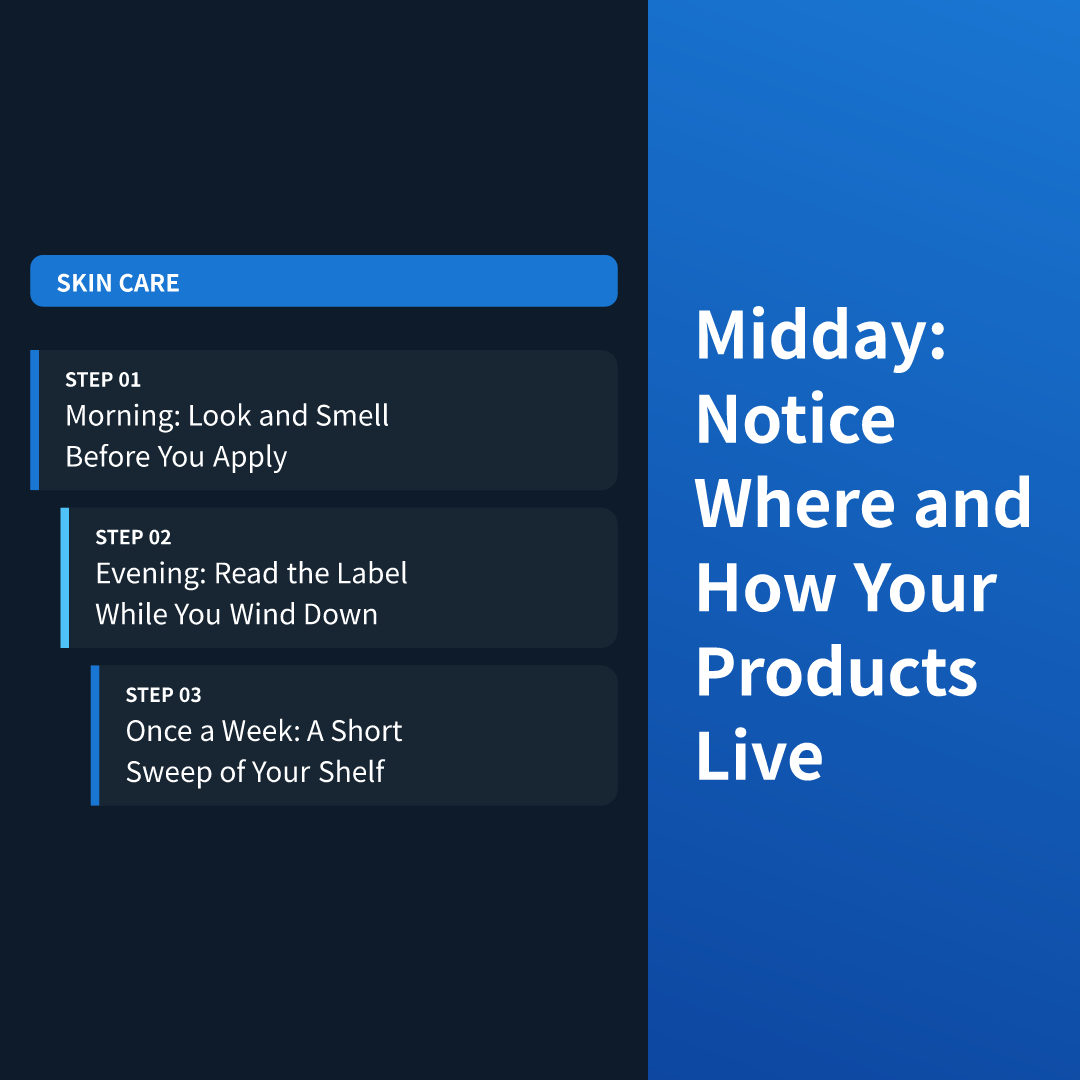
During the day, your products are mostly sitting somewhere, and that somewhere matters. Midday is a good moment to think about storage, because it is when you can see how light and warmth actually hit your space.
First, keep products somewhere stable. A cool, dry cabinet is typically gentler on formulas than a sunny windowsill or a steamy bathroom shelf, since heat and light can speed up changes in some ingredients. If your bathroom runs warm and humid, moving everyday items to a bedroom drawer is a low-effort kindness. The benefit is modest and varies by product, but it costs nothing.
Second, pay attention to packaging if you carry products in a bag or use them away from home. Pumps, tubes, and airless containers limit how much air and how many fingers touch the formula. Jars you dip into give bacteria and air more chances to get in, and clear containers let light through. That does not make jars bad; it just means a jar deserves a closer look as it ages.
Also be watchful with anything used near the eyes and with water-rich formulas. If an eye product begins to smell odd or stings in a way it did not before, it is reasonable to stop and replace it. People who wear contact lenses or have sensitive eyes may want to be especially conservative.
Evening: Read the Label While You Wind Down
Evening is calmer, so it suits the slightly more detail-oriented checks. While you cleanse and apply your night products, take a few seconds to read the packaging.
Many skincare products carry a small open-jar symbol, usually a tiny jar icon with a number and the letter "M." It is commonly called a period-after-opening mark, and it suggests how many months a product is intended to stay good once opened. The U.S. Food and Drug Administration notes that cosmetics are not required to carry expiration dates in the same way some other products are, so this symbol, when present, is worth noticing. You can read the agency's general overview on the FDA cosmetics page. Remember it is a manufacturer's estimate, not a guarantee; heat, sunlight, and how often you open the container can shorten a product's life.
If you have the energy, look for the batch code, usually printed on the bottom of a tube or the back of the box. Some brands offer a lookup tool that turns it into a production date, and customer service can often help. This is handy for items bought long ago or from a discount source, though formats vary widely and may be hard to decode alone.
Sunscreen deserves a special glance because its job is protection and an aged formula may not perform as intended. Many sunscreens in the United States carry an expiration date, and the FDA's sun safety guidance is a good place to read more. Active-ingredient products, such as vitamin C or retinoids, can also change with age.
If a product has no printed date at all, which is common, rely on your opening-month note and those sensory clues. If you cannot tell how old something is and it has been around a long time, many people simply replace it.
A simple rule of thumb: if you would hesitate to put it on your face today, you probably already have your answer.
Related reading: How to Patch Test a New Skincare Product Properly
Once a Week: A Short Sweep of Your Shelf
A weekly pass keeps the daily habits honest, and it can take just a few minutes. It also helps to know what you can skip:
- You do not need to track every item. Focus on what touches your face daily and anything near the eyes.
- A product slightly past its suggested window is not automatically harmful, though results vary. If it looks, smells, and feels normal, many people decide for themselves; those with sensitive or reactive skin may prefer replacing it sooner.
- You do not need to memorize preservative names.
- "Natural" is not a shortcut. Fewer synthetic preservatives may mean a shorter useful life.
- Refrigeration is not a universal fix, and some formulas separate when chilled. Check the brand's guidance.
If a product causes persistent redness, burning, swelling, hives, or a rash that does not settle, stop using it and consider speaking with a licensed professional such as a dermatologist. Eczema, rosacea, or acne can resemble irritation from an old product, so the cause is hard to judge alone. Because responses differ, replacing something that seems off is generally the more cautious path, and any benefit of doing so builds gradually rather than overnight.
Weekly Checklist
- Sniff and look over every product you use daily for changes in smell, texture, or color.
- Confirm each newly opened item has an opening month written on it.
- Compare open-jar symbols to your notes on anything that has been open a while.
- Check eye-area products and sunscreens first for odd smells, stinging, or a passed date.
- Move anything sitting in sun or steam to a cooler, drier spot.
- Set aside any product you would hesitate to put on your face today.
Disclaimer: This article is for informational purposes only and is not a substitute for professional medical advice, diagnosis, or treatment. Please consult a licensed professional for personal health decisions.