How to Patch Test When You Have Sensitive Skin
Slathering a new product on your whole face "just to see how it feels" is the most common way people discover they react to it, and for sensitive skin it is the least informative way to find out. Knowing how to patch test when you have sensitive skin means testing a small, low-stakes area first so that any reaction stays contained and easy to trace. Even then, a patch test is a helpful clue rather than a guarantee, and reactions vary from person to person.
The sections below walk through the usual missteps, what to do instead, how to adjust for different situations, and the questions that tend to remain afterward. Think of it as a friendly editor's roundup of general practice, not personal medical advice.
Common patch testing mistakes with sensitive skin
Most patch test failures are not about the product. They come from small habits that make the result hard to read. Here are the usual ones, each paired with why it backfires and what to do differently.
Mistake: testing the whole face first
It feels efficient, but if something goes wrong you now have irritation across a large, visible area, and you cannot tell which product caused it. Sensitive skin often reacts in ways that overlap, such as stinging, redness, or tightness. A broad test makes those signals blur together.
Instead: start with one small spot and one product at a time. Keeping the test contained is the whole point.
Mistake: testing several new products at once
When a new cleanser, serum, and moisturizer all go on during the same week, a flare-up has three possible suspects. Sensitive skin does not come with a label telling you which one it objected to. You end up guessing, and often you toss everything, including products that were fine.
Instead: stagger new products so only one unknown is in play at a time. It is slower, but it gives you a clear answer.
Mistake: choosing a spot that is too tough or too different
Skin on the palm or the back of the hand is thicker and usually less reactive than facial skin. A product that seems fine there can still bother the cheek or around the eyes. On the other hand, testing right next to the eye is a risk in itself.
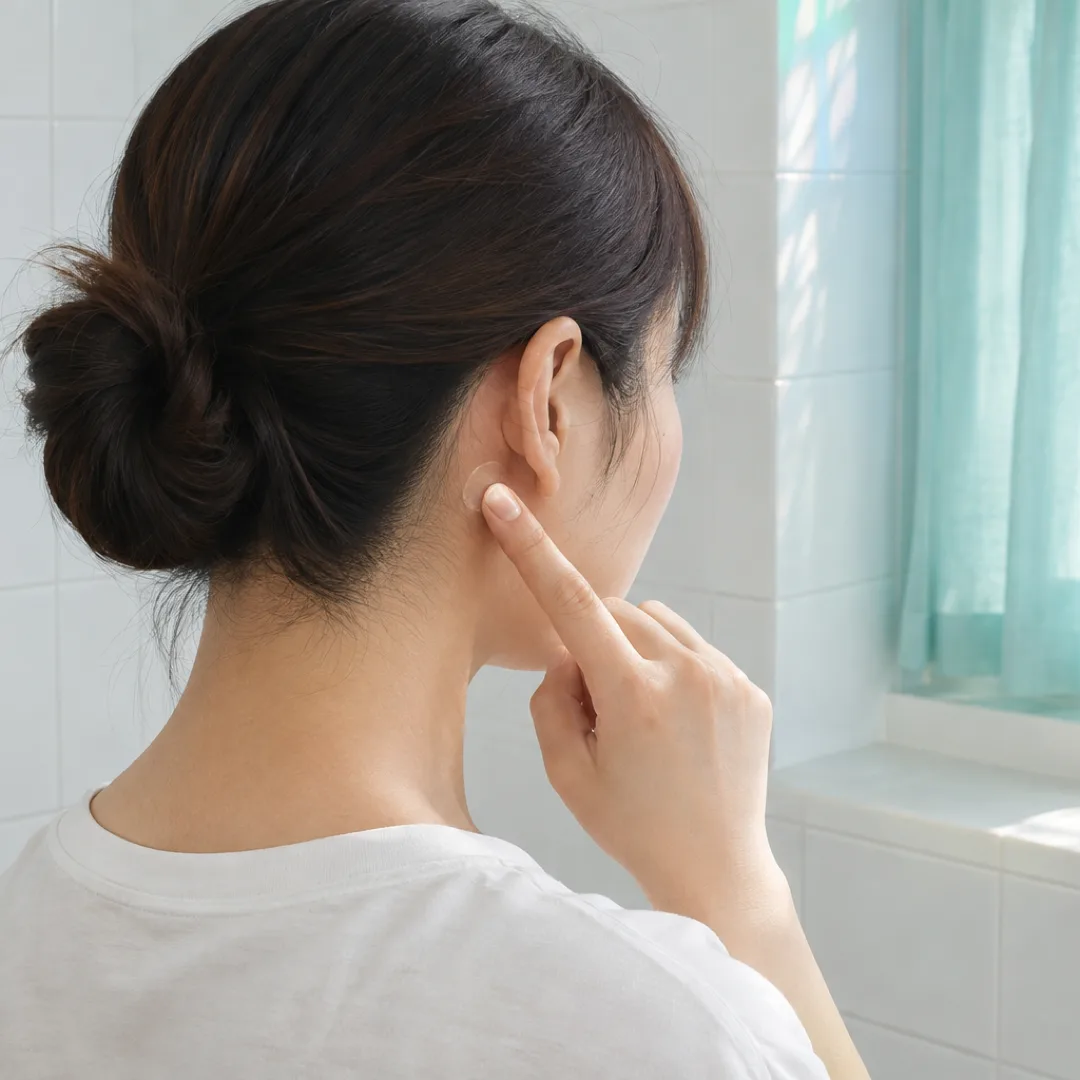
Instead: many people choose the inner forearm or the area behind the ear, since these are thinner, easy to monitor, and out of the way. If the product is meant for the face, a spot along the jawline or just in front of the ear is also commonly discussed. No single spot is perfect, and a reaction at one site does not map exactly onto another.
Mistake: judging the result too quickly
Checking after a few minutes and declaring the product "fine" misses reactions that show up later. Some skin responses are immediate, like stinging, while others, such as allergic-type contact reactions, can take a while to appear. According to the American Academy of Dermatology's general guidance on contact dermatitis, delayed reactions to products are a known pattern, which is why a quick glance is not enough.
Instead: plan to watch the spot over a couple of days, not a couple of minutes, and note anything that changes.
Mistake: ignoring the ingredient list entirely
Patch testing is not a substitute for reading labels. If you already know certain fragrances, essential oils, or specific preservatives bother you, a patch test on a product containing them is just a way of confirming what you could have predicted.
Instead: scan the ingredient list first and skip anything containing a known personal trigger. Then patch test what remains.
how to read a skincare ingredient listMistake: testing on already irritated skin
If your skin barrier is already inflamed, dry, or stinging, almost anything will feel unpleasant. A test on compromised skin can look like a failed result when the product was not really the issue, or it can worsen what is already going on.
Instead: wait until the skin is calm and the test area is intact, without cuts, rashes, or active flare-ups.
Mistake: pushing through a reaction to "be sure"
Some people see redness or itching and decide to keep going because "skin purges" or "it needs time to adjust." That reasoning gets applied too freely. A purge and an irritant or allergic reaction are not the same thing, and on sensitive skin it is hard to tell them apart from the outside.
Instead: treat unexpected itching, burning, swelling, or a spreading rash as a signal to stop using the product and, if it persists, ask a qualified professional.
What to do instead: a calm, careful approach
Once the common mistakes are out of the way, the approach itself is fairly simple. The goal is a clean, readable test. This is a general description of common practice, and product labels and professionals may suggest their own variations.
Set up the test so it is easy to read
- Start with clean, calm skin. Choose an area that is not irritated, freshly shaved, or recently exfoliated.
- Pick a small, discreet area. The inner forearm or behind the ear are common choices, and a spot you can see easily helps you notice changes.
- Test one product only. Keep everything else in your routine the same during this window so you know what you are evaluating.
- Use a small amount. A patch test is meant to be a tiny sample, not a full application. Follow the product's own directions and ask a pharmacist or clinician if you are unsure how a particular product should be handled.
Watch, note, and be patient
After the product goes on, avoid washing or rubbing the spot more than needed, and keep an eye on it over the following days. Jot down what you see in a phone note: redness, itching, bumps, dryness, or a burning sensation, and roughly when each appeared. Writing it down sounds fussy, but it makes patterns far easier to spot, especially if you are testing more than one product over several weeks.
The FDA's general consumer guidance on cosmetics notes that reactions to cosmetic ingredients can vary and that people should stop using a product if they have a bad reaction. That is a useful baseline: no reaction at the test site is encouraging, but it is not proof that the product will never bother you.
Know what counts as a warning sign
Mild, brief warmth might be normal for certain products, but persistent or escalating symptoms are different. Signs worth taking seriously include:
- Itching that grows rather than fades
- Redness that spreads beyond the test area
- Swelling, blistering, or oozing
- Pain or a burning sensation that does not settle
- Any facial swelling, trouble breathing, or feeling unwell, which calls for urgent medical attention
If any of these appear, stop using the product and consult a healthcare professional. How a reaction is assessed and managed is a decision for a clinician, who can also discuss whether allergy testing makes sense for you.
Adjusting patch tests for different situations
Sensitive skin is not one single thing. Some people sting easily, some flush, some react only to fragrance, and some have a skin condition in the background. These variations change how cautious it makes sense to be.
If you have eczema, rosacea, or another diagnosed skin condition
Skin conditions can make the barrier more reactive, and a patch test on affected or nearby skin may be hard to interpret. Some people with eczema notice that certain products seem to bring on flare-ups, so they often take extra care when trying something new. If you have a diagnosed condition, it is sensible to ask your dermatologist or other clinician before introducing active ingredients or heavily fragranced products, rather than relying only on a home patch test.
If you are testing an active ingredient
Ingredients such as exfoliating acids, retinoids, and vitamin C are commonly associated with irritation, particularly on sensitive skin. A patch test can show an obvious bad reaction, but it may not predict how your face responds with repeated use over time. Irritation from actives can build up gradually. If you are curious about whether an active suits your skin or whether it interacts with any prescription products you use, a pharmacist or dermatologist is the right person to ask, and the product's directions are the right reference for how it is meant to be used.
If you are testing hair dye or similar products
Hair dye is a special case. Many hair dye products come with their own patch test instructions because certain dye ingredients are known to cause allergic reactions in some people. The FDA's consumer information on hair dyes notes that a patch test is often recommended by manufacturers and that some reactions can be serious. Follow the manufacturer's directions exactly, and do not substitute your own version. If you have had a reaction to dye before, talk with a professional before trying again.
If you are testing a product for a child
Children's skin is often more delicate, and what works for an adult may not suit a child. For babies and young children, a pediatrician or pharmacist is the best person to ask before trying something new, especially if the child already has dry, itchy, or reactive skin.
If you are pregnant or using prescription skin treatments
A patch test only tells you about surface tolerance. It does not tell you whether an ingredient is appropriate during pregnancy or alongside a prescription. Those questions belong with your clinician or pharmacist, who can consider your specific situation.
If you tend to react to "everything"
When it feels like every product causes trouble, it can be tempting to keep testing endlessly. Often a simpler routine helps more than another new product. Some people find it useful to keep their routine minimal for a while and bring in new items slowly. If reactions keep happening without a clear cause, a dermatologist can help work out whether something deeper is going on, including whether patch testing in a clinic could be useful.
Frequently asked questions
If my patch test shows no reaction, does that mean the product is safe for my face?
Not necessarily. A clear patch test is a good sign, but it only reflects how one small area responded over a short window. Facial skin can behave differently, and some reactions develop only after repeated use, so keep watching your skin even after a clean test.
Is it really necessary to patch test products labeled "hypoallergenic" or "for sensitive skin"?
Many people still choose to, because these labels are marketing terms and are not a promise that a product will suit every person. The FDA has noted in its consumer information on cosmetics that terms like hypoallergenic have no standard federal definition, so what the label means can differ from brand to brand. Individual triggers vary, so a gentle-sounding product can still bother you.
Can I just ask a doctor to patch test me instead?
In some cases, yes, and it may be a good idea if you have repeated unexplained reactions. Dermatologists and allergy specialists can perform clinical patch testing designed to look for specific contact allergies, which is a different process from a quick at-home check. Whether it makes sense for you is something to discuss with a qualified professional.
Patch testing on sensitive skin comes down to patience: one product, one small spot, and enough time to see what happens. Skip the shortcuts, write down what you notice, and stop if your skin tells you no. For anything persistent or worrying, a qualified professional is the right next step.
Disclaimer: This article is for informational purposes only and is not a substitute for professional medical advice, diagnosis, or treatment. Please consult a licensed professional for personal health decisions.