How to Layer Moisturizer and Sunscreen Without Pilling
The order is simple: moisturizer first, sunscreen last, as the final skincare step in the morning. That is the general convention most skincare information sources describe, and it works because sunscreen is meant to sit on the surface of the skin as an even film. But the same complaint, like flaking, greasiness, or stinging, can come from very different causes, so the fix depends on what is actually going wrong. This article sorts the common causes, explains how to tell them apart, and points out where a professional opinion is worth getting.
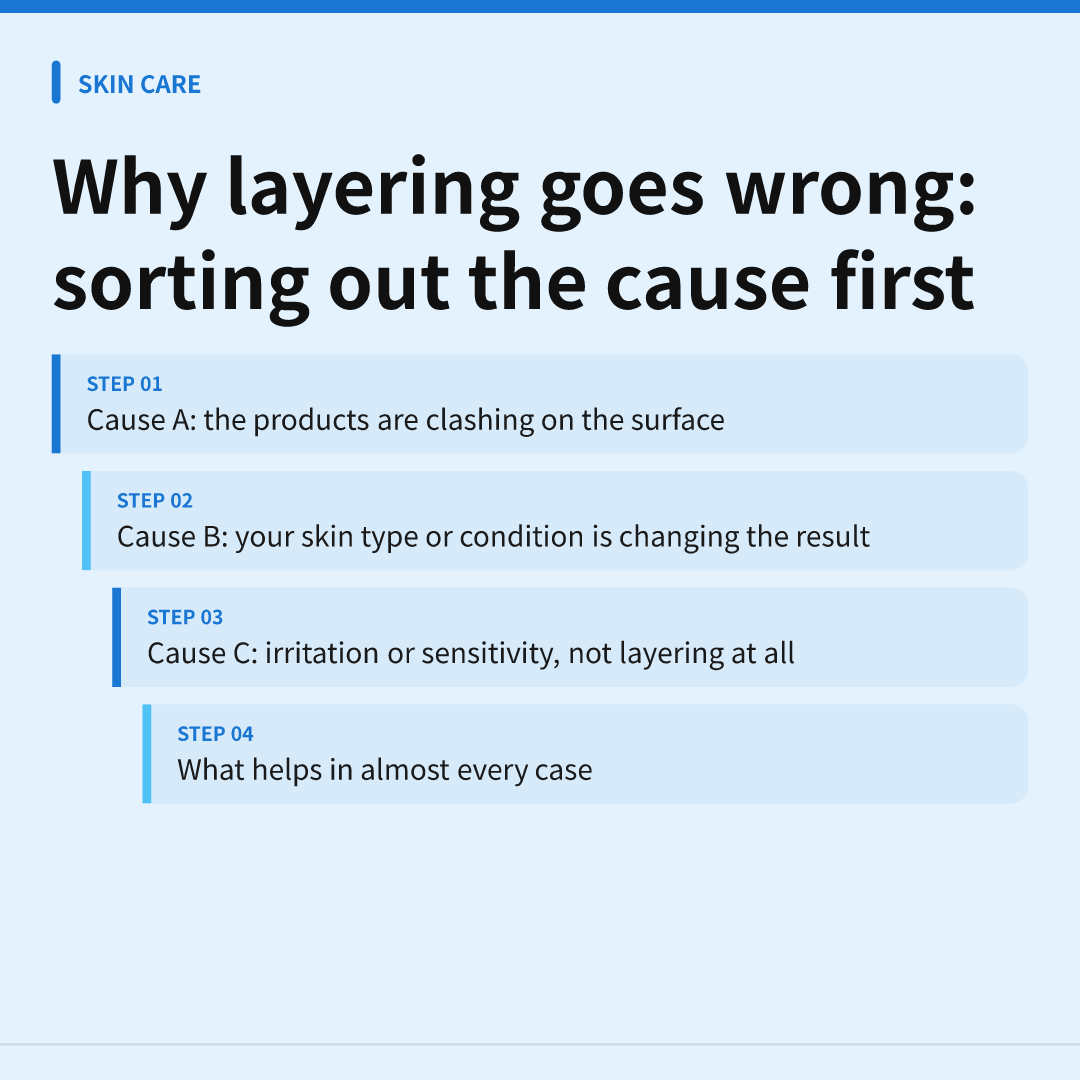
Why layering goes wrong: sorting out the cause first
When people say their moisturizer and sunscreen "don't work together," they usually mean one of a few things. Small bits of product roll off the skin like eraser crumbs, a makeup base slides around, the face looks shiny within an hour, or the skin feels hot and itchy. Each of these has a different root, and swapping products at random can waste money without solving anything.
Broadly, the trouble tends to come from one of three places. The first is product mechanics: the textures, bases, or film-forming ingredients simply do not sit well on top of each other. The second is skin condition and type: very dry, very oily, or compromised skin responds differently to the same layers. The third is irritation or sensitivity, where the layering is fine but an ingredient is not suiting the skin. The sections below take these one at a time.
A useful rule of thumb: texture problems show up on the surface, while comfort problems show up in how the skin feels. Notice which one you are dealing with before changing anything.
Cause A: the products are clashing on the surface
How to tell if this is your situation
Pilling is the classic sign. If tiny rolls or flakes appear when you spread sunscreen over moisturizer, or when makeup goes on afterward, the products are probably not blending well. The skin underneath may feel perfectly comfortable, and the problem may happen only with certain combinations. Another hint is that it gets worse when you rub or pat repeatedly, or when you pile on several layers in a hurry.
Common contributors, as generally described in skincare ingredient discussions, include silicone-heavy primers or moisturizers layered with water-based products (or the reverse), thick creams that haven't settled before the next step, and a heavy hand with every layer. Some film-forming ingredients in sunscreens can also form clumps when disturbed by a still-wet layer beneath.
What usually helps
- Let each layer settle. Many people find that giving moisturizer a short time to absorb before sunscreen reduces rolling. There is no universal wait time, and it varies by product and climate.
- Press rather than rub. Gentle patting tends to disturb the layer underneath less than dragging product across the face.
- Match bases where possible. If a moisturizer and sunscreen are both lightweight and water-based, they often layer more smoothly than a mismatched pair.
- Simplify the stack. Cutting back the number of products in the morning is often the fastest way to find the culprit.
If you misdiagnose this one, the waste is real. People sometimes assume their skin is "rejecting" sunscreen and give up on it, when a texture swap or a slightly longer pause would have solved the problem. On the other hand, if pilling continues across many different products, the cause may lie elsewhere, so keep reading.
Cause B: your skin type or condition is changing the result
Here the products might be perfectly compatible, but the skin underneath is changing the outcome. Two sub-cases show up most often.
B1: Dry or tight skin
How to tell: The skin feels tight within minutes of finishing, makeup clings to dry patches, and flaking appears around the nose, mouth, or cheeks. Sunscreen may look patchy because it is settling into dry areas unevenly.
What usually helps: A more cushioning moisturizer underneath often makes sunscreen glide more evenly, and some people prefer cream-type or hydrating sunscreen formulas. Dry skin that flakes persistently, cracks, or feels sore may point to a barrier issue or a skin condition rather than a layering issue, and that is worth raising with a dermatologist or other qualified clinician.
B2: Oily or shiny skin
How to tell: The face looks glossy early in the day, sunscreen seems to slide off, and your T-zone gets slick even though the product felt light at first. Heavy layers may also feel suffocating.
What usually helps: Many people with oilier skin prefer a lightweight gel-type or fluid moisturizer and a sunscreen labeled as lightweight or matte-finishing. Some find they need only a thin moisturizer layer, while others skip it in the morning when the sunscreen itself contains moisturizing ingredients. That is a personal call, and it is reasonable to ask a pharmacist or skin professional what suits your routine. Be careful about stripping the skin to fight shine, because over-cleansing can leave skin feeling irritated and, for some, even oilier-looking.
Misreading this branch is costly in a different way. Piling on richer products for oily-looking skin that is actually dehydrated, or the reverse, can make things feel worse. If you are unsure whether your skin is dry, oily, or both in different zones, a short conversation with a licensed skin professional can save months of guesswork.
Cause C: irritation or sensitivity, not layering at all
How to tell if this is your situation
Stinging, burning, redness, or itching shortly after application points away from texture and toward sensitivity. Layering order is rarely the culprit here. Some sunscreen filters, fragrances, preservatives, or alcohol-based ingredients bother some people. Mineral and chemical sunscreens are often discussed as different options, and some people with sensitive skin find one type more comfortable than the other, though responses are individual and neither type is guaranteed to suit everyone.
Another common source is the rest of the routine. Exfoliating acids, retinoids, or other active products used earlier can leave skin more reactive, so sunscreen that normally feels fine may suddenly sting. Stinging near the eyes can also come from product migrating there during the day with sweat.
What usually helps
- Pare the routine back to a gentle cleanser, a simple moisturizer, and sunscreen while the skin settles.
- Look at ingredient lists for repeat offenders if you have noticed reactions before.
- Consider asking a pharmacist or dermatologist about patch testing approaches and fragrance-free options.
- Seek professional advice promptly for swelling, blistering, spreading rash, or discomfort that does not ease. Those are not things to troubleshoot at home with more products.
Treating irritation as a texture problem is the most common misstep. Adding more layers or switching only the order will not calm a reaction to an ingredient, and it may add more potential irritants. If you use prescription skincare, how it fits with sunscreen and moisturizer is a question for your prescriber, who can explain it for your particular situation.
What helps in almost every case
Whichever branch you landed on, a few habits tend to make layering easier. None of them are guarantees, but they are widely recommended in general skincare guidance.
Keep sunscreen as the last skincare step
Sunscreen is generally intended to form the top protective layer over other skincare, with makeup applied after it. Public health organizations such as the American Academy of Dermatology publish guidance on sunscreen use, and it is worth reading directly rather than relying on a summary. Product labels also explain how a specific sunscreen is meant to be used, including reapplication, so check the label and ask a pharmacist or clinician if something is unclear.
Do not let layering undermine protection
One quiet risk is using so little sunscreen, or spreading it so thin, that it no longer does what the label describes. Another is relying on a moisturizer or foundation that mentions sun protection instead of a dedicated sunscreen. Sun protection also goes beyond products, and shade and protective clothing are commonly mentioned alongside sunscreen.
Introduce one change at a time
If you change the moisturizer, the sunscreen, and the cleanser in the same week, you will not know which one made the difference. Changing a single item and watching for a while gives clearer answers. Skin also varies with season, hormones, sleep, and stress, so what works in humid summer may feel different in dry winter.
Related reading: How to Build a Simple Skincare Routine That Sticks
Test new products sensibly
Trying a new product on a small area before full use is a common precaution, though it does not predict every reaction. If you have a history of allergic reactions, eczema, rosacea, or other skin conditions, talk with a qualified professional before overhauling your routine.
Conclusion: matching the fix to the cause
To layer moisturizer and sunscreen well, start with the simple order and then let the symptom tell you what to adjust. If the trouble is rolling or flaking on the surface, the likely issue is product mechanics, so texture, patience, and a lighter hand tend to matter most. If the skin itself feels very dry or very oily, the answer usually lies in choosing a moisturizer and sunscreen weight that suits your skin type. If you feel stinging, burning, or redness, the more likely cause is irritation, and the sensible move is to simplify and consider professional input rather than re-ordering products.
In short: surface pilling points to compatibility, tightness or shine points to skin type, and discomfort points to sensitivity. When it is hard to tell which one you have, you have a few reasonable options. You can strip the routine down to the basics and add things back one at a time, you can ask a pharmacist about gentler or fragrance-free options, or you can book a visit with a dermatologist or other licensed skin professional, especially if symptoms persist or worsen. Results differ from person to person, and a routine that suits a friend may not suit you.
Disclaimer: This article is for informational purposes only and is not a substitute for professional medical advice, diagnosis, or treatment. Please consult a licensed professional for personal health decisions.