How to Choose a Moisturizer for Oily Skin
Two people can both say their face looks shiny by noon, yet the reason behind it may be completely different, so the same moisturizer will not suit both. Figuring out how to choose a moisturizer for oily skin starts with asking why your skin feels greasy, not just whether it does. Some oily skin is simply producing a lot of sebum, some is thirsty underneath and compensating, and some is irritated by the products it already meets every day.
This guide is written from an information-editor point of view, not a clinician's. It explains common causes, how people usually tell them apart, and which ingredients and textures tend to fit each situation. Skin varies a great deal from person to person, so treat everything here as general background rather than personal advice.
Sorting Out Why Your Skin Looks Oily
Shine on the surface is a symptom, not a diagnosis. According to the American Academy of Dermatology's general skin-care guidance, oil production is influenced by factors such as genetics, hormones, climate, and the products you use. That means a moisturizer that works well in a humid summer may feel suffocating or, oddly, not enough in a dry winter.
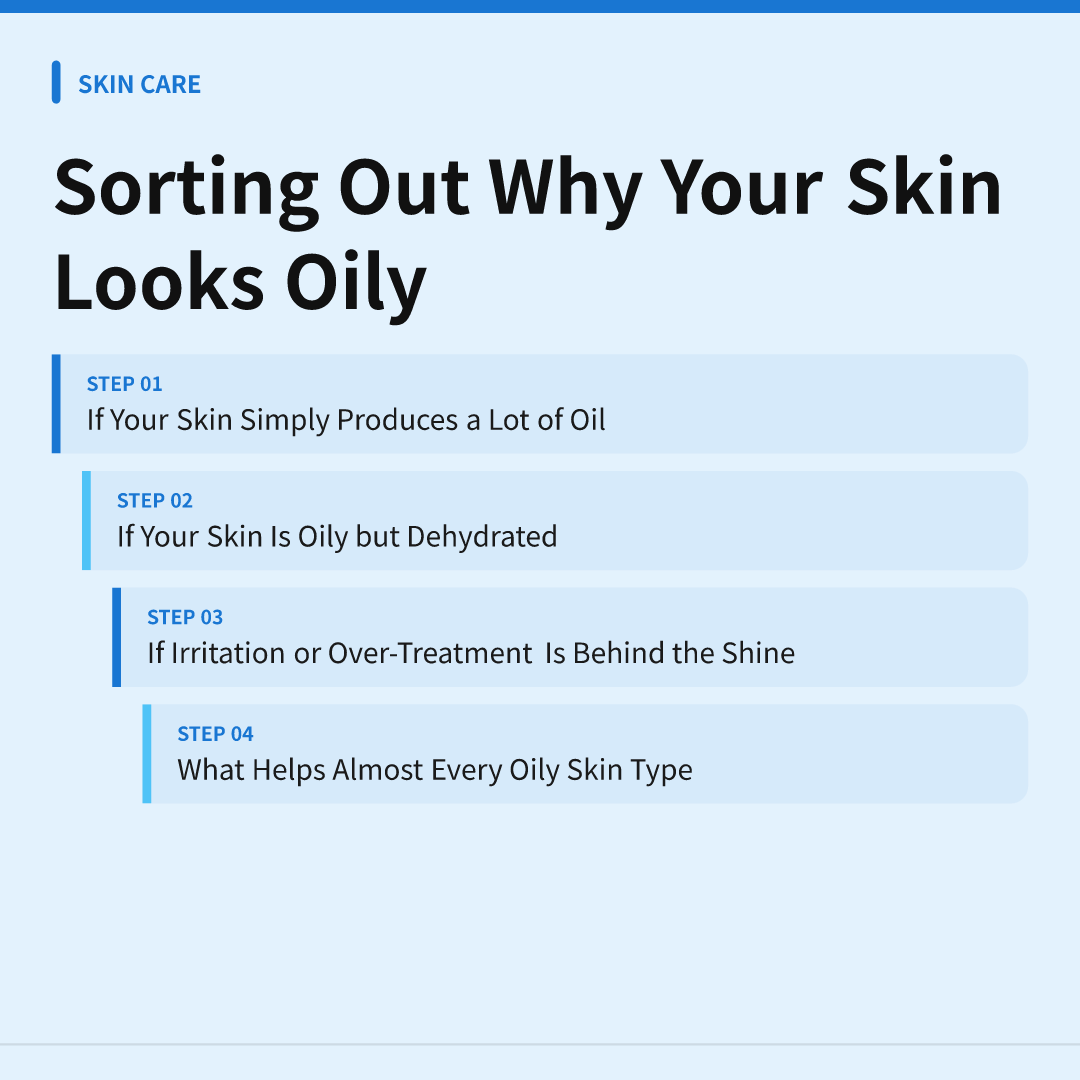
For product-picking purposes, it helps to sort oily skin into three broad patterns:
- Naturally high oil production: shine returns fairly quickly after cleansing, pores often look more visible, and skin rarely feels tight.
- Dehydrated but oily: the surface looks shiny, yet skin can feel tight or rough after washing, and makeup may sit unevenly.
- Over-treated or irritated skin: stinging, redness, or flaking show up alongside the shine, often after strong cleansers or exfoliating products.
These patterns can overlap, and the lines are blurry. Still, picking the closest match gives you a much better starting point than choosing by the word "oily" on a label.
If Your Skin Simply Produces a Lot of Oil
How to tell this is your situation
A common sign is that your face feels comfortable, not tight, after cleansing, but looks shiny again after a few hours, especially through the forehead, nose, and chin. Skipping moisturizer may even feel fine for a day or two. Many people with this pattern assume they do not need a moisturizer at all.
What tends to fit
Even oil-prone skin generally benefits from a moisturizer, because the skin barrier still needs water, not more oil. Lightweight textures are the usual starting point: gels, gel-creams, and thin lotions that absorb without leaving a film. Labels such as "oil-free" or "non-comedogenic" are often used by brands for products formulated to be less likely to clog pores, though these terms are not tightly standardized, so they are a hint rather than a promise.
Ingredients commonly found in lighter formulas include glycerin and hyaluronic acid, which are humectants that attract water, and niacinamide, which is widely used in cosmetic products aimed at oily or combination skin. Some people also like silicone-based primers or dimethicone for a smooth, matte-ish feel. Reactions to any of these vary, so it is reasonable to introduce one new product at a time.
The cost of guessing wrong
If your skin actually belongs in this group and you pick a rich, buttery cream meant for dry skin, you may notice heaviness, a slick finish, or breakouts for some people. That is a wasted purchase and sometimes a few weeks of frustration. On the other hand, abandoning moisturizer entirely can leave skin feeling uncomfortable once the weather or your routine changes.
If Your Skin Is Oily but Dehydrated
How to tell this is your situation
The classic clue is a mismatch: the surface looks shiny, but your skin feels tight, rough, or slightly flaky after washing. Fine lines may look more noticeable when your face is bare, and foundation might cling to dry patches while the T-zone still glows. Oil and water are different things, so skin can be low on water while still producing plenty of sebum.
Dermatology organizations such as the American Academy of Dermatology note that a damaged or stressed skin barrier can lose water more easily. Harsh cleansing, frequent scrubbing, and a very dry environment are common contributors, though the exact mix differs for everyone.
What tends to fit
People in this group often look for moisturizers that emphasize water-binding ingredients without much heavy oil. Hyaluronic acid, glycerin, panthenol, and ceramides are frequently found in barrier-focused formulas. Ceramides are lipids that occur naturally in skin, and cosmetic products containing them are commonly used to support the skin's feel and comfort. A gel-cream is often a comfortable middle ground between a watery gel and a thick cream.
Layering is another approach some people prefer: a hydrating serum or essence first, then a light moisturizer on top. The right order and amount for you can depend on the specific products, so the label directions and a skin-care professional's input are the best guides there.
The cost of guessing wrong
If dehydration is the real issue and you reach for a mattifying, alcohol-heavy product to fight shine, skin can feel tighter and look duller. Some people then respond by cleansing even more, which can keep the cycle going. Matching texture to what your skin actually lacks, which is water, usually saves both money and patience.
If Irritation or Over-Treatment Is Behind the Shine
How to tell this is your situation
Look for stinging when you apply products, persistent redness, rough patches, or a tight-yet-greasy feeling, especially if you recently added several active ingredients at once. Strong cleansers, frequent exfoliating acids, retinoid-type products, and scrubs are common culprits when layered together. Skin may look shiny because it is inflamed and unevenly hydrated, not because it is producing the most oil.
What tends to fit
In this situation, many people simplify first: a gentle cleanser, a plain fragrance-free moisturizer, and sunscreen during the day. Soothing and barrier-supportive ingredients such as glycerin, ceramides, and petrolatum-free simple formulas are often described as gentle choices, though individual reactions still differ. Fragrance, essential oils, and high levels of alcohol are frequent triggers for sensitive skin, so some people prefer to avoid them while their skin settles.
How long to pause active products, and which ones to bring back, is a personal question. It is worth discussing with a dermatologist or other qualified professional, particularly if you use prescription products. The U.S. Food and Drug Administration's consumer information on cosmetics also notes that cosmetic products can cause reactions in some people, which is why paying attention to your own skin matters.
The cost of guessing wrong
If irritation is the real cause and you add yet another product, such as an oil-control serum or a clarifying mask, you may deepen the problem. It can also make it harder to tell which product caused what. Persistent burning, swelling, a spreading rash, or anything that worries you is a reason to stop and seek professional care rather than experimenting further.
Related reading: What Ceramides Do for Skin and the Barrier
What Helps Almost Every Oily Skin Type
Whichever pattern fits you best, a few habits tend to be useful across the board. None of them are guarantees, and results build gradually and vary between people.
- Patch test new products. Trying a small area first, as many product labels suggest, can reveal a reaction before it affects your whole face.
- Change one thing at a time. If you swap your cleanser, moisturizer, and serum together, you will not know which one helped or hurt.
- Give a product time. Skin often needs a few weeks before you can judge a new moisturizer fairly, unless it causes obvious irritation.
- Watch the season. A gel that feels perfect in summer may feel thin in cold, dry months, and adjusting is normal.
- Do not skip sun protection. According to the American Academy of Dermatology, daily sun protection is a standard part of skin care. Some moisturizers include sunscreen, but check the label to understand what it covers.
Reading the label without getting lost
Ingredient lists are ordered by amount, with the largest quantities first, so what appears near the top usually tells you the most about the texture. Marketing words such as "mattifying," "pore-minimizing," or "balancing" are not regulated medical terms. A cosmetic is generally meant to cleanse, beautify, or change appearance rather than treat a medical condition, which is how the FDA draws the line between cosmetics and drugs.
Also keep in mind that persistent, painful, or inflamed breakouts can be acne, and acne is a medical skin condition that a moisturizer is not designed to manage. If that sounds familiar, a dermatologist can look at your skin directly and discuss options.
When product choice is not the whole story
Sometimes oiliness changes suddenly, or comes with other symptoms, and that deserves a conversation with a healthcare professional rather than another round of shopping. Hormonal shifts, medications, and certain skin conditions can all play a role, and a moisturizer cannot sort that out on its own.
Bringing It Together
To choose a moisturizer for oily skin, start with the likely cause. If your skin truly makes a lot of oil and feels comfortable after cleansing, a light gel or gel-cream with humectants is a common direction. If it feels tight under the shine, hydration-focused and barrier-supportive formulas are often a better match than anything labeled mattifying. If stinging or redness is part of the picture, simplifying and avoiding common irritants usually comes before adding anything new.
When you cannot tell which group you belong to, a few practical options help. You can test one simple, fragrance-free moisturizer for a few weeks and see how your skin responds, ask a pharmacist or skin-care professional to look at your routine, or book a visit with a dermatologist if problems are persistent or uncomfortable. Skin responds differently for everyone, so patience and small, one-at-a-time changes usually beat a full overhaul.
Disclaimer: This article is for informational purposes only and is not a substitute for professional medical advice, diagnosis, or treatment. Please consult a licensed professional for personal health decisions.