How Much Sunscreen to Use on Your Face, Really?
You're standing at the bathroom mirror with a tube of sunscreen, wondering if that thin swipe you just applied is doing anything at all. Most people underestimate this amount by quite a bit, which is one reason sunburns and uneven protection happen even when someone swears they "wore sunscreen." For most faces, a nickel-sized dollop or roughly a quarter teaspoon of sunscreen is the commonly cited starting point for adequate coverage.
That said, the right amount can shift slightly depending on your face size, the formula you're using, and how much of your neck and ears you're covering too. Below, we'll break down the practical side of this question — from daily amounts to formula differences — so you can build a routine that actually protects your skin instead of just feeling like one.
How much sunscreen should you actually put on your face?
A commonly referenced guideline is about a quarter teaspoon, or a dollop roughly the size of a nickel, for the face alone. This is meant to cover the entire face, not just the cheeks and forehead — think jawline, nose, and around the eyes too.
Many skincare guides also suggest extending this to the neck, ears, and any exposed hairline area, which usually means adding a bit more product. Skipping these spots is a common reason people get uneven tanning or burning along the neck and ear tips.
Keep in mind this is a general reference point, not a strict rule that applies identically to everyone. Someone with a smaller face or a different sunscreen texture may need a slightly different amount to get even coverage.
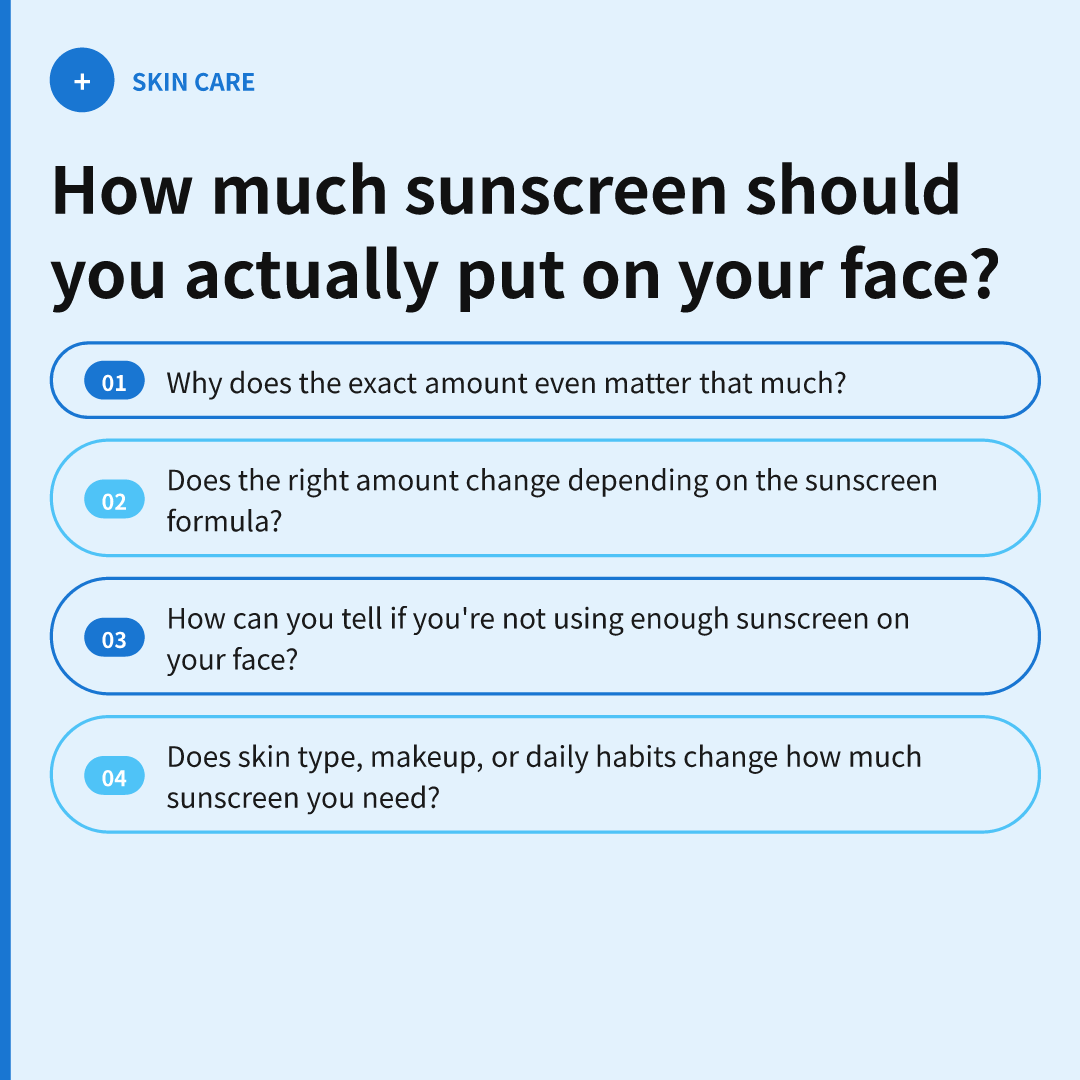
Why does the exact amount even matter that much?
Sunscreen products are tested and labeled for their level of protection based on a specific, fairly generous application amount. When people apply less — which happens often, since thick layers can feel greasy or look chalky — the actual protection they get in real life tends to be lower than what's listed on the bottle.
This gap between "labeled protection" and "real-world protection" is one of the more overlooked issues in sun care. It's part of why dermatology-focused resources, including general guidance from the FDA's consumer information on sunscreen, tend to emphasize both the amount applied and the habit of reapplying.
In short, using too little doesn't just mean "slightly less protection" — it can mean a noticeably weaker shield than the number printed on the label suggests.
Does the right amount change depending on the sunscreen formula?
Yes, texture plays a real role here. Thin, watery, or gel-based sunscreens sometimes need a touch more product to build an even film across the skin, since they spread very easily and can be applied too sparingly without realizing it.
Thicker creams and lotions tend to match the quarter-teaspoon guideline fairly closely, since their texture makes it easier to see and feel where coverage is thin. Stick and powder sunscreen formats are the trickiest — they often require multiple back-and-forth passes over the same area to approach similar coverage, which many people don't realize.
- Lotions and creams: generally align well with standard nickel-sized guidance
- Gels and fluids: may need a slightly larger amount due to thin spreadability
- Sticks and powders: often require several deliberate passes for similar coverage
If you mainly use a stick or powder formula, it may be worth pairing it with a lightweight fluid sunscreen underneath, especially for daily outdoor exposure.
How can you tell if you're not using enough sunscreen on your face?
One practical sign is how quickly your skin tans or reddens compared to how much time you spend outdoors. If sunburn or tanning shows up faster than expected despite "wearing sunscreen," under-application is a common and very fixable culprit.
Another clue is visible unevenness — patchy tan lines around the nose, cheekbones, or jaw usually mean those areas weren't fully covered in the first place. Some people also notice their sunscreen seems to "disappear" within an hour or two, which can point to a layer that was too thin to begin with.
None of these signs are a diagnosis of anything serious on their own, but they're useful, low-effort ways to reassess your routine before assuming the product itself isn't working.
Does skin type, makeup, or daily habits change how much sunscreen you need?
Oilier skin types sometimes apply less sunscreen out of concern about shine or breakouts, but the actual amount needed for protection doesn't really shrink because of oil production. It may simply be worth choosing a lighter, oil-free, or gel-based formula rather than reducing the quantity.
Makeup adds another layer of complexity. Foundation or powder with SPF listed on the label is rarely enough on its own, since most people don't apply nearly enough of those products to reach the tested protection level — sunscreen is generally considered the base layer, with makeup as an extra, not a replacement.
People with sensitive or reactive skin may also want to patch test new sunscreen formulas, since irritation can sometimes come from specific ingredients rather than the amount used. how to patch test new skincare products If redness, stinging, or breakouts appear consistently after sunscreen use, that's a good reason to bring the product name to a dermatologist rather than guessing at the cause.
What about reapplying sunscreen throughout the day?
Reapplication amount generally mirrors the first application — roughly the same nickel-sized amount, not a smaller "touch-up" version. Many people skip full reapplication because it feels excessive over makeup, but this is exactly where powder sunscreens or setting sprays are sometimes suggested as a more practical option.
How often reapplication is needed can depend on sweating, swimming, toweling off, and general sun exposure time, and this can vary quite a bit from person to person. For extended outdoor time, checking product packaging for its specific reapplication guidance is generally more reliable than guessing.
Frequently Asked Questions
Is more sunscreen always better for the face?
Not necessarily — applying far beyond the recommended amount doesn't add meaningful extra protection and can just leave skin feeling greasy or make makeup harder to apply smoothly. The goal is an even, complete layer rather than a thick, uneven one.
Can you use body sunscreen on your face instead?
It's possible, but body formulas are often heavier or more likely to clog pores on facial skin, especially for those prone to breakouts. Many people prefer a facial-specific formula for comfort, though this comes down to personal skin tolerance and formula ingredients.
Do darker skin tones need less sunscreen on the face?
The amount needed for adequate coverage is generally similar across skin tones, since the guidance is based on covering the full facial surface evenly rather than skin color. What can differ is formula preference, since some mineral sunscreens leave a visible white cast that's more noticeable on deeper skin tones.
What if sunscreen keeps irritating your skin no matter the amount?
Persistent irritation is a reasonable signal to stop using that specific product and consult a dermatologist, since the issue may be tied to an ingredient rather than the quantity applied. A professional can help narrow down whether it's a fragrance, alcohol content, or an active ingredient causing the reaction.
Getting the amount of sunscreen right is a small habit with a fairly outsized impact on how well your skin is actually protected day to day. If you're ever unsure whether your routine, skin reaction, or sun exposure needs professional input, a dermatologist can offer guidance suited to your specific skin rather than general reference points like these.
Disclaimer: This article is for informational purposes only and is not a substitute for professional medical advice, diagnosis, or treatment. Please consult a licensed professional for personal health decisions.