Do You Need a Toner? What It Does and Who Can Skip It
For most people, a toner is optional rather than essential. A toner is a thin, water-like cosmetic liquid used after cleansing to prepare skin for the next step, and modern formulas are usually built around hydration, gentle exfoliation, or soothing ingredients instead of the harsh, stinging astringents of the past. Below, you will find what toner means today, the situations where it earns a spot in a routine, how it differs from products people often confuse it with, and how to decide whether you need one.
What a Toner Actually Is
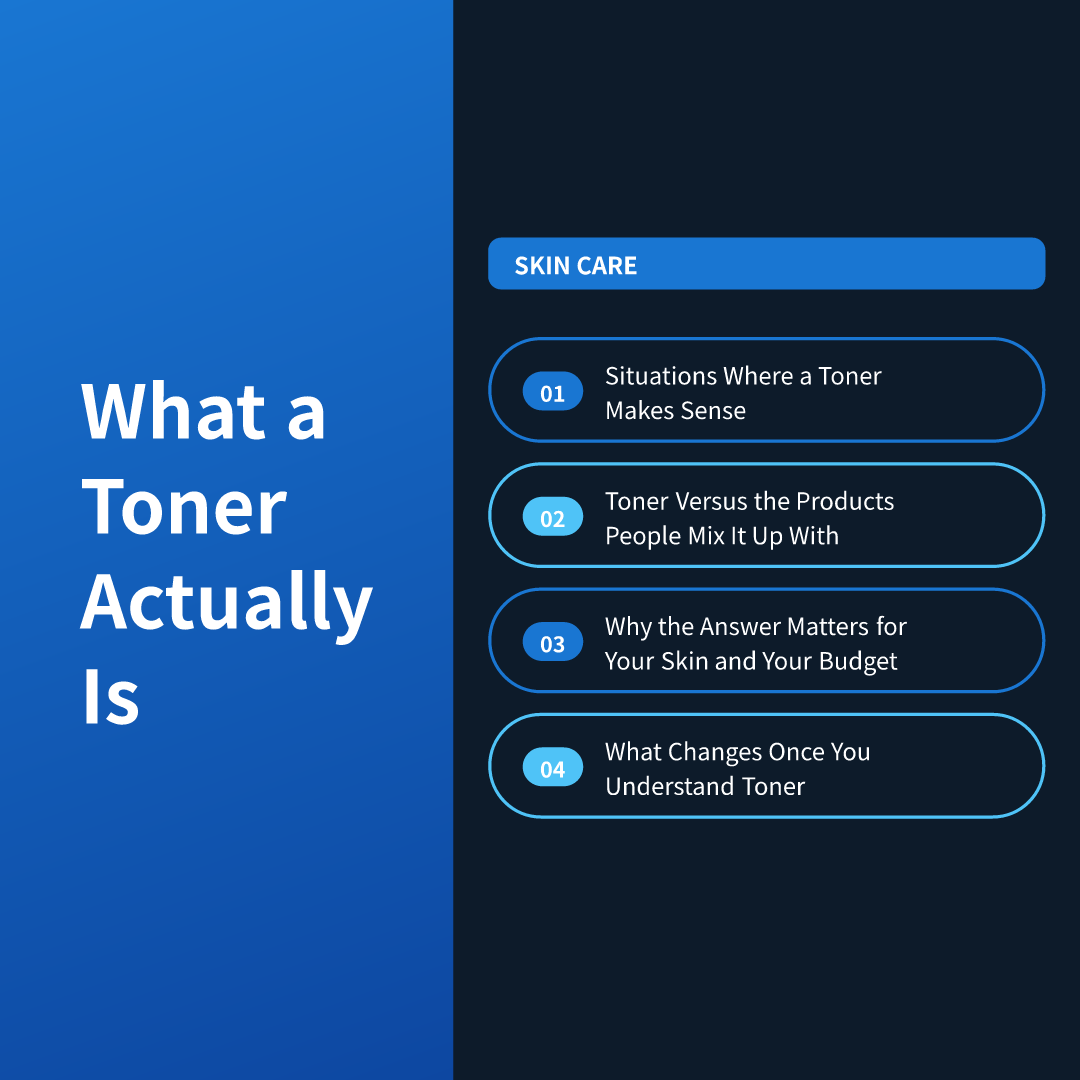
Toner is a broad category, not a single type of product. Generally, it refers to a lightweight liquid, mist, or essence-like formula applied to clean skin before serums and moisturizer. Some are mostly water and humectants (ingredients that attract and hold water in the outer skin layer), while others contain acids or other active ingredients meant to do a specific cosmetic job.
The word itself causes confusion. Older toners were often alcohol-heavy and designed to leave skin feeling tight and "squeaky clean." Many people still associate toner with that sensation. Today, plenty of formulas skip high amounts of drying alcohols, and a tight feeling is generally not considered a goal of a balanced routine.
Common types you will see on shelves
- Hydrating toners: Water-based formulas with humectants such as glycerin or hyaluronic acid. They are meant to add a layer of moisture before other products.
- Exfoliating toners: These contain acids, such as alpha hydroxy acids (AHAs, water-soluble acids that loosen dead surface cells) or beta hydroxy acids (BHAs, oil-soluble acids often used on congested skin).
- Soothing toners: Formulas with calming ingredients like panthenol or plant extracts, often marketed to sensitive-feeling skin.
- Astringent-style toners: Often contain alcohol or witch hazel and are marketed for a clean, matte feel. These tend to be the most likely to irritate dry or reactive skin.
Situations Where a Toner Makes Sense
A toner tends to be useful when it solves a specific problem in your routine rather than filling a step because a trend says so. Think of it like adding a seasoning to a meal: helpful if the dish is missing something, unnecessary if it already tastes right.
If your skin feels dry right after washing
Some cleansers leave skin feeling tight, and a hydrating toner can act as a quick buffer layer before moisturizer. That said, a gentler cleanser may solve the same problem without adding a step. It is worth testing which change makes the bigger difference for you.
If you want a gentle exfoliation step
Exfoliating toners are one way people add chemical exfoliation to a routine. According to the American Academy of Dermatology's general skin care guidance, over-exfoliating or combining too many active products can irritate skin, so these formulas are not for everyone. How often a particular product is used depends on its label and your skin's tolerance, and a dermatologist can help if you are unsure.
If you wear makeup or sunscreen daily
Some people like a second light pass after cleansing to feel that leftover residue is gone. Others find a proper double cleanse covers this. Either approach is a matter of preference, and neither is a requirement for healthy-looking skin.
If you enjoy the ritual
Skincare is partly about habit and enjoyment. If a toner makes your routine feel pleasant and your skin tolerates it, that is a perfectly reasonable reason to keep one. Just be honest with yourself about whether you are using it for a benefit or for the feeling.
Related reading: What Essence Means in Skincare and How It Fits Your Routine
Toner Versus the Products People Mix It Up With
A lot of the "do I need this?" question comes from overlapping product names. Here is how toner generally differs from its neighbors.
Toner and essence
Essences are typically a little more concentrated or slightly thicker than toners, with an emphasis on hydration. The line between the two is blurry, and brands use the terms differently. Reading the ingredient list tells you more than the label name.
Toner and astringent
Astringents are a subset of the older toner style, usually built around alcohol or similar ingredients to give a degreased feel. Many people with oily skin reach for them, but oily skin still needs water-based hydration, and heavy drying can sometimes lead to irritation. Reactions vary from person to person.
Toner and micellar water
Micellar water is a cleansing product containing tiny cleansing particles (micelles) that attract oil and makeup. It is designed to remove dirt, while a toner is generally meant to be used after cleansing. They can look similar in the bottle, but their jobs differ.
Toner and facial mist
Mists are lighter and often used throughout the day for a quick refresh. They are usually not a substitute for a toner step, though some formulas can serve both purposes depending on their ingredients.
Toner and serum
Serums usually carry a higher concentration of targeted ingredients, such as vitamin C or niacinamide, and are layered after toner. If you only have room for one extra product, many people find a serum more targeted than a toner. Whether that holds true for you depends on your goals.
Why the Answer Matters for Your Skin and Your Budget
Understanding toner helps you avoid two common problems: skipping something that would genuinely help, or piling on products that add cost and irritation risk without a clear benefit. Skin barrier health, meaning the outer layer's ability to hold moisture and keep irritants out, tends to do best with a consistent, simple routine. The U.S. Food and Drug Administration notes that cosmetics are not required to be approved before sale, so reading ingredient lists and patch testing new products matters.
Cosmetic claims also deserve some skepticism. A toner may help skin feel softer or more comfortable, but it is a cosmetic, and no toner can treat a medical skin condition. If you deal with persistent redness, painful breakouts, or itching, a licensed dermatologist is the right person to ask rather than adding more products.
Signs a toner may not be working for you
- Stinging, burning, or lingering redness after use
- Skin that feels tight or flaky afterward
- New breakouts or rough patches that appear after you start a product
If you notice these, it is reasonable to stop the product and discuss it with a pharmacist or dermatologist, especially if you use prescription skin treatments, since combining actives can raise irritation risk. Patch testing a small area before using a new product on your whole face is a widely recommended habit.
Related reading: How Often to Exfoliate: Skin Type and Signs to Watch
What Changes Once You Understand Toner
Knowing what toner is and is not leads to two practical shifts in how you decide.
- You judge a toner by its job, not its label. Instead of asking whether everyone needs one, you ask whether a hydrating, exfoliating, or soothing formula fills a gap in your routine. If your cleanser, moisturizer, and sunscreen already work well for you, skipping toner is a sound choice.
- You treat it as an add-on, not a fix. Since toner is a cosmetic, you stop expecting it to resolve concerns that call for professional evaluation. When do you need a toner? Usually only when it makes your routine more comfortable or fills a specific need, and results vary, so it is worth keeping the rest of your routine simple and bringing persistent skin concerns to a qualified professional.
Disclaimer: This article is for informational purposes only and is not a substitute for professional medical advice, diagnosis, or treatment. Please consult a licensed professional for personal health decisions.