What Witch Hazel Does in Skincare, and Who Should Be Careful
You pick up a toner at the drugstore, see "witch hazel" on the label, and wonder whether it is a gentle plant extract or something that will leave your face tight and stinging. Witch hazel is a plant-derived ingredient commonly used in skincare for its astringent, tightening feel, and it may suit some skin types better than others. What witch hazel does in skincare comes down to its natural tannins, the other ingredients it is mixed with (especially alcohol), and how sensitive your skin happens to be.
What is witch hazel, and why is it in so many skincare products?

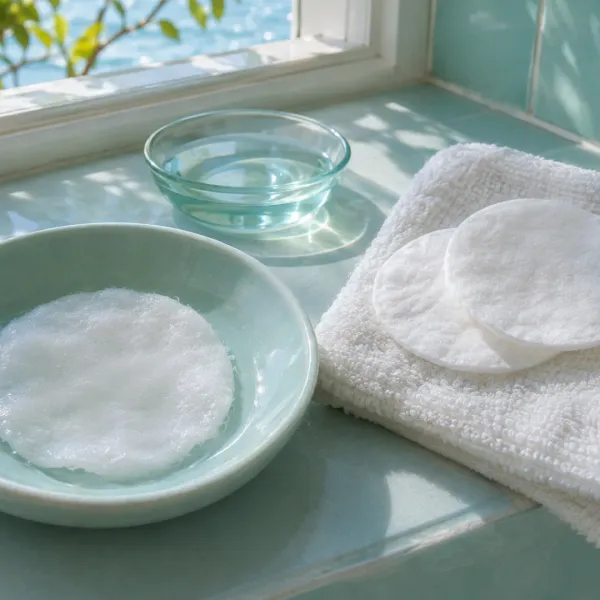
Witch hazel is an extract made from the bark and leaves of a shrub called Hamamelis virginiana, which is native to North America. According to the National Center for Complementary and Integrative Health (NCCIH), it has a long history of traditional use for skin concerns. Today it shows up mainly in toners, cleansing pads, after-shave products, and some spot-care formulas.
Brands like it for a few practical reasons. It gives a clean, slightly tightening feel after washing, it is familiar to shoppers, and it can be sold as a plant-based ingredient. That familiarity is part of why it appears in so many drugstore products.
The compounds that give it its character
Witch hazel contains tannins, which are plant compounds known for their astringent quality. Astringent here simply means the ingredient can make skin feel firmer and less slick for a while after use. It does not permanently change pore size, a point worth keeping in mind when marketing language gets enthusiastic.
The extract also contains other plant compounds, such as polyphenols, that are often discussed for their antioxidant qualities. How much any of these compounds matter in a finished toner depends on the formula and how the extract was made.
Not all witch hazel products are the same
This is where labels matter most. Some witch hazel products are made by distilling the plant, and many commercial versions include added alcohol as part of the formula. Others are alcohol-free and blend the extract with ingredients such as glycerin or aloe to soften the feel.
Two bottles that both say "witch hazel" on the front can behave very differently on skin. The ingredient list on the back tells you far more than the front label does.
how to read a skincare ingredient listWhat does witch hazel actually do for your skin?
Witch hazel is mostly used for its astringent, toning effect, and some people also use it to help skin feel less oily or less puffy for a short time. It is a cosmetic-style ingredient, so it is better understood as a way to change how skin feels than as a way to treat a condition. The U.S. Food and Drug Administration (FDA) notes that products meant to treat disease are regulated differently from cosmetics, which is a useful reminder when a label sounds medical.
Here are the effects people most often associate with it:
- A tightening, refreshed feel. The tannins can leave skin feeling firmer and cleaner after washing.
- A less shiny look for a while. Some people with oily or combination skin like how it seems to take surface oil down temporarily.
- A soothing sensation for some. Certain formulas are used on skin after shaving, and some people find them comforting. Others find the same products irritating.
- A light cooling feel. This is often paired with ingredients like aloe or cucumber extract in gentler toners.
Oily skin and breakout-prone skin
Witch hazel is often marketed to people dealing with oiliness and blemishes. The reasoning is that its astringent quality makes skin feel less greasy. However, feeling less oily is not the same as addressing the causes of breakouts, which can involve hormones, genetics, and other factors that a toner cannot change.
Some people also find that stripping oil too aggressively leads skin to feel tight, dry, or irritated, which can make a routine harder to stick with. Results vary from person to person, and a product that works well for one person may not suit another.
Redness, puffiness, and post-shave skin
Witch hazel is sometimes used with the hope of calming a flushed or puffy look. Research on its soothing properties is limited and mixed in quality, and the NCCIH describes the evidence for many of its uses as modest. So it may feel pleasant for some people, but it should not be expected to resolve ongoing redness.
If your skin looks persistently red, burns easily, or flares up often, that pattern is worth discussing with a dermatologist rather than trying to cover it with more toners.
What it does not do
Witch hazel is not a moisturizer, and it does not replace sunscreen. It is also not a substitute for medical care when you are dealing with persistent acne, eczema, rosacea, or any rash that is painful or spreading. Think of it as an optional step that adjusts how skin feels, not as a foundation of a routine.
building a simple routine for oily skinIs witch hazel a good fit for every skin type, and what are the risks?
No, witch hazel does not suit everyone, and sensitive or dry skin tends to be the most likely to react. The alcohol-containing versions in particular can feel drying or stingy, and fragrance or other added ingredients can also trigger reactions. Reactions vary from person to person, so a plant origin is not a guarantee of gentleness.
Who may want to be more careful
Some groups have good reason to approach it cautiously:
- People with dry or sensitive skin. Astringent products can add to tightness, flaking, or stinging.
- People with eczema, rosacea, or a damaged skin barrier. Skin that is already inflamed or compromised may react more strongly to astringents and alcohol.
- People with known plant allergies. Allergic contact reactions to botanical ingredients are possible, even with familiar ones.
- People using strong actives. If your routine already includes exfoliating acids or retinoid-type products prescribed or recommended by a professional, adding another drying step may increase irritation.
Signs a product is not working for your skin
Burning, persistent redness, itching, peeling, or a rash that appears after using a product are common signals that skin is unhappy. If that happens, many people simply stop using the product and keep the rest of their routine as simple as possible. The American Academy of Dermatology (AAD) generally advises that persistent or severe reactions are worth having a dermatologist look at.
Around the eyes, the skin is thinner and more delicate, and many product labels advise avoiding that area. Always read the manufacturer's directions on the specific product you own, since formulas differ.
A cautious way to approach a new product
A patch test is a commonly mentioned precaution before using a new skincare product widely. The AAD describes patch testing as a way to see whether a product causes a reaction on a small area first. For the specifics of how to do it with a particular product, follow the label directions or ask a pharmacist or dermatologist.
It also helps to introduce one new product at a time. If you add several at once and your skin reacts, it becomes very hard to tell which one caused the problem.
Alcohol-free versus alcohol-containing formulas
If you are curious about witch hazel but your skin runs dry or reactive, many people look for alcohol-free formulas with soothing, hydrating ingredients listed alongside it. That said, "alcohol-free" does not automatically mean "non-irritating," because fragrance, essential oils, and other additives can also cause trouble. The full ingredient list is still the best guide.
When to talk to a professional
Reach out to a dermatologist or other licensed clinician if you have breakouts that are painful, scarring, or not improving, or if a reaction is severe, swelling, or spreading. The same goes for skin conditions you have not had evaluated. A professional can look at your skin directly and discuss options suited to your situation, which no ingredient article can do.
Frequently asked questions
Can witch hazel shrink pores?
Witch hazel can make pores look less noticeable for a short time because of its tightening, astringent feel. That effect is temporary and does not permanently change pore size. If you want to understand your pores or oiliness better, a dermatologist can discuss what is realistic for your skin type.
Is an alcohol-free witch hazel toner better if my skin is dry or sensitive?
If your skin is dry or sensitive, an alcohol-free formula is often the version people try first because alcohol can add to dryness and stinging. It is not a guarantee, since fragrance and other additives can still cause reactions, so checking the full ingredient list still matters. A patch test and a conversation with a pharmacist or dermatologist can help if you are unsure.
Can witch hazel replace a moisturizer or sunscreen?
If you are hoping witch hazel can stand in for a moisturizer or sunscreen, it cannot. It is mainly an astringent that changes how skin feels, and it does not provide the hydration or sun protection those products are designed for. It is better treated as an optional extra step, with the rest of your routine staying in place.
Disclaimer: This article is for informational purposes only and is not a substitute for professional medical advice, diagnosis, or treatment. Please consult a licensed professional for personal health decisions.