How to Moisturize Right After a Shower: Fix These Mistakes
Waiting until your skin feels tight and dry before reaching for lotion is one of the most common ways people undo a good shower. Knowing how to moisturize right after a shower comes down to timing, because skin that has just been wet holds onto moisture best when it is sealed in soon afterward. Once the water evaporates, the skin can feel drier than it did before you stepped in. That is why a small change in order and speed often matters more than the price of the product.
This guide walks through the habits that quietly work against your skin, explains why each one backfires, and offers a practical swap for every mistake. It also covers how to adjust for different skin types and seasons, and when it makes sense to talk to a professional.
Common mistakes that undo your shower hydration
Most of these habits feel harmless or even helpful. The trouble is that they work against the way skin holds water, so the effort ends up wasted.
Mistake 1: Letting your skin air-dry completely first
Many people towel off, get dressed, check their phone, and only then think about lotion. By that point, the water on the skin surface has evaporated, and it may have taken some of the skin's own moisture with it. Moisturizers are generally described as helping to reduce water loss from the skin, so applying them after the surface has dried means there is less water to hold in.
What to do instead: Keep your moisturizer within arm's reach of the shower, and apply it while your skin is still slightly damp. The goal is a few minutes, not a stopwatch. If your bathroom is the problem, move the bottle there so you are not walking across the house with damp skin.
Mistake 2: Rubbing yourself dry with the towel
A vigorous towel rub removes water, but it also creates friction on skin that has just been softened by warm water. For people with dry or reactive skin, this can add to that tight, irritated feeling. It also leaves the skin bone dry, which makes the timing problem from the first mistake worse.
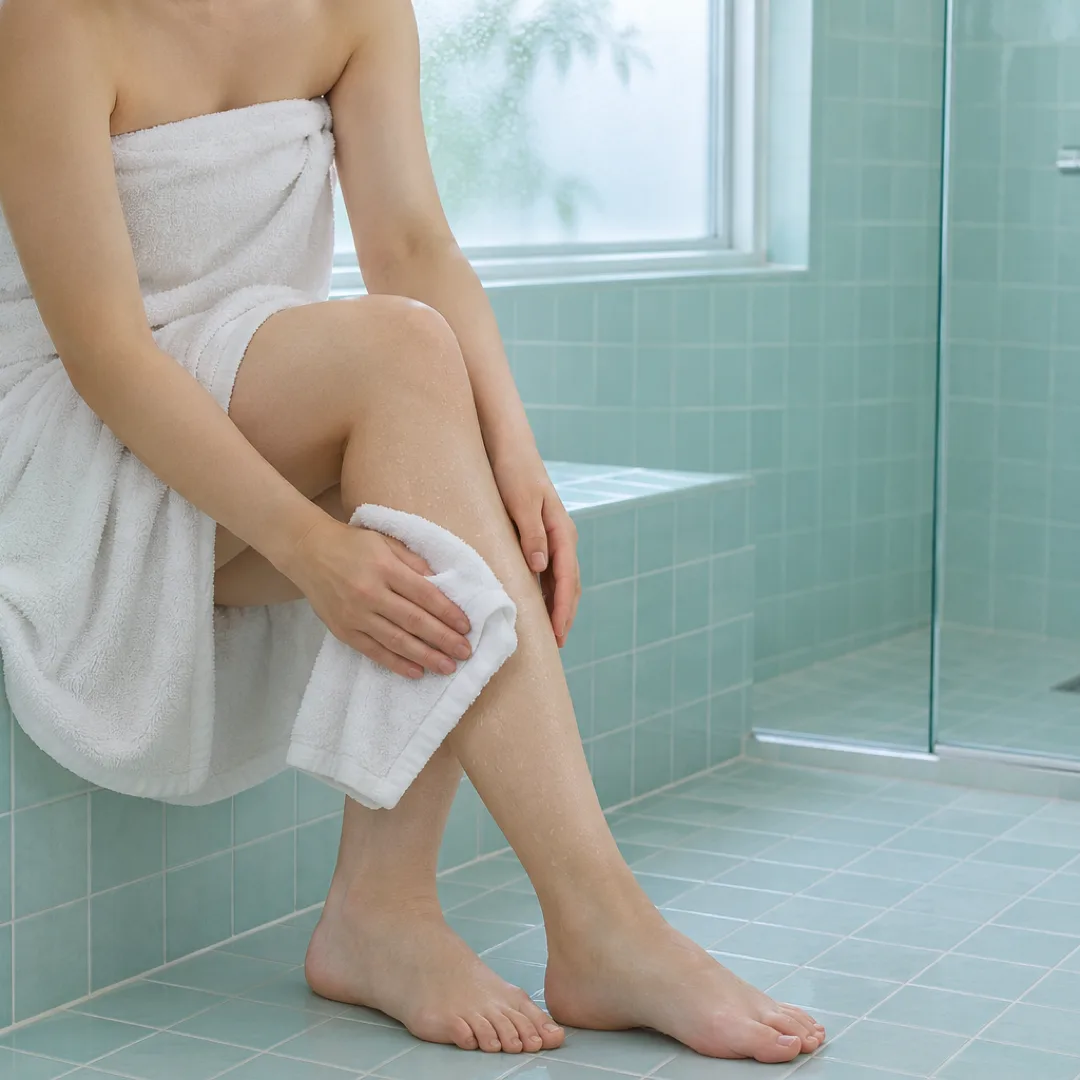
What to do instead: Pat or blot gently, and stop while a light film of moisture remains. You are not trying to be completely dry before you moisturize. A soft, clean towel helps, and so does washing towels regularly so residue from detergent or old products does not sit against your skin.
Mistake 3: Taking very hot, very long showers
Hot water feels wonderful, especially in winter, but it can strip away the natural oils that help the skin barrier do its job. The American Academy of Dermatology's general skin care guidance for dry skin points toward shorter showers and lukewarm rather than hot water. A long, steamy shower followed by a thin layer of lotion is a mismatch that many people never connect to their dry patches.
What to do instead: Try turning the temperature down a notch and trimming the shower a little. You do not need to take cold showers. Comfortably warm is a reasonable middle ground, and you may notice your skin feels less tight afterward.
Mistake 4: Using a harsh cleanser on your whole body
Strongly fragranced or very foamy body washes can leave skin feeling squeaky clean, which is often a sign that more oil was removed than necessary. Squeaky does not mean healthy. Skin that has been over-cleansed tends to demand more moisturizer just to feel normal.
What to do instead: Consider a gentler, fragrance-free cleanser, and focus lathering on the areas that actually need it, such as underarms and feet, rather than scrubbing every surface. Skin type matters here. People with very oily or acne-prone skin on the back and chest may reasonably want something more cleansing, so this is a matter of adjusting, not eliminating.
Mistake 5: Choosing a product by scent or texture alone
A lotion that smells lovely and feels light may not be what dry skin needs, and a heavy, rich cream may feel suffocating on warm days. Many people also grab whatever is on sale without checking the ingredient list, which can be an issue for those who react to fragrance or certain preservatives.
What to do instead: Look at the type of product and a few key ingredients rather than the marketing. The next section explains how to read the basics.
Mistake 6: Skipping the hard-to-reach and high-friction spots
Elbows, knees, shins, heels, and the backs of the hands tend to dry out first, yet they are often an afterthought. Lower legs have fewer oil glands in general, which is one reason shins can become flaky even when the rest of the body feels fine.
What to do instead: Start with the driest areas while your skin is still damp, then work toward the rest. That way the places that need the most help get the best timing.
What to do instead: a simple routine that works with your skin
Fixing the mistakes above does not require a complicated routine. It requires a sensible order, a product that suits your skin, and a bit of consistency.
Step through the order, not the clock
A realistic sequence looks like this. Finish your shower, turn off the water, and gently pat yourself so that you are damp rather than dripping. Apply your moisturizer to the body, starting with the driest areas, and then give your face and hands the products you normally use for them. Dress after the product has had a moment to settle so it does not rub off onto fabric.
Your face usually needs its own product rather than body lotion. Facial skin is thinner and may react differently, so a cream made for the face is generally a better fit than whatever you use on your legs.
Understand the three basic ingredient jobs
Moisturizers are often described as combining a few types of ingredients, and knowing the roles makes labels less confusing.
- Humectants such as glycerin and hyaluronic acid are commonly used to draw water toward the skin.
- Emollients such as certain plant oils and ceramides are often used to smooth and soften the skin surface.
- Occlusives such as petrolatum and some butters and waxes are commonly used to form a seal that helps slow water loss.
Many everyday lotions and creams blend all three. Ointments and thick creams tend to lean more heavily on occlusives, while light lotions lean on humectants and lighter emollients. Neither is automatically better. The right choice depends on your skin and the season.
Lotion, cream, or ointment: a plain comparison
Lotions contain more water, spread easily, and often suit normal to oily skin or humid weather. Creams are thicker and tend to suit dry skin or cooler months. Ointments are the heaviest and greasiest, and some people use them on very dry patches like heels, though they can feel uncomfortable over large areas. The National Eczema Association's general guidance for people with eczema often highlights thicker, fragrance-free options, which gives a sense of how product thickness can matter for very dry or sensitive skin.
Be patient with consistency
Moisturizing is not a one-time fix. Skin tends to look and feel better over time when the habit is steady, and results vary from person to person. If you only moisturize on days when your skin already feels bad, you may stay stuck in a cycle of dryness and relief.
Adjusting for your skin type, season, and situation
The same routine does not fit everyone. A few common situations are worth thinking through.
If your skin is dry or flaky
Thicker creams and fragrance-free formulas are often a good place to start, and applying them while damp becomes especially important. Some people also moisturize again at night. If dry patches persist despite a steady routine, it may be worth mentioning to a professional, since dryness can overlap with conditions that need different care.
If your skin is oily or acne-prone
Skipping moisturizer is a common instinct with oily skin, but oily skin can still be dehydrated. Lighter, gel-like or lotion-style products labeled non-comedogenic are often used, though the label is not a guarantee for every person. If you tend to break out on your back or chest, a lightweight product and a clean towel may be more comfortable than a rich body butter.
If your skin is sensitive or reactive
Fragrance, dyes, and some preservatives are common triggers for people with sensitive skin, though reactions differ widely. Simple formulas with fewer ingredients are often preferred. A small patch test on a less visible area before using a new product on your whole body is a widely mentioned precaution, and it is worth asking a pharmacist or clinician if you are unsure how to do it for your situation.
If it is winter or the air is very dry
Cold air and indoor heating pull moisture from the skin, so many people find they need a richer product in colder months and a lighter one in summer. Some also use a humidifier at home, which the Mayo Clinic's general advice on dry skin lists among everyday measures for comfort.
If you swim or shower more than once a day
Frequent water exposure, chlorine, and repeated cleansing can all dry the skin. Rinsing off after a pool and moisturizing while damp is a sensible approach. Athletes and people who work with their hands may want a small, portable product for the driest areas.
If you are using prescription skin products
If a clinician has prescribed a cream, ointment, or lotion for a skin condition, the order and timing of that product relative to your moisturizer is something to confirm with your prescriber or pharmacist. Do not assume it is the same for every treatment. Product layering can change how well a medicated product is absorbed, so follow the instructions you were given.
Related reading: How to Care for Skin Under a Face Mask
When to get professional advice
Moisturizing is a cosmetic and comfort habit, not a treatment for a medical condition. It makes sense to talk with a licensed clinician if you notice:
- Persistent redness, itching, or scaling that does not improve with a steady routine
- Cracked or bleeding skin, or signs of infection such as warmth, swelling, or oozing
- Rashes that appear after starting a new product
- Dryness that is severe, widespread, or interferes with sleep or daily life
These signs can overlap with eczema, contact dermatitis, and other conditions that benefit from proper evaluation, and a moisturizer alone may not be enough.
Frequently asked questions
Do I really have to moisturize within a few minutes, or is that just a myth?
If your skin is still slightly damp, applying moisturizer soon after the shower generally helps seal in that surface water, which is why the habit is so widely suggested. Exact timing is not a strict rule, and there is no magic cutoff, but waiting until your skin is fully dry means there is less moisture for the product to hold in. If you are often interrupted, keeping the product in the bathroom makes the habit easier to stick to.
Can I skip moisturizer if my skin is oily?
If your skin is oily, it can still lose water and feel tight, so skipping moisturizer completely is not always the best move. A lighter lotion or gel-style product labeled non-comedogenic is commonly used for this skin type, though reactions vary. If you keep breaking out, a professional can help you sort out whether the product, the routine, or something else is involved.
Will a thicker cream always work better than a light lotion?
If your skin is very dry or the weather is cold, a thicker cream or ointment may feel more comfortable, since it leans on ingredients that help slow water loss. If the weather is warm or your skin is oily, a heavy product can feel greasy and may not suit you. The right choice depends on your skin, the season, and how the product feels in daily use, so it is reasonable to try different textures over time.
Is body lotion fine to use on my face?
If your facial skin is sensitive or prone to breakouts, body lotion may not be the best match, since facial skin is thinner and often reacts differently from the skin on the legs or arms. Many people prefer a product made for the face and keep body lotion for the rest of the body. If you are unsure, a pharmacist or clinician can help you choose based on your skin.
Disclaimer: This article is for informational purposes only and is not a substitute for professional medical advice, diagnosis, or treatment. Please consult a licensed professional for personal health decisions.