How to Dry Your Face After Washing, Step by Step
Knowing how to dry your face after washing mostly comes down to being gentle: pat the skin with a clean, soft towel instead of rubbing, and leave it slightly damp rather than bone dry. It sounds like a trivial detail, yet many people finish a cleanse feeling tight, flushed, or oddly greasy, and the towel is often part of the story. Rough fabric, a damp towel that has hung in the bathroom for days, and a vigorous scrub across the cheeks can all irritate skin that is already freshly cleansed.
Anyone who has stepped out of the shower with a stinging, red face knows the pattern. You wash, grab whatever towel is nearby, scrub it dry, and then wonder why your skin feels rough by midday. Fixing it is not complicated, but the order matters: first work out what is going wrong, then change what you do right now, then adjust over the coming week, and finally build habits that hold up over time.
Pinpointing what is going wrong
Before changing anything, it helps to notice which signal your skin is giving you. Face-drying problems tend to show up in a few recognizable ways, and each points to a slightly different cause.
Common signs your drying habits may be the issue
- Tightness or flaking soon after washing: often linked to rubbing hard, very hot water, or a cleanser that feels stripping for your skin type.
- Redness or a stinging feeling: can come from friction against a coarse towel, though it can also have other causes.
- New breakouts around the chin and cheeks: sometimes associated with towels that are reused many times without laundering, since fabric can hold oils, product residue, and moisture.
- Skin that feels dry again within minutes: may mean moisture evaporated from fully dry skin before anything was layered over it.
None of these signs is a diagnosis, and several can overlap with other skin concerns. They are simply clues about whether your technique, your towel, or your overall routine deserves a closer look.
Why drying technique matters at all
Freshly washed skin is a bit more vulnerable than usual, because cleansing removes some surface oil along with dirt. According to the American Academy of Dermatology's general skin care guidance, gentle handling is a common theme in everyday routines, including patting rather than rubbing after washing. The reasoning is straightforward: friction on a damp, recently cleansed face can add irritation that has nothing to do with the cleanser itself.
Step 1: What to do right now
These are the changes you can make with the very next wash. They cost nothing and need no new products.
- Pat instead of rub. How: press a soft towel lightly against your cheeks, forehead, and chin, lifting between presses. For the area around the eyes, use even less pressure. Why: pressing absorbs water without dragging fabric across skin, which reduces friction on a face that has just been cleansed.
- Stop while the skin is still a little damp. How: remove the surface drips, then step away from the towel instead of chasing every last drop. Why: skin that is slightly damp is generally better prepared to receive a moisturizer your routine already includes, and it avoids that pulled, tight feeling that complete drying can cause for some people.
- Grab a clean towel. How: choose one that is dry and freshly laundered, not the one that has been used on your body for a week. Why: a used, damp towel can carry residue and moisture that you then press straight onto your face.
- Check the water temperature. How: lukewarm water is generally gentler than very hot water. Why: hot water can leave skin feeling drier and more reactive, which makes the drying step feel harsher than it needs to.
If you only do one thing today, make it the patting. It is the single change most skin care guidance keeps coming back to.
Step 2: Within the week
Once the immediate habits are in place, a few small adjustments over the following days help the routine settle in. This is where you tailor things to your own skin and your own bathroom.
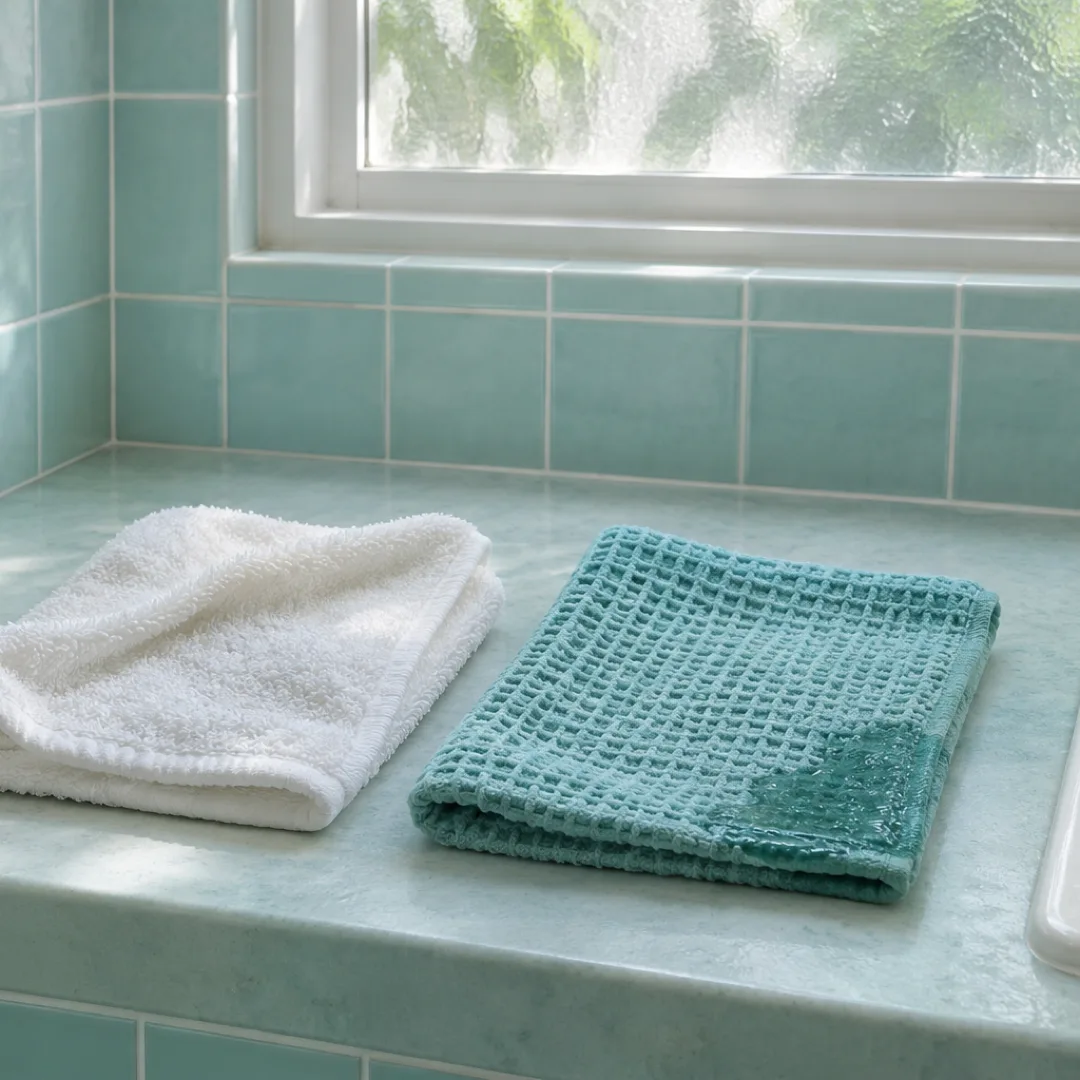
- Pick a dedicated face towel. How: set aside a separate towel just for your face, in a soft fabric such as cotton or a smooth microfiber that feels gentle to you. Why: keeping it separate from body towels makes it easier to keep clean and avoids transferring residue from other areas.
- Try a different material if your current one feels scratchy. How: run the towel across the inside of your wrist, where skin is thin. If it feels rough there, it will probably feel rough on your face. Why: texture varies widely between towels, and a towel that has gone stiff from age or heavy detergent can be more abrasive than you realize.
- Consider disposable options if you are breakout-prone or traveling. How: some people use clean, soft single-use face cloths or unscented paper-based facial towels. Why: a fresh surface each time removes the question of whether a towel has been laundered, though preferences and sensitivities differ, so notice how your skin responds.
- Air-dry briefly in specific cases. How: some people simply let the face dry for a short moment after patting away the water. Why: it avoids touching the skin more than necessary, although it is not suited to everyone and can leave some skin feeling tight.
The point of this stage is not perfection. It is simply removing the small sources of friction and residue that add up over weeks.
Adjusting for your skin type
Skin type changes how much the drying step matters, and what feels comfortable varies from person to person.
- Dry or easily tight skin: a lighter touch and leaving a little dampness tend to feel more comfortable. Friction and hot water are commonly flagged as things that worsen dryness.
- Oily or breakout-prone skin: towel cleanliness becomes more relevant, since fabric that holds oil and product can sit against the face. Fresh towels are often the practical priority.
- Sensitive or reactive skin: very soft fabrics, minimal pressure, and fragrance-free laundry products are often preferred, because residue from detergent or fabric softener can bother some people.
- Combination skin: a gentle, even pat across the whole face usually works; there is rarely a reason to treat the oily and dry zones differently at this stage.
Related reading: How to Pick a Cleanser for Oily Skin
Step 3: Building a steady routine
Good habits only help if they last. Over the longer term, the goal is to make gentle drying automatic and to connect it to the rest of your routine so it works with your other products instead of against them.
- Rotate towels on a regular schedule. How: keep a small stack of face towels so there is always a clean one ready, and wash them frequently according to the care label. Why: a predictable rotation means you never have to make do with a damp or stale towel when you are in a hurry.
- Wash towels gently. How: follow the fabric care label, and consider fragrance-free detergent if your skin is easily bothered. Why: leftover detergent or softener can stay in the fibers and may irritate reactive skin.
- Connect drying to the next step in your routine. How: if you use a moisturizer or other skin care product, follow its label and your clinician's or pharmacist's advice on timing, since some products are designed to go on damp skin and others on dry skin. Why: the right moment depends on the product, and that is a question for the product instructions rather than a one-size-fits-all rule.
- Keep your hands clean and your touch light. How: wash your hands before touching your face and avoid pulling the skin while drying. Why: repeated tugging and unclean hands add friction and transfer, which undoes the gentle approach.
Related reading: How to Care for Skin Under a Face Mask
Habits that quietly undermine a good routine
A few common practices work against gentle drying even when the technique is right. Leaving a towel bunched up on a damp hook, using the same towel for the face and the gym, and scrubbing at makeup residue with fabric are all familiar examples. Over-washing is another one: cleansing more often than your skin needs can leave it feeling dry no matter how carefully you pat it.
It also helps to remember that skin changes with seasons, climate, and stress. A routine that felt perfect in humid summer weather may feel too light in cold, dry months, so a little flexibility is normal.
When it does not seem to help
Gentle drying is a small part of skin care, and it will not resolve every concern. If you have tightened up your technique, switched to a clean soft towel, and your skin still feels persistently irritated, it may be worth looking beyond the towel.
Consider reaching out to a licensed professional, such as a dermatologist or your primary care clinician, if you notice any of the following:
- Redness, burning, or stinging that continues or keeps returning despite a gentler routine.
- Patches that are scaly, itchy, swollen, or cracked, or that seem to be spreading.
- Breakouts that are painful, deep, or not responding to the basics.
- Skin reactions that appear after starting a new product, which a professional can help sort out.
- Any change that worries you, or a skin condition you already manage that seems to be flaring.
A professional can look at your skin directly, ask about your products and history, and tell you what is appropriate for you. That kind of individual assessment is something a general article cannot replace, and it is especially worth seeking if you use prescription skin products, since timing and technique can matter for those and should follow the label and your prescriber's guidance.
In short, the answer to how to dry your face after washing is rarely complicated: pat gently, use a clean towel, and keep what works for your skin. If gentle habits are not enough, a qualified professional is the right next stop.
Frequently asked questions
Should my face be completely dry before I apply moisturizer?
It depends on the product, so check its label or ask a pharmacist or clinician. As noted above, some products are designed for slightly damp skin and others for dry skin, and a face that is still a little damp after patting is common practice for many routines. If your skin feels tight after fully drying, that may be a sign to leave a touch of dampness.
Is it better to use a towel or let my face air-dry?
If your skin tends to feel tight, a gentle pat with a clean towel and a short pause before the next step is a common middle ground. Air-drying avoids friction, but it can leave some skin feeling dry, while a clean soft towel used lightly is a familiar option for many people. Preference and skin type both play a role, so notice how your own skin responds.
How often should I change the towel I use on my face?
If breakouts or irritation are a concern, a fresh, clean towel more often is generally the safer habit, because fabric can hold moisture, oils, and residue. Keeping a small rotation of face towels makes this easy, and washing them according to their care labels helps keep them clean. Individual needs vary, so adjust based on how your skin behaves.
Can drying my face the wrong way cause breakouts?
If you rub hard or use a towel that has not been laundered, friction and residue may contribute to irritation or breakouts for some people. Breakouts have many possible causes, though, so drying technique is only one piece of the picture. A professional can help if breakouts are persistent or painful.
Disclaimer: This article is for informational purposes only and is not a substitute for professional medical advice, diagnosis, or treatment. Please consult a licensed professional for personal health decisions.