How to Care for Lips in Dry Weather, Step by Step
Learning how to care for lips in dry weather starts with one idea: protect the surface, reduce what irritates it, and give the skin time to recover. Lips have no oil glands of their own, so they lose moisture quickly when the air turns dry, windy or cold. Most people find that a few small changes, made in the right order, make the difference between tight, flaky lips and comfortable ones.
Anyone who has felt that tug when smiling, or winced at a split in the corner of the mouth, knows how irritating dry lips can be. The instinct is to lick them, peel them, or layer on whatever balm is nearby, and those habits often keep the cycle going. The fix is not one magic product. Solving this works best when the steps come in the right order: calm things down first, build a routine next, then keep it going.
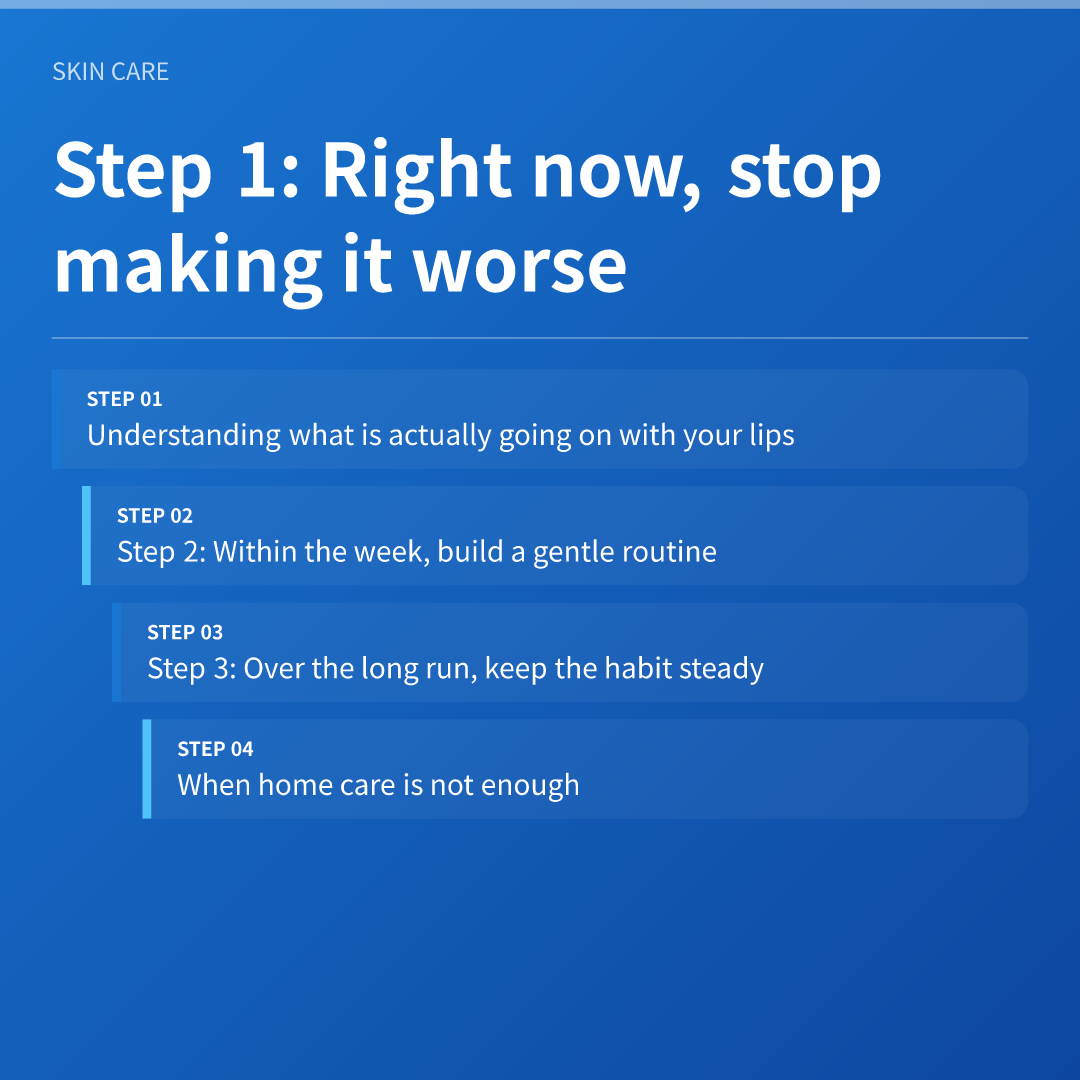
Understanding what is actually going on with your lips
The skin on the lips is thinner than skin elsewhere on the face and has very little natural oil. That is why lips tend to show dryness before other areas do. According to general dermatology education from the American Academy of Dermatology, dry, chapped lips are common and often linked to weather, licking the lips and certain products.
Common triggers in dry weather
- Low humidity: Dry outdoor air, and indoor heating or air conditioning, pulls moisture from the skin.
- Wind and cold: Exposure can leave lips rough and sore.
- Lip licking: Saliva evaporates fast and often leaves lips drier than before.
- Mouth breathing: Common with congestion or during sleep, and it dries the lips overnight.
- Sun exposure: Lips can be affected by UV light even when the weather feels cool.
- Irritating products: Some flavored, fragranced or strongly tingling lip products bother sensitive people.
Dry lips versus something else
Ordinary weather-related dryness usually shows up as tightness, flaking and mild soreness. Cracked corners, persistent swelling, a rash that spreads beyond the lips, or patches that do not heal may point to something different, such as irritation from a product or another skin condition. Those cases are better looked at by a professional than guessed at at home. Personal variation is large here, so what works for a friend may not suit you.
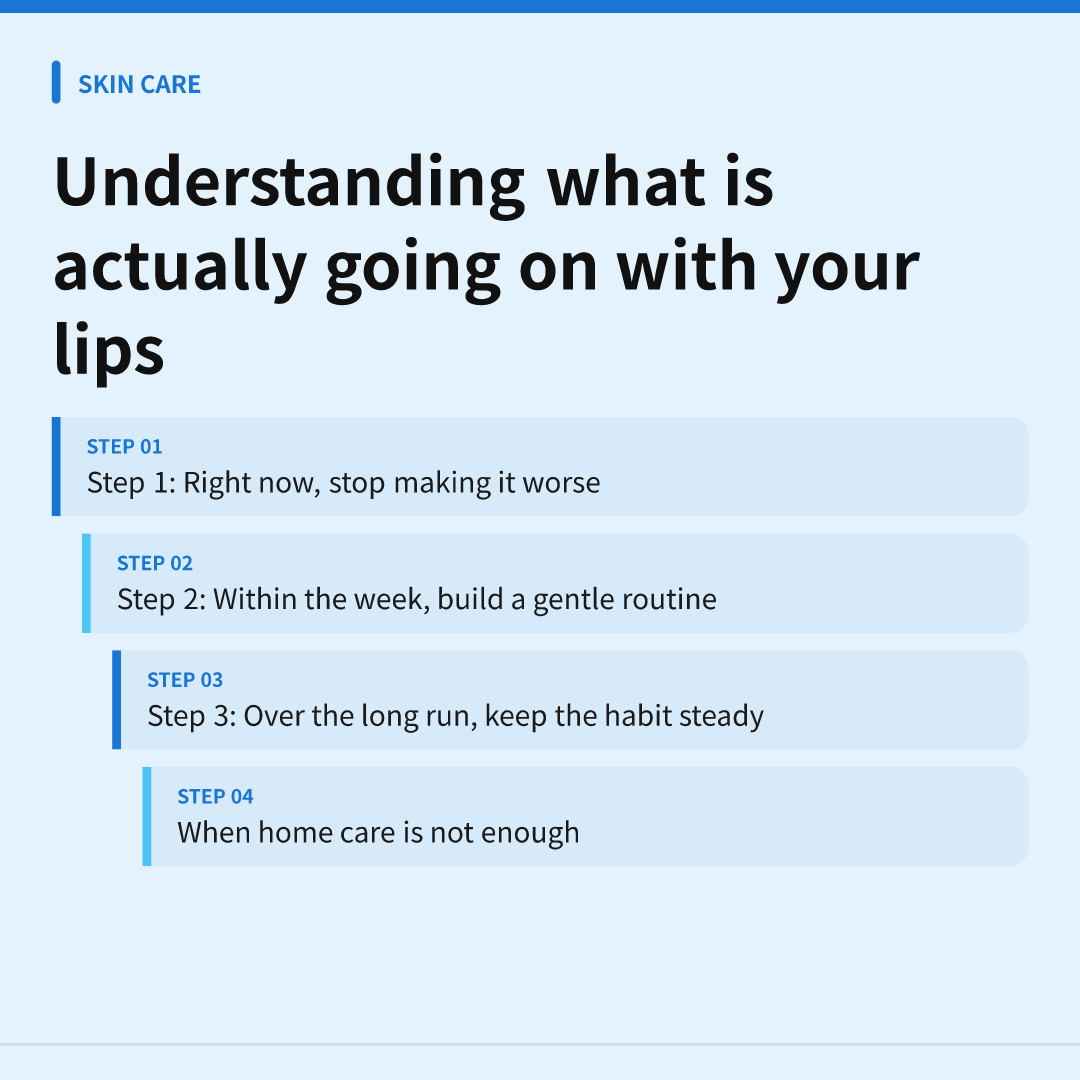
Step 1: Right now, stop making it worse
The first job is to remove whatever is prolonging the dryness. Think of it as giving the skin a chance to settle before adding anything new.
- What: Stop licking, biting and picking at your lips. How: Notice the habit, and keep a simple, plain balm within reach so your hands have something else to do. Why: Saliva dries quickly, and peeling flakes can tear living skin underneath, which delays healing.
- What: Pause products that sting, tingle or smell strongly. How: Set aside lip scrubs, plumping products, and heavily flavored or scented balms for now. Why: Sensitive, cracked skin can react to ingredients it would normally tolerate.
- What: Choose a simple, bland lip balm or ointment. How: Look for short ingredient lists built around occlusive, skin-softening ingredients such as petrolatum, plant butters or waxes, and follow the directions on the product label. Why: Occlusives form a barrier that slows moisture loss, which gives the skin room to recover.
A quick note on ingredients: people who know they react to fragrance, essential oils, lanolin or certain flavorings often do better reading labels carefully. If a product causes burning or swelling, it is reasonable to stop using it and ask a pharmacist or clinician for guidance.
Step 2: Within the week, build a gentle routine
Once the lips feel less raw, the goal shifts to a routine that is easy enough to keep up. Consistency matters more than fancy products.
Choose a day balm and a night balm
- What: Keep one lip balm with sun protection for daytime. How: Pick a lip product labeled with broad-spectrum sun protection and follow the label for reapplication after eating or drinking. Why: Lips can be affected by UV exposure, and dry weather does not cancel that out.
- What: Keep a richer, plain ointment for the evening. How: Choose a thicker texture that stays put overnight, and use it according to the product directions. Why: Lips go without food and drink for hours while you sleep, so a sturdier barrier tends to be more useful then.
Support the lips from the inside and the room
- What: Add some moisture to the air you spend time in. How: Many people use a humidifier in the bedroom, following the manufacturer's cleaning instructions. Why: Very dry indoor air can contribute to dry skin, and a cleaner, slightly more humid room may feel more comfortable.
- What: Keep up with regular drinking water and a balanced diet. How: Carry a bottle and sip through the day. Why: Hydration alone will not fix chapped lips, but general dehydration can make dry skin feel worse. Individual needs differ.
- What: Protect lips from wind and cold. How: A scarf pulled loosely over the mouth can help on blustery days. Why: It reduces direct exposure to the air that dries lips out.
What to do about flakes
It is tempting to scrub or peel flaky skin away. Many people find that this makes lips sorer, especially when they are already cracked. A softer approach is to let a bland balm do its work and allow flakes to loosen on their own, for example after a warm shower. If you are considering any exfoliating product for lips, it is sensible to ask a pharmacist or skin professional whether it fits your skin.
Step 3: Over the long run, keep the habit steady
Dry weather comes back every year, and lips that have recovered can dry out again quickly. Long-term care is mostly about making the routine automatic.
- What: Keep balms where you will actually use them. How: Leave one by the bed, one in a bag or coat pocket, and one at your desk. Why: A product you forget about does not protect anything.
- What: Review your products when the season changes. How: Check ingredient lists, expiry dates and whether your lips react to anything. Why: Old or contaminated products can irritate, and needs shift with the weather.
- What: Pay attention to patterns. How: Notice whether dryness flares after certain toothpastes, foods, medications or cosmetics. Why: Sometimes the trigger is not the weather at all, and spotting a pattern makes it easier to talk to a professional if needed.
Lips often need a little patience. Gentle, repeated care usually does more than a dramatic one-off fix, though results differ from person to person.
A word on medicated and active products
Some lip products contain actives, such as menthol, camphor or salicylic acid, that can feel pleasant at first but may irritate dry or cracked lips. Others are sold for specific problems and come with their own directions. How often and how long any medicated product should be used depends on the product label and, where relevant, on a clinician or pharmacist. Mixing several active products at once can make irritation more likely.
When home care is not enough
Most weather-related dryness eases with gentle, consistent care. If it does not, that is useful information rather than a failure of your routine. Some signs suggest it is time to get a professional opinion:
- Lips stay cracked, sore or flaky despite several weeks of gentle care.
- The corners of the mouth are persistently split, red or painful.
- You notice swelling, blistering, oozing, crusting or a spreading rash.
- A patch, sore or rough spot does not heal, bleeds easily, or keeps changing.
- Symptoms seem to follow a new product, medication or food, which might suggest a reaction.
- You have a known skin condition, allergies or a health issue that affects the skin, and your lips are worsening.
A pharmacist, doctor or dermatologist can look at your lips, ask about products and habits, and decide whether anything needs testing or treatment. What they recommend depends on your history, so it is best not to self-diagnose or keep trying new products in the meantime. Bringing a list of what you have been using, including balms, toothpaste and any medicines, can make the visit more useful.
To sum up the approach to caring for lips in dry weather: ease off irritating habits first, settle into a gentle day and night routine, keep it going as the seasons change, and ask a qualified professional for help when dryness does not improve.
Disclaimer: This article is for informational purposes only and is not a substitute for professional medical advice, diagnosis, or treatment. Please consult a licensed professional for personal health decisions.