What Sheet Masks Actually Do for Skin
What sheet masks actually do for skin comes down to two things: they hold a layer of product against the face, and they slow the evaporation of that product while it sits there. In practice, that makes them a short-term hydration and comfort step rather than a treatment that changes how skin works. Below, you will find what the term means, when a sheet mask makes sense, how it differs from similar products, and why the distinction matters for your routine.
The Basic Meaning of a Sheet Mask
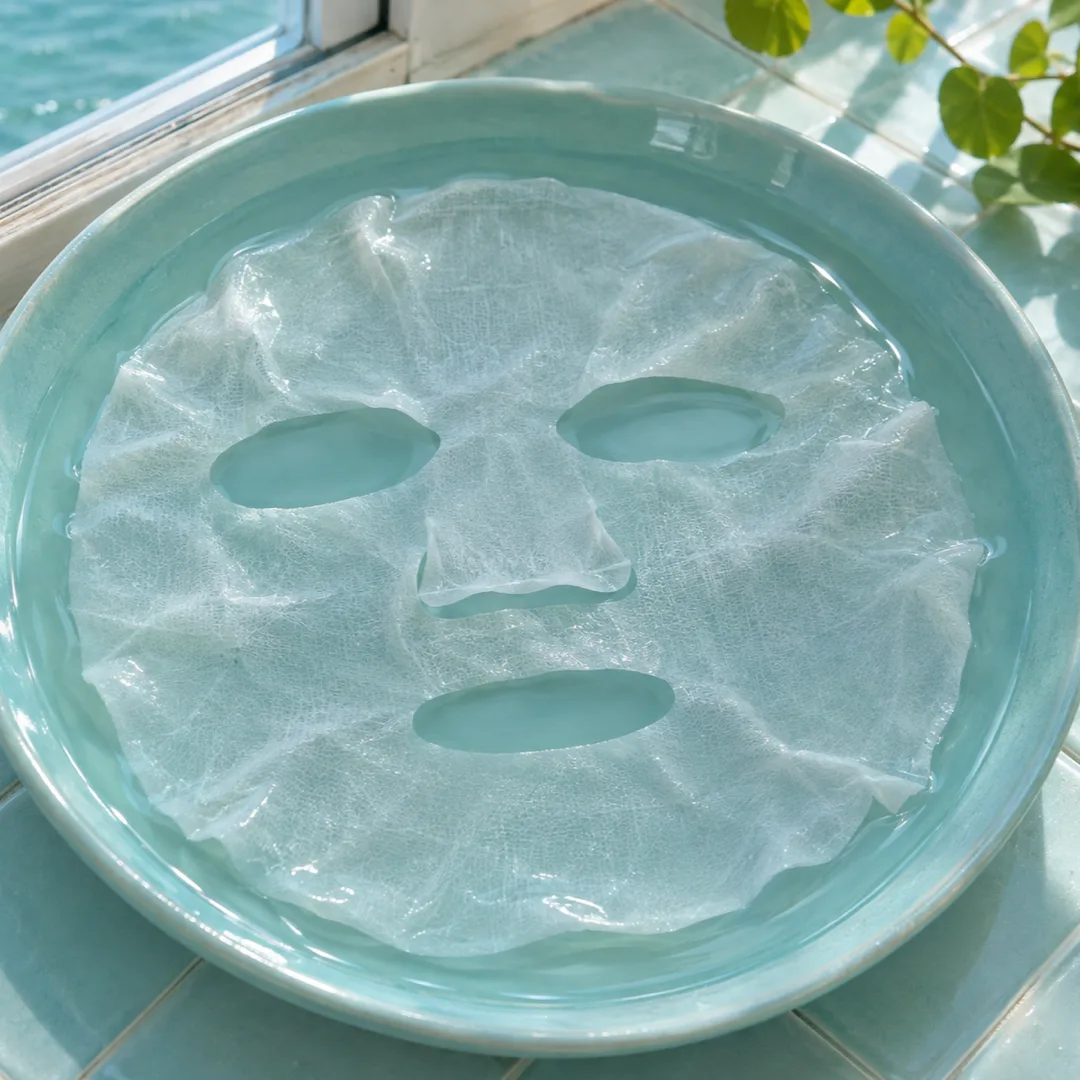
A sheet mask is a thin piece of material, usually cotton, nonwoven fiber, hydrogel, or a bio-cellulose type of fabric, soaked in a liquid formula called an essence or serum. It is cut to fit the face, with openings for the eyes, nose, and mouth. The fabric acts as a carrier and as a cover.
The carrier: what the liquid contains
The soaking liquid is where most of the ingredients live. Common ones include humectants (ingredients that attract and hold water, such as glycerin and hyaluronic acid), soothing plant extracts, mild conditioning agents, and sometimes fragrance or preservatives. Some formulas also include niacinamide or mild exfoliating acids, though the amounts differ widely between products and are not always easy to judge from the label.
The cover: what the sheet itself does
The sheet works like a lid on a pot. By sitting snugly on the skin, it limits how fast water and dissolved ingredients evaporate into the air. This is often described as an occlusive effect, meaning a physical barrier that slows moisture loss. That is the main mechanical reason a sheet mask can feel different from simply patting the same essence onto the face.
What the skin does with it
The outermost layer of skin, called the stratum corneum, can temporarily take in water when it is kept moist. Skin that has taken in extra water often looks plumper and feels softer. According to the American Academy of Dermatology's general skin care guidance, moisturizing helps skin feel more comfortable and supports the skin barrier, and a sheet mask is one way to deliver that kind of moisture. The effect is usually described as temporary, and how long it lasts varies from person to person.
Situations Where a Sheet Mask Fits
Sheet masks tend to be most useful when the goal is a modest, short-lived boost in hydration or a moment of comfort. They are less suited to goals that need sustained, active treatment.
When skin feels tight or dull from dryness
Dry or dehydrated skin often feels tight and can look flat. Dehydrated skin lacks water, while dry skin lacks oil, and the two can overlap. A sheet mask built around humectants may help skin feel more comfortable for a while, especially after a long flight, a stretch in dry indoor air, or a few nights of poor sleep. It will not rebuild a damaged barrier on its own.
When you want a calm, low-effort routine moment
Part of a sheet mask's appeal is the pause itself. Lying down for a short stretch with something cool on the face can feel relaxing, and that sense of comfort is a real reason people enjoy them. It is fair to count that as a benefit, as long as it is not confused with a medical effect.
When you are preparing for an occasion
Plenty of people reach for a sheet mask before an event because well-hydrated skin tends to take makeup more smoothly. This is a cosmetic, short-term use. Some people also like to try a new product's feel this way, though a patch test on a small area first is a sensible habit for anyone with reactive skin.
Situations where it is a poor fit
- Skin that is currently broken, raw, sunburned, or visibly inflamed.
- Active rashes, suspected infections, or flare-ups of a diagnosed skin condition.
- A history of reactions to fragrance, essential oils, or preservatives commonly found in masks.
- Skin recently treated with procedures or strong prescription products, unless a professional has said otherwise.
Related reading: How to Build an Evening Routine in Five Minutes
Sheet Masks Versus Similar Products
Because the category is crowded, people often mix up sheet masks with other products that sound alike. The differences affect what you can reasonably expect.
Sheet masks and wash-off clay or cream masks
Clay masks are generally designed to sit on oily skin and be rinsed off, and they are often used with oil or shine control in mind. Cream or gel masks may be rinsed or left on depending on the formula. A sheet mask is different in that it is a pre-soaked fabric that usually stays on briefly and is then removed, with the leftover liquid commonly patted in. They serve different goals, and one does not replace the other.
Sheet masks and serums or essences
A sheet mask is, in a sense, a serum with a cover. Think of it like putting a lid on a simmering pot: the contents are the same, but less escapes. Because the liquid inside is often a lightweight essence, the ingredient concentration is typically modest compared with a dedicated serum, so a mask is not a shortcut to stronger results.
Sheet masks and moisturizers
A moisturizer is built to reduce water loss over many hours, usually by combining humectants with oils or other sealing ingredients. Most sheet mask liquids are lighter and lean more on water-attracting ingredients. Many people find that a moisturizer afterward helps hold in what the mask delivered, since the sheet's effect fades once it is removed.
Sheet masks and medical or professional treatments
Cosmetic masks are not the same as prescription products or in-office procedures. The U.S. Food and Drug Administration's general guidance on cosmetics explains that cosmetics are intended to cleanse or beautify, while products meant to treat or prevent a condition fall under different rules. That is why a sheet mask is not an appropriate stand-in for care of acne, eczema, rosacea, or other skin conditions.
Common mix-ups about "detox" and "anti-aging"
Labels sometimes use words like detoxifying, purifying, or anti-aging. These are marketing terms rather than precise scientific ones, and skin does not store toxins in a way a mask can pull out. Ingredients linked with fine-line appearance, such as humectants, can make skin look smoother temporarily, but that is a surface effect and not a change to aging itself.
Why the Distinction Matters
Knowing that a sheet mask is mostly a hydration-and-comfort step changes how you spend money, how often you rely on it, and when you look elsewhere for help.
Setting realistic expectations
When people expect a mask to shrink pores, erase wrinkles, or clear breakouts, disappointment is common. A more accurate expectation is a temporary boost in softness and a plumper look. Results differ by skin type, product, and starting condition, and a single mask is unlikely to produce lasting change.
Understanding irritation risks
Any product left on the face under an airtight cover can raise the chance of a reaction in sensitive skin, because ingredients stay in contact longer. Fragrance, certain preservatives, and strong acids are among the common triggers. Reactions vary from person to person, and the American Academy of Dermatology's general guidance suggests being cautious with new products if your skin is easily irritated.
Signs that call for stopping and getting advice include:
- Stinging or burning that does not settle quickly after removal.
- Redness, swelling, or an itchy rash.
- Small bumps or blisters appearing where the mask touched.
If these happen, a pharmacist or a licensed clinician such as a dermatologist can help work out the cause. Persistent or severe reactions are worth professional attention rather than waiting them out.
Skin-type differences
Dry skin often responds well to hydrating, humectant-based formulas. Oily or acne-prone skin may find heavy, sticky essences uncomfortable, and lightweight gel-type sheets can feel better. Sensitive skin is usually better served by short ingredient lists without added fragrance, though even then individual reactions can differ. Skin with a diagnosed condition is best discussed with a professional before adding new products.
Cost, waste, and frequency
Single-use sheets add up in price and packaging waste. Since the benefit is modest and short-lived, many people treat masks as an occasional extra rather than a daily necessity. How often to use one depends on the product's own directions and your skin's tolerance, and a pharmacist or clinician can advise if you are unsure.
Related reading: How Long Should You Try a New Product Before Judging It?
How This Changes Your Decisions
Once you see a sheet mask as a covered, short-term hydration step, two practical judgments get easier.
- Choosing what to buy. Instead of chasing bold claims, you can look at the ingredient list for hydrating basics and check for fragrance or other known irritants if your skin is reactive. A simple, fragrance-free option is a reasonable starting point for many people, though preferences differ.
- Deciding when a mask is not enough. If your concern is persistent breakouts, ongoing redness, scaling, or discomfort, a mask is unlikely to address the cause. That is the moment to talk with a pharmacist or a licensed skin professional rather than adding more products.
In short, what sheet masks actually do for skin is modest and temporary, and that is a perfectly fine reason to enjoy one while keeping your expectations grounded.
Frequently asked questions
Does leaving a sheet mask on longer give better results?
If a mask begins to dry out on your face, leaving it on longer can work against you, because a drying sheet may start pulling moisture back out. The sheet's main job is to slow evaporation while it is still damp. Follow the directions printed on the product, and ask a pharmacist or clinician if you are unsure about timing for your skin.
Can I use a sheet mask if my skin is sensitive?
If your skin is sensitive, a short, fragrance-free formula is generally the more cautious choice, and a small patch test first is a common precaution. Because the sheet keeps ingredients in close contact with skin, reactions can show up more readily than with a quick-rinse product. If you have a diagnosed condition, check with a licensed professional before trying a new mask.
Do I still need moisturizer after a sheet mask?
If you want the softness to last, a moisturizer afterward is commonly used to help hold in hydration, since the sheet's occlusive effect ends once it is removed. Many mask liquids are lightweight and humectant-heavy rather than sealing. Your skin type and the product's formula affect what works best for you.
Can a sheet mask treat acne or wrinkles?
If the goal is treating acne or reducing wrinkles, a cosmetic sheet mask is generally not designed for that purpose. The FDA's general guidance distinguishes cosmetics, which are meant to cleanse or beautify, from products intended to treat conditions. A temporary smoother or plumper look is a more realistic expectation, and a dermatologist is the right contact for persistent concerns.
Disclaimer: This article is for informational purposes only and is not a substitute for professional medical advice, diagnosis, or treatment. Please consult a licensed professional for personal health decisions.