How to Protect Lips From the Sun, Hour by Hour
Lasting lip sun protection comes from small habits spread across your day, not from one big plan. The routine below places three easy touchpoints in the morning, midday and evening, because lips have little natural defense and are easy to forget. Individual needs differ, so treat this as general information rather than personal advice.
Lips are a bit of a blind spot in most routines. We cleanse, moisturize and cover the face, then walk out the door with bare lips. Many people only notice the problem when their lips feel dry, tight or sore after a long day outdoors.
According to the American Academy of Dermatology's general guidance, lips can be affected by sun exposure just like the rest of the face, and lip products with broad-spectrum protection are commonly suggested. The U.S. Food and Drug Administration also regulates sunscreen labeling, including lip balms that carry sun protection claims. Because lips are thin and lack the oil glands found elsewhere on the face, they tend to need extra attention.
Why lips need their own sun plan
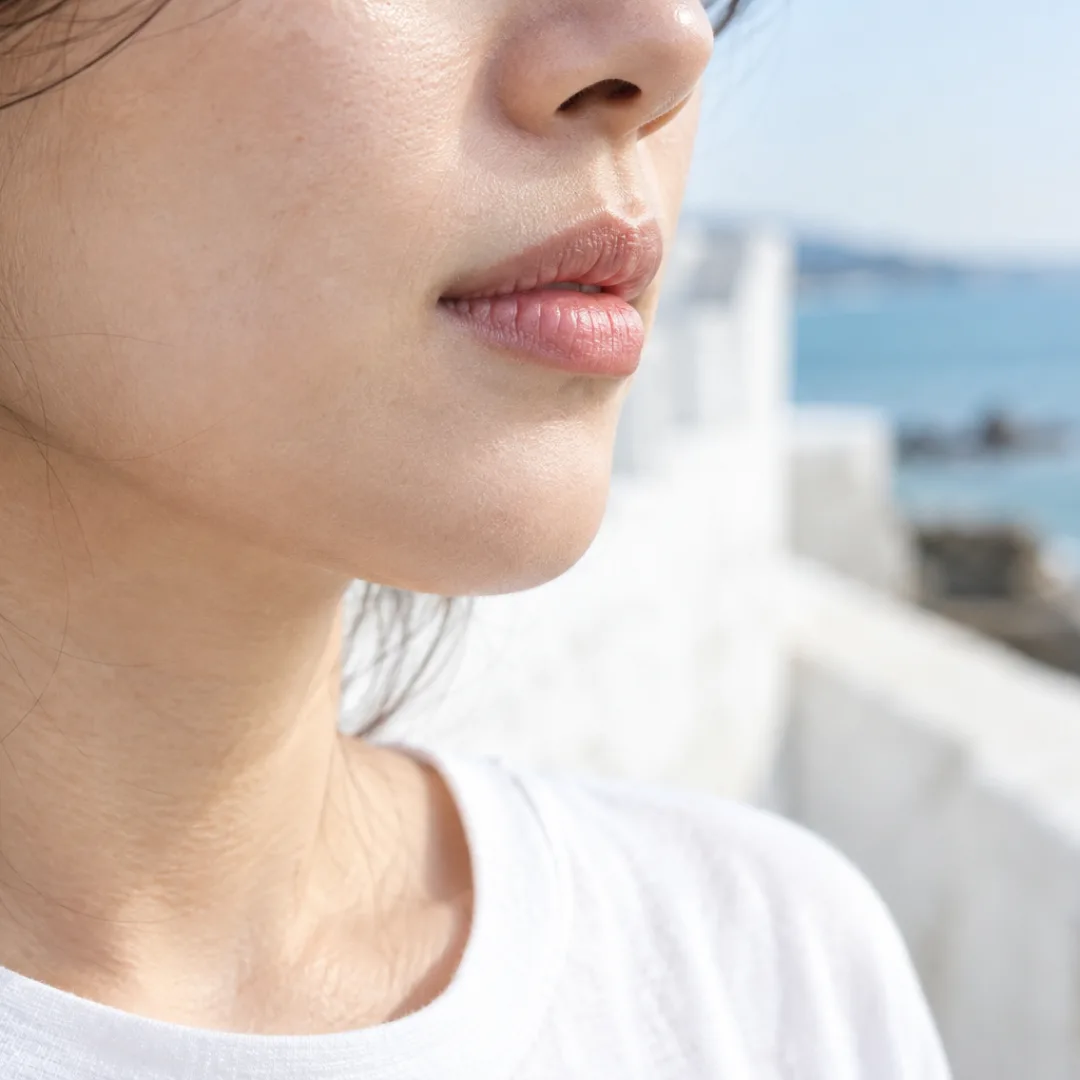
The skin on the lips is thinner than facial skin and has very little pigment. Pigment is one of the things that helps skin cope with ultraviolet light, so lips often have less built-in cushioning. They also do not produce oil the way other skin does, which can leave them dry and more easily irritated.
That is why the usual face routine can leave a gap. A daytime moisturizer with sun protection often stops at the lip line, and a lipstick or tinted balm without any sun protection information on the label may not fill that gap. Reading the product label is the simplest way to tell what a lip product actually offers.
Another practical point: lips get licked, bitten, eaten off and rubbed away throughout the day. Any protection on them wears off faster than protection on your cheeks. This is the main reason a morning-only approach tends to fall short, and why the routine below spreads out over the day.
Morning: set the base before you leave
Choose a lip product that lists sun protection
The first small action is picking a lip balm or lip product whose label states broad-spectrum protection. In the United States, sunscreen products are labeled under FDA rules, so the label is where you find what the product claims and how the manufacturer says to use it. Product directions vary, so it makes sense to follow what is printed on the package and to ask a pharmacist if you have questions.
Why in the morning? Because it is the one time of day when you are probably standing at a mirror anyway. Tying lip protection to something you already do, like brushing your teeth or finishing your face routine, makes it much more likely to stick.
Keep it where you will see it
The second small action is logistical. Put a lip product by your toothbrush, in your bag and in your coat pocket or car. Habits tend to survive when the item is already in your hand at the moment you need it.
Honestly, the best product is often the one you will actually remember to use. A formula you like the feel of, in a place you can reach, usually beats a perfect product stuck in a drawer.
Check your lips before applying anything
Take a quick look at your lips each morning. If they feel unusually dry, cracked or sore, that is useful information. Lips in that state can react more strongly to certain ingredients such as fragrance, menthol or flavoring, and reactions vary from person to person.
Midday: protection that survives the workday
Plan for wear-off
The midday action is simply to refresh protection when it has likely worn away. Eating, drinking, talking, wiping your mouth and licking your lips all remove product. Sunscreen labels commonly include directions about reapplying after eating or drinking or after a period outdoors, so check the instructions on your specific product rather than relying on a general rule.
Why this point in the day? Midday is when many people are outside for lunch, a walk or errands, and when sunlight is often strongest. It is also right after a meal, which is when lip products have most often been removed.
Add physical cover when you can
A second small action is physical shade. A wide-brimmed hat, sitting under an umbrella or choosing a shaded table can all reduce how much light reaches your face and mouth. Many public health organizations, including the Centers for Disease Control and Prevention, describe shade, protective clothing and hats as part of a broader sun safety approach alongside sunscreen.
Shade does not replace a lip product, and a lip product does not replace shade. They work as a pair, and people vary in how much time outdoors they get during a typical workday.
Watch the situations that raise exposure
Some settings tend to bump up exposure, and they are worth being extra deliberate about. Think of time near water, snow, sand or other bright surfaces that reflect light, high altitudes and long drives with sun coming through the windows. If your day includes any of these, lip protection is worth a second thought, even when the weather feels mild.
Evening: clean up and let lips recover
Remove product gently
In the evening, the small action is to take off lip products without scrubbing. Heavily pigmented or long-wear lip products sometimes need a gentle makeup remover on a soft cloth. Rubbing hard can irritate thin lip skin, so a light touch is the safer habit.
This is the right time because buildup from the day, including sunscreen, balm and color, is easier to remove before bed than to leave overnight. It also gives you a chance to see how your lips actually feel after a day outside.
Use a soothing, plain moisturizer at night
The second evening action is a simple, fragrance-free lip moisturizer. Plain occlusive balms are commonly used to help lips hold on to moisture. If you are sensitive to ingredients, ask a pharmacist or dermatologist which types tend to be better tolerated, since reactions vary.
Night is a natural pause. Without sun, eating or talking, lips have time to rest, and a basic balm can support comfort while you sleep. Skip anything that stings, tingles or leaves your lips feeling worse.
Notice what the day did
Before bed, take a few seconds to notice how your lips feel. Tightness, flaking or tenderness after a sunny day may be a sign you need to adjust the plan tomorrow, for example by planning more shade or more frequent reapplication. This tiny check-in is what turns a routine into one you can improve over time.
When lip changes are worth a professional look
Everyday dryness is common, but some changes deserve attention from a qualified professional. The American Academy of Dermatology and other health organizations commonly advise having new or changing skin spots examined rather than waiting. This article cannot tell you what a change on your lips is, and only a clinician can evaluate it.
Consider booking an appointment with a dermatologist or other licensed clinician if you notice any of the following:
- A sore, crack or patch on the lip that does not heal as expected
- A spot that changes in color, shape, texture or size
- Persistent bleeding, crusting or a rough area that keeps returning
- Swelling, pain or numbness that is unusual for you
- Repeated cold-sore-like blisters, which a clinician can assess and discuss options for
- Any reaction to a lip product, such as itching, burning or swelling
People with a history of significant sun exposure, fair skin, a weakened immune system or certain medications may want to ask a professional what extra precautions make sense for them. Some medications and skin treatments can also make skin more sensitive to light, so it is worth asking your pharmacist or prescriber about that.
A routine is only as good as the habit behind it. Pick the version you can repeat on a busy day, and let a professional handle anything that looks unusual.
Weekly check-in: tune the routine
Once a week, take a few minutes to look back at how the routine went. The goal is not perfection. It is to catch small gaps before they become habits, and to adjust for changes in weather, schedule and travel. Use this list as a simple weekly review.
- Label check: Does your main lip product clearly state sun protection on the label, and have you read the directions?
- Placement check: Is a lip product within reach at home, in your bag and in the car?
- Reapplication check: Did you refresh protection after meals or long stretches outdoors?
- Shade check: Did you use a hat, shade or an umbrella on your sunniest days?
- Expiry check: Are any lip products old, changed in smell or texture, or past the date on the package?
- Irritation check: Did any product cause stinging, swelling or flaking that suggests a switch?
- Change check: Have you noticed any sore, spot or texture change that has lingered and may be worth showing a professional?
- Schedule check: Do you have outdoor plans, travel or water and snow time coming up that call for extra planning?
If most of the list feels easy, your routine to protect lips from the sun is probably working well for your lifestyle. If several items feel hard, pick just one to improve this week. Small, repeatable steps tend to last longer than ambitious overhauls, and results vary from person to person.
Disclaimer: This article is for informational purposes only and is not a substitute for professional medical advice, diagnosis, or treatment. Please consult a licensed professional for personal health decisions.